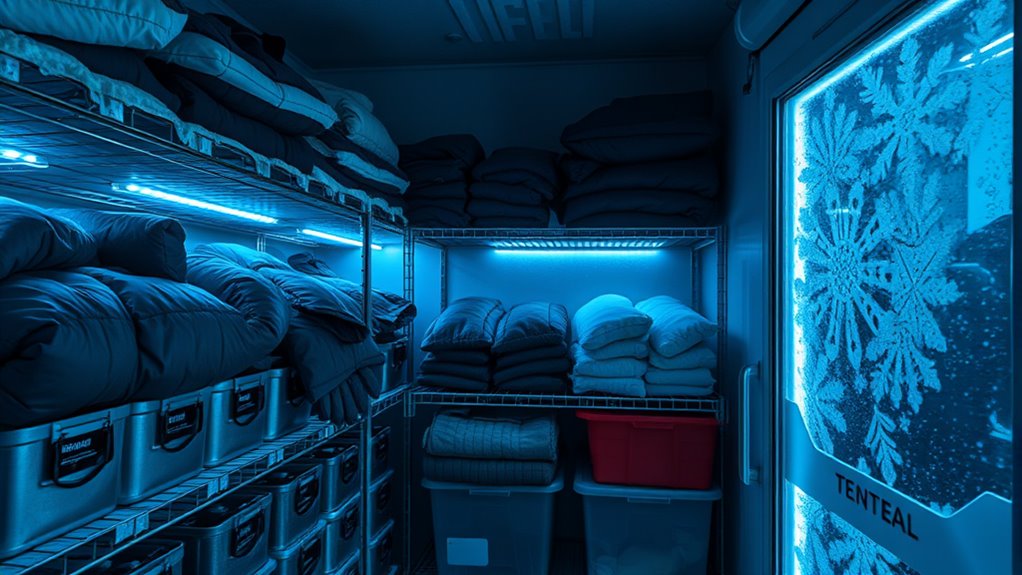

To guarantee your gear, batteries, and layers stay in top shape, store them in a designated cold, dry area with regulated temperature and humidity. Keep insulated gear organized and protected from moisture, while batteries should be kept at moderate temperatures to prevent freezing or capacity loss. Properly managing cold storage not only extends equipment life but also improves safety and efficiency on the job. Keep exploring to find out more ways to optimize your storage practices.
Key Takeaways
- Use dedicated cold storage areas to maintain optimal temperature and humidity for gear and batteries.
- Store winter gear in dry, organized sections to prevent moisture damage and preserve insulating properties.
- Regulate battery temperature to prevent freezing, cracking, and capacity loss, ensuring reliability.
- Implement modern, AI-powered storage systems for efficient organization and quick access to equipment.
- Regularly check and maintain stored items to extend lifespan, improve safety, and ensure readiness.

Cold storage plays an essential role in many workplaces, ensuring perishable items stay fresh and safe. But it’s not just food that benefits from cold environments; your winter gear, batteries, and other equipment also rely on proper storage to stay in top condition. When you work in cold environments, managing your gear and batteries correctly becomes vital for safety, efficiency, and longevity. Proper cold storage helps prevent damage, keeps your equipment ready to use, and extends its lifespan.
Proper cold storage safeguards gear and batteries, ensuring safety, efficiency, and extended lifespan in cold environments.
Your winter gear, such as insulated jackets, gloves, and hats, needs to be stored properly in cold storage areas when not in use. If left exposed to fluctuating temperatures or humidity, your gear can become damp or degrade faster. Using dedicated cold storage ensures your winter gear remains dry and retains its insulating properties. It’s important to keep these items organized and protected from excess moisture, which can lead to mold or material breakdown. When stored correctly, your gear will be ready to provide warmth when you need it most, without the risk of deterioration. Additionally, modern AI-powered storage solutions can optimize organization and environmental controls to further preserve your equipment.
Battery maintenance is another critical aspect of cold storage at work. Batteries, especially those used in equipment or vehicles, can be severely impacted by cold temperatures. Cold storage helps regulate these temperatures, reducing the risk of battery capacity loss or damage. If batteries are left in freezing conditions for too long, they can freeze and crack, leading to costly replacements. Storing batteries in a controlled cold environment minimizes the risk of freezing and ensures they remain functional when needed. It’s also essential to periodically check and maintain batteries stored in cold environments, including cleaning terminals and checking charge levels, to prevent corrosion and guarantee maximum performance.
In addition to protecting gear and batteries, cold storage also makes it easier to organize your workspace. By designating specific cold storage areas for winter gear and batteries, you streamline your workflow and reduce downtime. You’ll always know where your equipment is, and it’ll be kept in conditions that prolong its usability. This organized approach also reduces clutter and helps maintain safety standards, especially when handling potentially hazardous items like batteries.
Frequently Asked Questions
How Long Can Gear Safely Stay in Cold Storage?
Your gear can stay safely in cold storage for a few days to a week, depending on insulation materials and container ventilation. Proper insulation helps prevent moisture buildup and freezing, while good ventilation minimizes mold or odors. Check your gear regularly, especially if stored longer, and consider using moisture absorbers. Storing gear properly guarantees it remains in good condition and ready for use when needed.
What Temperature Range Is Optimal for Storing Batteries?
To keep your batteries happy and healthy, aim for a temperature range of 32°F to 77°F (0°C to 25°C). This cozy zone guarantees ideal temperature stability, no matter the battery chemistry. Staying within this range prevents premature aging and performance dips. Think of it as giving your batteries a comfy home where they can perform at their best without stress, ensuring they’re ready whenever you need them.
Can Moisture Damage Stored Clothing in Cold Environments?
Moisture can damage stored clothing in cold environments, leading to mold, mildew, and fabric deterioration. You should focus on moisture control by keeping your clothing in airtight containers or bags with desiccants. Proper moisture management helps preserve fabric quality and prevents long-term damage. Make sure your storage area is dry, well-ventilated, and free from condensation to maintain your clothing’s integrity and prolong its lifespan.
Are There Specific Safety Precautions for Cold Storage Areas?
A safe day keeps the hazards at bay. You should implement strict safety precautions in cold storage areas, including regular temperature monitoring to prevent spoilage or freezing hazards. Clear signage safety is essential to warn staff about slippery surfaces and proper handling procedures. Always wear appropriate gear, and ensure emergency exits are accessible. These steps help protect you and your colleagues from cold-related risks and maintain a secure environment.
How Often Should Stored Items Be Inspected or Rotated?
You should inspect and rotate stored items at least weekly to guarantee freshness and safety. Regularly check your storage container maintenance to spot any damage or leaks, and address pest prevention measures promptly. By doing so, you prevent spoilage, maintain the integrity of your gear and batteries, and keep the cold storage environment safe. Consistent inspections help you catch issues early, ensuring everything remains in ideal condition.
Conclusion
Now that you know how to keep your gear, batteries, and layers cool, you’re ready to face any cold day head-on. Think of cold storage as your secret weapon—like a trusted anchor that keeps everything steady and ready for action. With the right precautions, you’ll stay warm, safe, and prepared, no matter how frosty the work environment gets. So, embrace these tips and let your gear shine brighter than a winter sunrise.