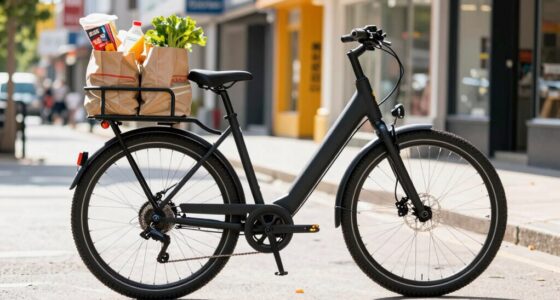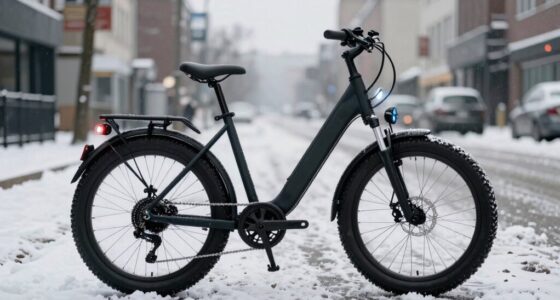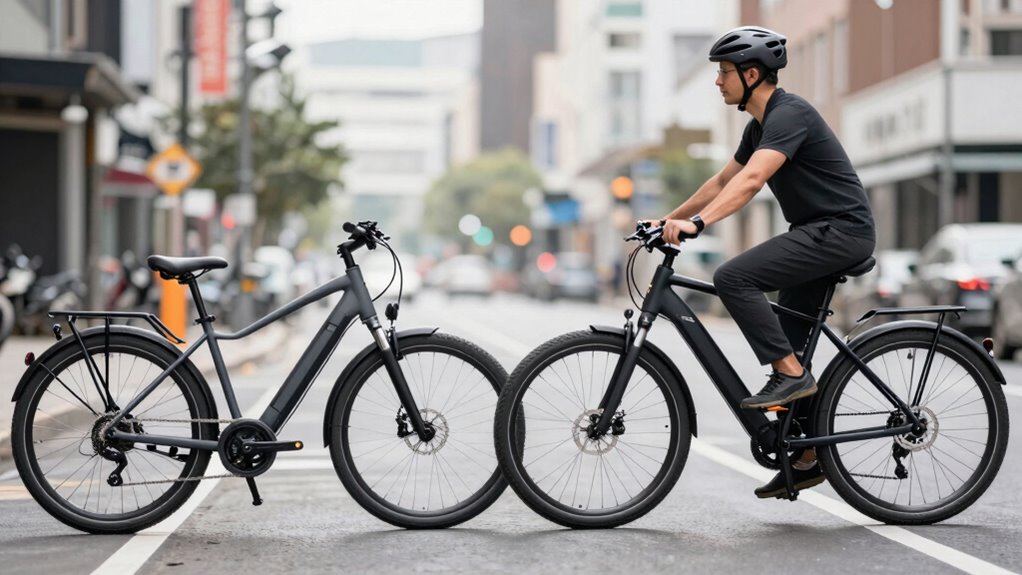

Choose a Class 2 e-bike if you prioritize safety, relaxed riding, and sticking to city speed limits of 20 mph, especially in busy, stop-and-go traffic. Opt for a Class 3 if you want to cover longer distances faster and are comfortable with higher speeds and potential safety gear requirements. Your preferred riding posture and local laws also matter. Keep exploring to discover which e-bike class best matches your city riding style and environment.

Get bike and ride gear delivered free with Prime
- Fast, free delivery on millions of items
- Prime Video, Amazon Music and more included
- Member-only deals all year
Key Takeaways
- Consider city traffic conditions; Class 2 suits stop-and-go environments, while Class 3 benefits longer, faster commutes.
- Prioritize helmet safety and proper fit for higher speeds on Class 3 bikes.
- Test both classes to assess comfort, posture, and control suited to your riding style.
- Check local regulations for licensing, helmet laws, and permissible e-bike classes in your area.
- Balance your need for speed with safety and comfort to select the most suitable e-bike class.
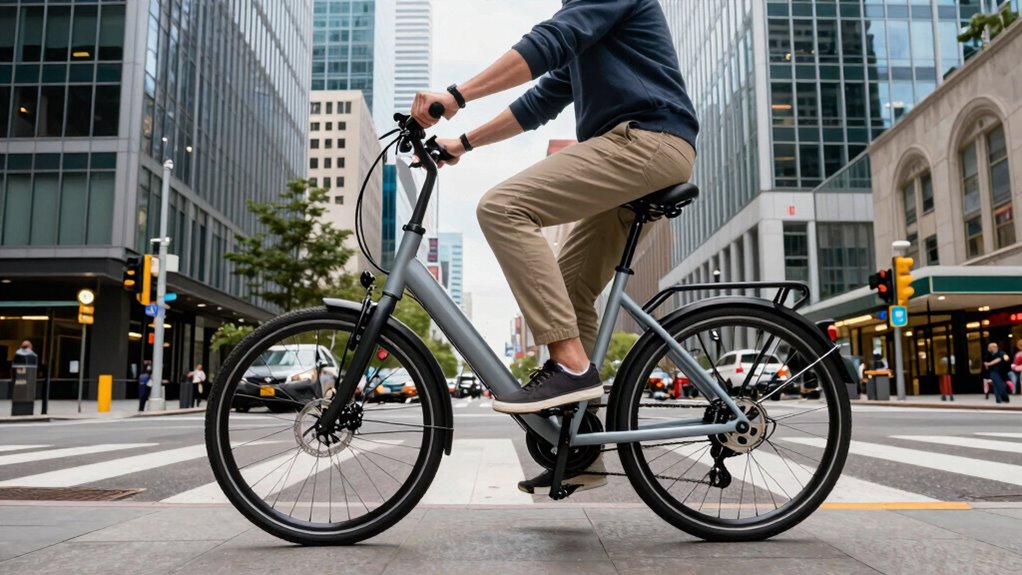
Are you unsure whether to choose a Class 2 or Class 3 electric bike for city riding? Understanding the differences can help you make an informed decision that suits your daily commute and riding style. One of the first things to consider is helmet safety. Regardless of the class, wearing a helmet is essential for protecting yourself. However, with faster speeds often associated with Class 3 bikes, helmet safety becomes even more critical. Higher speeds increase the potential for accidents, so choosing a helmet with proper impact resistance and a secure fit is essential. Additionally, your riding posture plays a significant role in comfort and control. On a Class 2 bike, which typically maxes out at 20 mph, you might adopt a more relaxed, upright posture, which is great for visibility and comfort during city rides. Conversely, a Class 3 bike, capable of reaching 28 mph, may encourage a slightly more aggressive, forward-leaning stance to improve aerodynamics and handling at higher speeds. Your posture influences your balance, visibility, and fatigue, so it’s worth trying out both types to see which feels most natural and comfortable for your daily routes.
Speed limits are another important factor. Class 2 bikes are limited to 20 mph, aligning well with most city regulations and bike lane restrictions. They’re easier to manage in congested areas and often don’t require a license in many jurisdictions. Class 3 bikes, reaching speeds up to 28 mph, can shave minutes off your commute but may face stricter regulations, such as licensing or helmet laws, depending on where you ride. If your city has strict rules about faster e-bikes, you might prefer a Class 2 bike to avoid legal complications. It’s also worth noting that regulatory compliance is crucial to ensure you’re riding within the law and avoiding potential fines or restrictions. Moreover, understanding local bike laws can help you choose the most suitable class for your riding environment.
Consider your riding environment too. If your city streets are busy with stop-and-go traffic, a slower, more manageable Class 2 bike might be safer and more practical. If you frequently need to cover longer distances or want to keep up with faster traffic, a Class 3 bike could be more suitable. Remember, higher speeds demand better riding posture and helmet safety gear, especially if you’re traveling at or near the maximum limit. It’s also important to note that biodiversity and conservation efforts can benefit from reducing noise and pollution from vehicles, which aligns with choosing eco-friendly transportation options like e-bikes. Ultimately, the choice depends on your comfort with speed, local regulations, and how you plan to use your e-bike. Testing both classes can also help you determine which feels more natural and enjoyable.
In the end, test both types if possible. Pay attention to how your body feels in different riding postures, and always prioritize helmet safety. Picking the right class for city riding means balancing speed, comfort, and safety — ensuring you enjoy your commute without unnecessary risk.
electric bike helmet with impact protection
As an affiliate, we earn on qualifying purchases.
As an affiliate, we earn on qualifying purchases.
Frequently Asked Questions
Can I Upgrade From Class 2 to Class 3 Later?
Yes, you can upgrade from Class 2 to Class 3 later. Your rider experience and bike customization options will influence this process. You’ll likely need to modify your bike to meet the legal specifications for Class 3, which may involve changing components or obtaining permits. Keep in mind that upgrading enhances your riding capabilities, but guarantee you follow local laws and regulations, and consider consulting a professional for a smooth shift.
Are There Specific City Regulations for Class 2 and Class 3 Bikes?
Imagine city streets as a lively dance floor—knowing the rules keeps you in step. Yes, there are specific city regulations for Class 2 and Class 3 bikes. Urban safety and parking rules often vary, with some cities restricting Class 3 bikes on certain roads or requiring permits. Checking your local DMV or city transportation website guarantees you stay compliant, helping your ride stay smooth and incident-free.
Do Insurance Requirements Differ Between Class 2 and Class 3?
Insurance requirements do differ between Class 2 and Class 3 bikes. You’ll find that policy differences often mean higher premiums for Class 3 bikes due to their power and speed capabilities, which can increase liability coverage needs. Make sure to check your insurance provider’s coverage options for each class, as some policies may have specific restrictions or requirements based on the bike’s classification, especially for city riding.
How Does Battery Life Vary Between Class 2 and Class 3 Bikes?
Battery life varies between Class 2 and Class 3 bikes mainly because of differences in battery capacity and power output. Class 2 bikes typically have smaller batteries, offering less range but better efficiency, while Class 3 bikes have larger batteries, providing longer rides. The higher power output of Class 3 models can drain the battery faster during heavy use, but overall, they tend to last longer per charge due to bigger capacity.
Are There Different Maintenance Needs for Each Class?
Yes, maintenance needs differ for each class. You’ll find that battery efficiency impacts how often you need to replace or service the batteries, especially for Class 3 bikes with higher power demands. Tire durability also varies; Class 3 bikes often require more robust tires due to increased speed and weight, meaning you’ll need to check and replace tires more frequently. Regular upkeep guarantees safe, reliable city riding for both classes.
As an affiliate, we earn on qualifying purchases.
Conclusion
As you navigate the bustling city streets, imagine yourself weaving smoothly through traffic, feeling confident on your ride. Whether you choose the versatility of Class 2 or the power of Class 3, remember it’s about what fits your journey best. Picture yourself cruising effortlessly, the city lights flickering around you. Make your choice wisely, and turn every ride into a seamless adventure—ready to conquer the urban jungle with style and confidence.
As an affiliate, we earn on qualifying purchases.
ergonomic e-bike riding posture accessories
As an affiliate, we earn on qualifying purchases.
As an affiliate, we earn on qualifying purchases.
Fall Picks
fall essentials
As an affiliate, we earn on qualifying purchases.