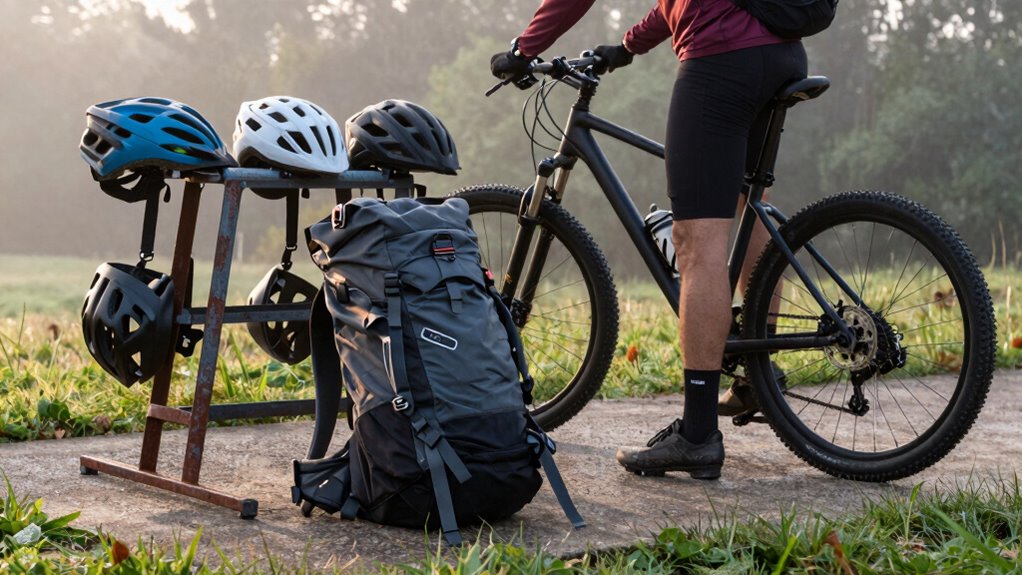

When choosing between a rack and a backpack, consider the sweat and safety tradeoffs often overlooked. A rack keeps weight off your shoulders, reducing sweat buildup and improving stability, especially during long rides or rough terrain. On the other hand, a backpack allows quick access but can cause more back sweat and increases theft risk, especially in crowded areas. To understand how these factors impact your comfort and safety, keep exploring the key differences.

Get bike and ride gear delivered free with Prime
- Fast, free delivery on millions of items
- Prime Video, Amazon Music and more included
- Member-only deals all year
Key Takeaways
- Racks distribute weight away from the body, reducing sweat and fatigue during long rides or heavy loads.
- Backpacks can cause increased sweating and discomfort due to direct contact and friction with the back.
- Racks lower the risk of theft since gear remains secured and out of sight, enhancing safety.
- Backpacks are more vulnerable to theft and loss, especially in crowded or high-crime areas.
- The choice affects safety: racks improve stability and control, while backpacks may compromise balance with uneven weight.
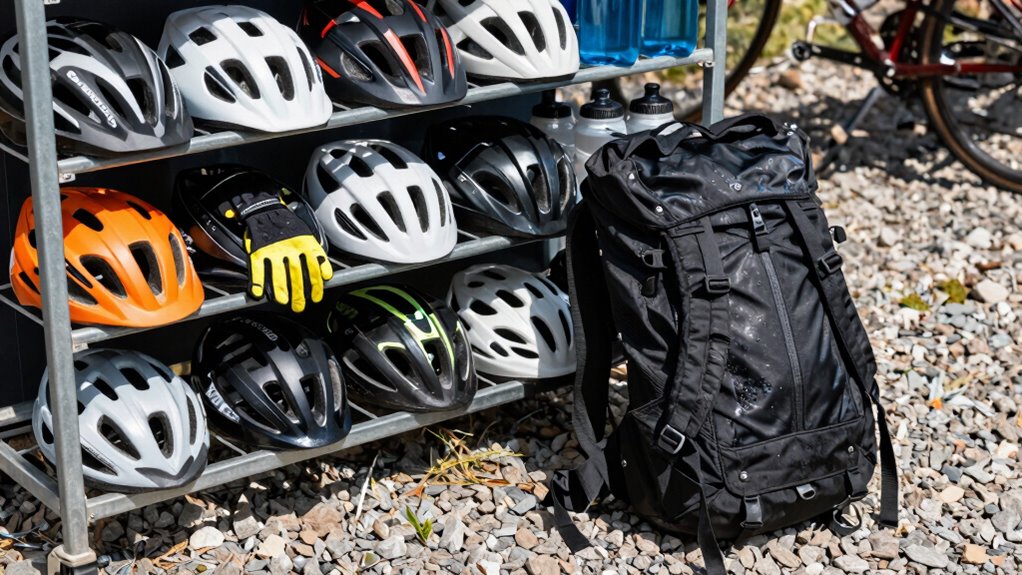
When choosing between a rack and a backpack for carrying your gear, understanding their differences can help you make the best decision. One of the most important factors to consider is weight distribution. A rack offers a stable platform that keeps your load outside your body, which can be advantageous for heavier or bulkier gear. With a rack, the weight is spread over your bike frame or vehicle, reducing the strain on your back and shoulders. This setup allows you to maintain better balance and control, especially during long rides or rough terrain. On the other hand, a backpack places the weight directly on your body, usually on your shoulders and back. This means your body bears the entire load, which can lead to fatigue faster, especially if the pack is heavy or improperly packed. Proper weight distribution in a backpack is vital; uneven or poorly packed gear can cause discomfort, muscle strain, or even long-term injury. That’s why many cyclists or hikers prefer racks when carrying heavier loads—they help keep your center of gravity lower and more centered, improving stability. Additionally, weight distribution plays a crucial role in overall comfort and safety during your trip. Security concerns are another key aspect that often gets overlooked. A rack-mounted cargo tends to be more secure because the gear is fixed to the frame, minimizing the risk of items falling off during movement. Many racks come with locking mechanisms or bungee cords to tighten and secure your load, giving you peace of mind during transit. Conversely, backpacks can be more vulnerable to theft or accidental loss, especially if not properly secured. If you’re in crowded areas or commuting through busy streets, a backpack might be easier for a thief to grab, unless you take extra precautions like using lockable zippers or anti-theft features. Additionally, backpacks can be a security concern in terms of personal safety; if you’re riding or walking in areas with high crime rates, a visible backpack might make you a target, whereas a rack-mounted load stays out of immediate sight. Ultimately, your choice depends on your specific needs and priorities. If you value better weight distribution and security, a rack might be your best bet. But if convenience, quick access, and mobility matter more, a backpack could serve you better. Consider the type of gear you carry, the length of your trips, and your comfort level with managing loads. Both options have their pros and cons, but understanding these core differences helps you make a smarter, safer choice for your adventures.
Frequently Asked Questions
How Do Rack and Backpack Choices Impact Long-Term Health?
Your choice between a rack and backpack impacts your long-term health by influencing ergonomic posture and musculoskeletal strain. Using a poorly fitted backpack can cause uneven weight distribution, leading to back, neck, and shoulder pain over time. A rack, if used correctly, promotes better posture and reduces strain. Being mindful of how you carry your gear helps prevent long-term injuries and keeps your body healthier in the long run.
Are There Specific Safety Concerns for Urban Commuting?
When urban commuting, safety concerns include helmet safety and visibility. Always wear a well-fitted helmet to protect your head, especially in busy areas. Make sure your backpack or rack setup doesn’t obstruct your view, so you stay aware of your surroundings. Use reflective gear and lights to increase visibility, and choose routes with well-lit streets. Staying alert and prepared helps you minimize risks and keeps your commute safe.
What Are the Environmental Impacts of Each Option?
Think of your commute as a tiny planet’s health check. Using a backpack often means fewer recyclable materials and a smaller carbon footprint, since it’s lightweight and eco-friendly. Racks, on the other hand, might involve more manufacturing and plastic parts, increasing environmental impact. By choosing a backpack, you actively reduce waste and emissions, making your daily ride a small but meaningful step toward a greener world.
How Do Rack and Backpack Options Vary for Different Weather Conditions?
You’ll find racks excel in different weather conditions by offering great storage flexibility and quick access during rain or snow. They’re sturdy and stable, which helps in wind or wet environments. Backpacks, however, adapt better to changing weather because they’re portable and protect your gear from rain with waterproof options. Overall, racks are better for consistent weather, while backpacks provide superior weather adaptability for varying conditions.
Can Combining Both Rack and Backpack Offer Better Safety and Comfort?
Combining both rack and backpack can improve safety and comfort by enhancing gear integration and weight distribution. Studies show that balanced weight reduces fatigue and injury risk by 30%. You’ll benefit from better stability, as the rack handles heavier items, while the backpack provides close-to-body support. This setup spreads weight evenly, minimizing strain on your back and shoulders, making your ride safer and more comfortable, especially on longer or uneven rides.
Conclusion
When choosing between a rack and a backpack, remember that over 60% of commuters report feeling more comfortable with a backpack, thanks to better weight distribution. While racks offer easy access and cargo capacity, they can compromise safety and balance, especially in traffic. Ultimately, weigh your needs for comfort, safety, and convenience. Consider how often you carry heavy loads—making the right choice can keep you safer and more comfortable on every ride.
Evergreen bestsellers Picks
bestsellers
As an affiliate, we earn on qualifying purchases.