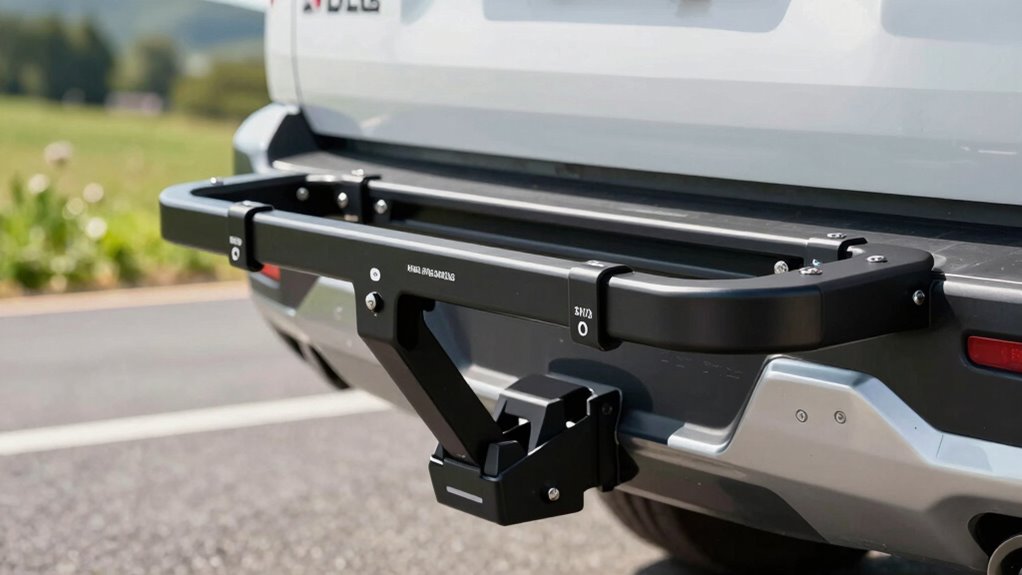
Hitch rack ratings show the maximum weight the rack can safely support, usually listed as a number like 100 lbs or more. This number helps you avoid overloading and ensures your bikes stay secure during transit. It’s important to match this capacity with your heaviest bike or gear, so everything remains safe and balanced. Knowing these ratings can prevent accidents and damage, and if you keep exploring, you’ll learn how to choose the right rack for your needs.
Key Takeaways
- Hitch rack ratings indicate the maximum weight capacity, ensuring safe loads and preventing rack failure or vehicle damage.
- The numbers reflect the maximum load the rack can handle, often based on material strength and construction quality.
- Matching the rack’s weight limit to your heaviest bike or load is essential for safety and durability.
- Exceeding rated capacities increases risk of rust, wear, and potential accidents, compromising safety during trips.
- Choosing a rack with appropriate ratings and high-quality materials ensures longevity, reliable performance, and peace of mind.
Choosing the right hitch rack can make all the difference in how easily and securely you transport your bikes or cargo. When evaluating options, the numbers and ratings associated with each rack are key to understanding its safety and performance. One of the most important factors to consider is bike rack durability. A sturdy rack is built to withstand the elements and the rigors of travel, ensuring your bikes stay secure from start to finish. Durability isn’t just about the materials used; it also involves how well the rack is constructed and its resistance to rust and wear over time. A durable rack gives you peace of mind, knowing it won’t fail during a long trip or under heavy loads.
Choosing a durable hitch rack ensures safe, secure transport and peace of mind on every trip.
Another critical aspect is understanding the weight capacity guidelines. Every hitch rack comes with specific weight limits, which dictate how much weight it can safely carry. Exceeding these limits can compromise the rack’s integrity, increasing the risk of accidents or damage to your bikes and vehicle. When selecting a rack, you need to match its weight capacity to the heaviest bike you plan to transport. For instance, if your heaviest bike weighs 50 pounds, the rack should comfortably support at least that weight. This ensures the rack can handle the load without straining or breaking.
The numbers on a hitch rack aren’t just arbitrary; they’re there to guide you in making a safe choice. Many racks come with a maximum weight capacity that’s clearly marked, often ranging from 50 to 150 pounds or more. It’s essential to follow these guidelines carefully. Not only does this protect your gear, but it also prolongs the life of the rack itself. Remember, the hitch receiver on your vehicle also has weight limits, so you need to consider both the rack and vehicle ratings to avoid overloading.
Additionally, material quality plays a significant role in the longevity and safety of a hitch rack, as high-quality materials ensure better resistance to corrosion and wear. Paying close attention to both the durability features and the weight capacity ratings is crucial. A higher capacity rack made with quality materials will typically last longer and support more weight, giving you flexibility in what you can transport. Conversely, a rack with lower durability or insufficient capacity could lead to mishaps, risking damage to your bikes, vehicle, or even causing accidents. Ultimately, understanding these numbers empowers you to choose a hitch rack that is both safe and reliable, making every trip smoother and worry-free.
Frequently Asked Questions
How Often Should I Check My Hitch Rack for Wear?
You should check your hitch rack for wear regularly, ideally before each use. Incorporate a maintenance checklist to inspect for rust, cracks, or loose parts, ensuring proper installation every time. If you notice any damage or signs of wear, it is crucial to address them immediately before riding. Regular inspections help maintain safety and prolong your rack’s lifespan, so make it a habit to review these aspects at least once a month or after heavy use.
Can Hitch Rack Ratings Vary Between Brands?
Yes, hitch rack ratings can vary between brands, and that’s where brand reputation and manufacturing standards come into play. Some brands prioritize quality control, ensuring their ratings are accurate and reliable, while others may cut corners. So, you should always research a brand’s reputation and check their manufacturing standards. Don’t assume all ratings are equal — a trusted brand offers peace of mind, making sure your gear stays safe on every trip.
Are There Differences in Ratings for Different Bike Types?
Yes, there are differences in ratings for different bike types. You need to take into account bike type considerations because some racks are designed for specific bikes, like road, mountain, or fat bikes. Rack compatibility varies based on frame size, weight, and wheel dimensions. Always check the hitch rack’s rated capacity and compatibility to ensure it safely holds your bike type, preventing damage or accidents during transport.
What Environmental Factors Affect Hitch Rack Safety?
Think of your hitch rack as a ship steering through rough seas. Weather impact, like rain or snow, can weaken its structure over time, especially if it’s exposed often. Corrosion concerns arise from moisture and salt, which can compromise the rack’s safety. To keep your gear secure, regularly check for rust, and consider weather-resistant coatings. Staying vigilant helps guarantee your rack remains dependable, no matter how harsh the environment gets.
How Do I Upgrade My Hitch Rack for Heavier Loads?
To upgrade your hitch rack for heavier loads, first check its compatibility with higher weight capacities. You might need a heavier-duty hitch receiver or a reinforced rack. Guarantee proper weight distribution by balancing your load evenly across the rack, which helps prevent sway and maintains stability. Consider adding additional straps or tie-downs for extra security, and always follow the manufacturer’s guidelines to keep your gear safe and secure during transportation.
Conclusion
Now that you understand hitch rack ratings, you’re armed with the knowledge to make smart, safe choices. Think of these numbers as your bike’s shield—protecting it on every adventure. Don’t let confusion steer you wrong; instead, let these ratings be your guiding star. When you pick the right rack, you’re not just securing your bike—you’re safeguarding your journey. So, gear up, choose wisely, and ride confidently into every new trail that awaits!