To safely load a heavy e-bike alone, make certain your ramp is sturdy and secured to prevent slipping. Approach with a straight back, engage your core, and use your legs to push or ride the bike slowly up the ramp, avoiding back strain. Keep the bike balanced and fixed with straps once on the vehicle. Mastering this technique reduces injury risk and makes the process easier—continue to learn how to perfect your ramp method and protect your back.
Key Takeaways
- Secure the ramp firmly and double-check stability before beginning to load the e-bike.
- Approach the ramp with a straight back, engaging your core and using leg muscles to push the bike up.
- Remove loose accessories and wear gloves to maintain grip and prevent snagging during loading.
- Use a bike stand or helper if the e-bike is very heavy to reduce strain and improve control.
- Secure the e-bike at multiple points inside the vehicle to prevent shifting and ensure safe transit.
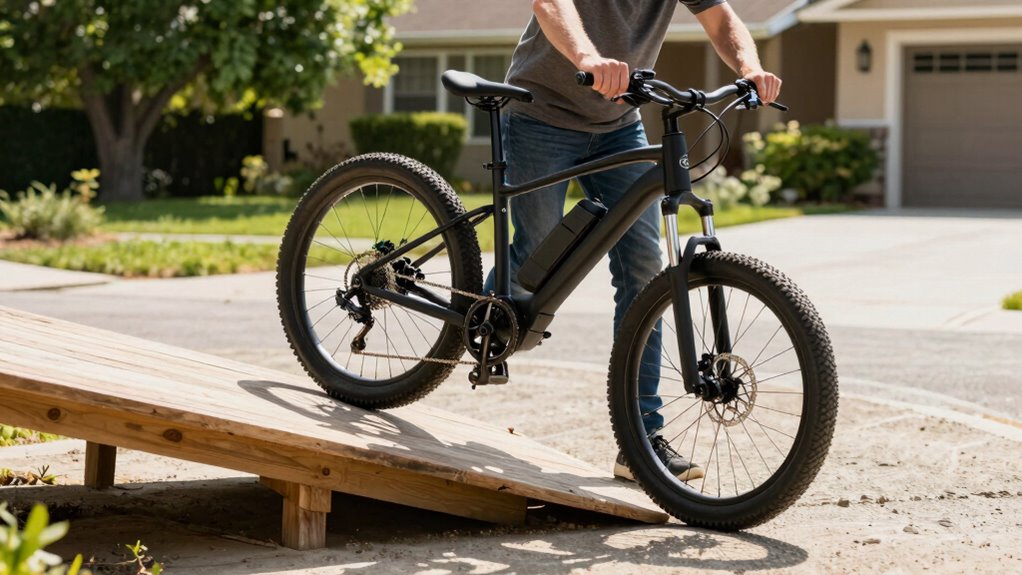
Loading a heavy e-bike alone can be challenging, but with the right technique and preparation, you can do it safely and efficiently. The key is to use proper tools and strategies to protect yourself and guarantee your bike stays secure during transit. One of the most effective methods involves the ramp technique, which minimizes strain and reduces the risk of injury. Before you start, it’s vital to have the right bike accessories, such as a sturdy ramp, straps, and possibly a bike stand to stabilize the bike during loading. These accessories not only make the process easier but also enhance transportation safety, giving you peace of mind that your bike won’t shift or fall during the trip.
To begin, position your ramp securely on the tailgate or truck bed, making sure it’s stable and won’t slip when you step on it. Many ramps come with anti-slip features or can be secured with straps or clamps, which is essential for safety. Before loading, double-check that your bike is turned off, and remove any loose accessories that could catch on the ramp or get damaged during loading. Wearing gloves can improve your grip and protect your hands, especially when handling heavy parts or straps.
Secure your ramp and double-check your bike is off before loading for safe, smooth transport.
Approach the ramp with your e-bike, keeping your back straight and engaging your core. Use your legs to push, rather than your back, as you lift and tilt the bike onto the ramp. If your e-bike is particularly heavy, consider using a bike stand to hold the bike steady or enlist a helper if possible. Once at the base of the ramp, slowly push or ride your bike up, keeping it centered and balanced. If you’re using straps, secure the bike at multiple points once it’s on the vehicle to prevent any movement during transit. This step is vital for transportation safety, as loose bikes can cause accidents or damage.
When loading solo, take your time and focus on maintaining good posture to avoid injury. Use your legs to lift, and avoid twisting your torso. Properly securing your bike with the right accessories guarantees not only your safety but also that your e-bike remains protected during transport. Additionally, understanding the safety precautions involved can further reduce risks during the loading process. With practice, the ramp technique becomes quicker and more intuitive, making solo loading a manageable task that keeps your back safe and your bike secure.
Frequently Asked Questions
What Safety Gear Should I Wear During Loading?
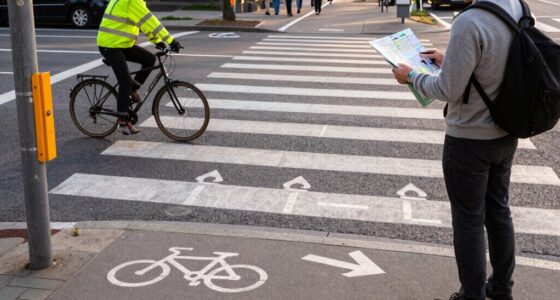
You should wear protective gloves to prevent hand injuries and improve grip during loading. A reflective vest is essential for visibility, especially if you’re loading your e-bike near traffic or in low-light conditions. These safety gear pieces help protect you from potential hazards and guarantee others see you clearly. Always prioritize your safety by wearing the right gear, making the process safer and more comfortable.
How Do I Prevent the Bike From Slipping?
To prevent your bike from slipping, guarantee you have a secure ramp grip by choosing a non-slip surface or adding grip tape to the ramp. Keep the ramp firmly in place, and hold the bike steady as you load it. You can also use straps or clamps for extra slip prevention, especially on smooth or inclined surfaces. Staying alert and maintaining control keeps both you and your bike safe during the process.
Can I Use the Ramp on Uneven Surfaces?
You can use the ramp on uneven surfaces, but it’s like trying to walk a tightrope over a mountain—dangerous and tricky. Make certain the ramp material is slip-resistant, especially on rough or uneven surfaces, and check surface compatibility before setting up. Use sturdy, non-slip pads if needed, and stabilize the ramp firmly to prevent shifting. Always prioritize safety, and consider leveling the ground or choosing a smoother spot for safer loading.
What Is the Maximum Weight the Ramp Can Handle?
The maximum weight your ramp can handle depends on its weight capacity, typically ranging from 150 to 600 pounds. Always check the manufacturer’s specifications to guarantee safety. Consider the material durability; sturdy aluminum or reinforced steel ramps generally support heavier loads. Never exceed the recommended weight capacity, as doing so risks damage or failure, which could cause injury when loading your e-bike. Always prioritize safety and proper usage.
How Do I Store the Ramp When Not in Use?
Think of your ramp like a trusty sidekick—ready when you need it, tucked away when you don’t. When not in use, store your portable ramp options in a garage, shed, or closet—some even fold for easy storage. Use hooks, wall mounts, or storage bins to keep it organized and protected. This keeps your storage solutions simple and makes certain your ramp is always prepared for your next adventure.
Conclusion
With the ramp technique, you become the captain steering your heavy e-bike onto the deck of your vehicle, smoothly and safely. No longer do you battle the beast alone or risk injury—you’re in control, gliding up the ramp like a ship sailing into port. This simple trick turns a formidable task into a confident voyage, making loading your e-bike feel less like a chore and more like mastering a skill. Now, you’re ready to conquer any journey ahead.