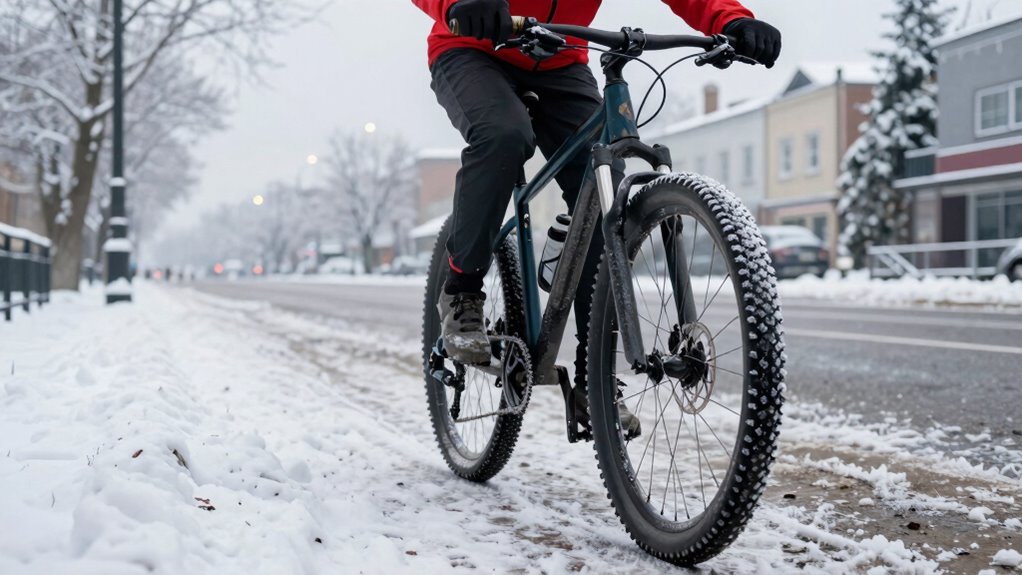

When winter commutes hit icy or snowy roads, upgrading to quality winter tires matters more than speed. These tires are designed to stay flexible in cold weather and feature deeper treads to improve grip on slippery surfaces. They give you better control, shorter braking distances, and increased safety, even in hazardous conditions. Prioritizing the right tires can make your drive safer and less stressful – and there’s more you can do to prepare as conditions change.

Get bike and ride gear delivered free with Prime
- Fast, free delivery on millions of items
- Prime Video, Amazon Music and more included
- Member-only deals all year
Key Takeaways
- Winter tires provide superior traction on snow and ice, reducing slip and slide risks during winter commutes.
- Upgrading to winter tires improves braking and steering response more effectively than simply increasing speed.
- Properly maintained winter tires enhance vehicle control and safety in unpredictable winter road conditions.
- Investing in quality winter tires minimizes accident risks better than relying on speed alone.
- The right winter tires help ensure a smoother, safer drive, making them more crucial than speed for winter safety.

Have you ever wondered how winter weather transforms your daily commute? When snow blankets the roads and temperatures drop, your usual drive suddenly becomes more unpredictable. That’s where the right winter gear, especially your tires, makes all the difference. Your tires are your direct link to the road, and during winter, they need to grip those changing road conditions to keep you safe and moving efficiently. Switching to specialized winter tires isn’t just a good idea; it’s essential. These tires are designed with rubber compounds that stay flexible in cold temperatures, providing better traction on snow and ice. They also feature deeper treads and unique patterns that help channel slush and snow away from the contact patch, giving you better control. Without the proper winter gear, you’re risking slipping, sliding, and longer, more stressful commutes.
Understanding the impact of road conditions is key. When the roads are icy or covered in snow, regular tires quickly lose their grip, making it difficult to accelerate, brake, or turn safely. You might think that driving carefully in a higher gear is enough, but the real game-changer is having tires suited for winter’s challenges. Winter tires are specifically engineered to handle these extreme conditions, offering increased safety and confidence. They cut through snow and ice better than all-season tires, giving you more control in hazardous situations. When roads are slick, having winter gear on your vehicle can mean the difference between arriving on time and being stuck in a ditch. Plus, by upgrading your tires, you reduce the risk of accidents caused by sudden loss of traction.
It’s also worth noting that your choice of winter gear impacts your overall driving experience. Good winter tires can improve braking distances, making stop-and-go traffic during snowstorms less stressful. They also help maintain steering response, which is essential when navigating icy curves or busy intersections. Investing in quality winter tires and ensuring they’re properly inflated and maintained can make your commute smoother, safer, and less anxiety-inducing. Remember, winter weather is unpredictable, and road conditions can change rapidly. Being aware of tire performance and how it relates to your vehicle’s handling can help you better prepare for winter driving challenges. Having the right tires means you’re prepared for whatever the road throws at you. So, don’t underestimate the importance of your winter gear—your tires—this season. They truly matter more than speed when it comes to staying safe and confident during your winter commute.
Frequently Asked Questions
How Do I Choose the Best Winter Tires for My Vehicle?
To choose the best winter tires, you should focus on tire tread depth and sidewall strength. Look for tires with deep treads to improve grip on snow and ice, and verify the sidewalls are sturdy to handle colder temperatures and rough conditions. You also want tires made from rubber compounds designed for winter. Comparing these features helps you select tires that keep you safe and confident during winter commutes.
When Is the Ideal Time to Switch to Winter Tires?
You should switch to winter tires before the first snow hits, even if the weather’s still mild. Don’t wait until your tire tread depth thins down or your vehicle’s weight distribution feels off during icy mornings. Proactively changing your tires guarantees better grip and safety, rather than risking slipping because you ignored those early warning signs. Better to be safe and warm than sorry when winter’s unpredictable grip is at play.
Can I Use All-Season Tires in Winter Conditions?
You can technically use all-season tires in winter, but they aren’t ideal. All-season tires offer decent tire durability and some traction, but they lack the specialized rubber compounds and tread patterns designed for cold, snowy conditions. This affects fuel efficiency and safety. For the best winter performance, especially in snow and ice, switching to dedicated winter tires is recommended, ensuring better grip, durability, and peak fuel efficiency during harsh conditions.
How Often Should I Check Tire Pressure During Winter?
Think of your tire pressure like a ship’s compass—constant checks keep you on course. During winter, you should check your tire pressure at least once a month and before long trips. Use tire pressure monitoring to stay alert, as cold weather causes pressure drops. Regular seasonal tire maintenance guarantees your tires perform well, providing better traction and safety on icy roads. Stay vigilant and keep your tires properly inflated.
Are Snow Chains Necessary With Winter Tires?
Snow chains aren’t always necessary with winter tires, but they can be a game-changer in severe conditions. The snow chain benefits include improved traction and safety on icy or snowy roads, especially where winter tire regulations mandate their use. If you’re facing steep hills, deep snow, or icy patches, carrying snow chains guarantees you’re prepared. Always check local winter tire regulations to stay compliant and prioritize your safety during tough winter drives.
Conclusion
When winter arrives, swapping your tires isn’t just an upgrade—it’s your best defense against slipping and sliding. Think of your tires as the shoes for your car; the right pair keeps you steady on icy sidewalks. By choosing quality winter tires, you’re planting a sturdy anchor in a sea of unpredictable conditions. Don’t let the cold catch you off guard—equip your vehicle wisely, and enjoy a safer, smoother ride through winter’s icy embrace.
Fall Picks
fall essentials
As an affiliate, we earn on qualifying purchases.