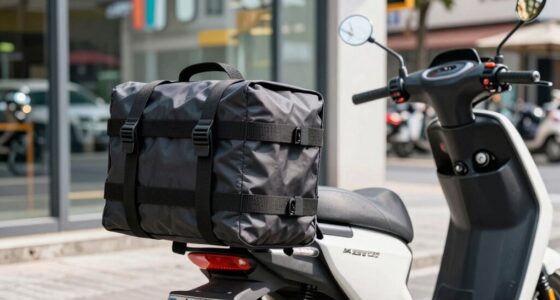
To learn your new scooter’s controls safely, start by thoroughly inspecting the scooter for damage and familiarizing yourself with every button, switch, and lever using the user manual. Wear proper safety gear and practice in a designated, safe area. Focus on smooth starts, stops, and turns, building confidence gradually. Keep alert, and don’t rush your progress. As you continue, you’ll discover essential tips to master your scooter comfortably and confidently.

Get bike and ride gear delivered free with Prime
- Fast, free delivery on millions of items
- Prime Video, Amazon Music and more included
- Member-only deals all year
Key Takeaways
- Read the user manual thoroughly to understand all controls before riding.
- Wear appropriate safety gear, including helmet, gloves, and pads, for protection during practice.
- Practice in a safe, designated area focusing on basic skills like starting, stopping, and turning.
- Progress gradually, increasing speed and complexity only once confident with initial maneuvers.
- Have an experienced rider or instructor provide guidance and feedback throughout your learning process.
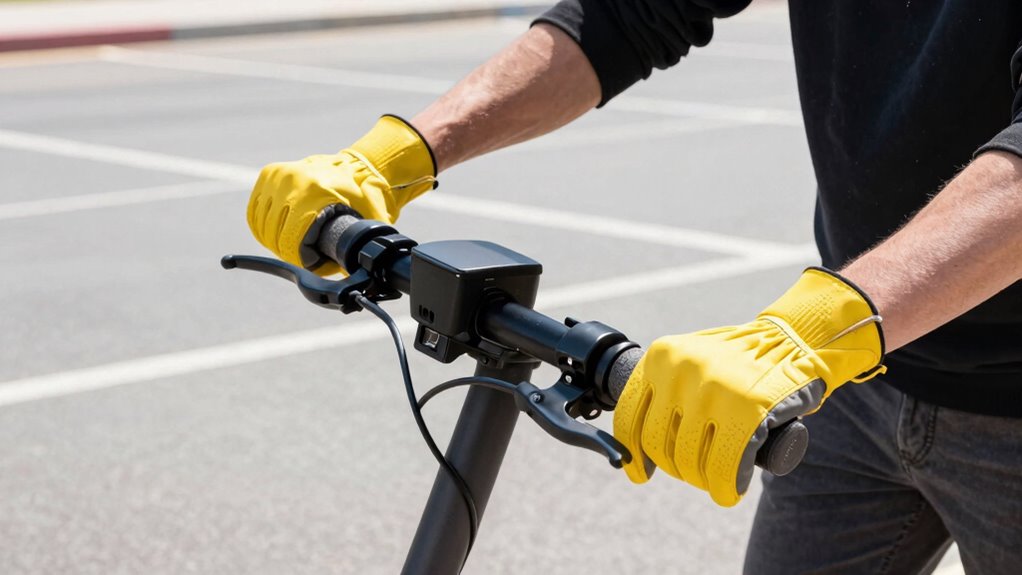
Learning to operate a new scooter safely starts with understanding its controls thoroughly. Before hopping on, take the time to read the user manual and familiarize yourself with every button, lever, and switch. Knowing what each control does helps you respond quickly and confidently when riding. Start by inspecting the scooter for any damage or loose parts, making sure everything is in proper working order. Once you feel comfortable with the controls, equip yourself with the right protective gear, including a helmet, gloves, knee pads, and elbow pads. Safety gear isn’t just recommended—it’s essential to protect yourself from potential injuries, especially when you’re still learning.
Master scooter controls, inspect for safety, and always wear protective gear before riding.
Next, find a safe, designated practice area that’s free of traffic and pedestrians. A quiet parking lot or an empty driveway is ideal for your initial sessions. These controlled environments allow you to focus solely on mastering the controls without distractions or hazards. Begin by practicing basic maneuvers like starting, stopping, and turning at slow speeds. Keep your movements smooth and deliberate, paying attention to how the throttle responds and how to brake effectively. As you become more comfortable, gradually increase your speed and practice more complex actions, such as steering around obstacles or making tight turns. Developing a good understanding of electric scooter controls will make these maneuvers easier and safer.
Throughout your practice, always stay alert and cautious. Remember that your confidence builds as your familiarity with the scooter’s controls increases. Don’t rush this process—taking the time to master the basics ensures safer riding later on. It’s helpful to have an experienced rider or instructor nearby who can give you feedback and guidance, especially during your first few sessions. They can spot any mistakes or unsafe habits early, helping you correct them before they become ingrained. Developing muscle memory through consistent practice is key to safe riding. Additionally, understanding safety precautions related to electric scooter riding can prevent many common accidents and injuries. Incorporating proper riding techniques also contributes significantly to your overall safety and confidence.
Persistently practicing in your designated area reinforces muscle memory and builds your confidence. As you gain skill and comfort, you can gradually move to more challenging environments. However, never neglect safety precautions—always wear your protective gear, observe traffic laws, and avoid risky maneuvers until you’re fully confident in your abilities. Learning the controls isn’t just about knowing what they are; it’s about integrating that knowledge into your riding routine safely and responsibly. With patience, practice, and the right safety measures, you’ll soon find yourself riding smoothly and confidently on your new scooter.
electric scooter safety gear set
As an affiliate, we earn on qualifying purchases.
As an affiliate, we earn on qualifying purchases.
Frequently Asked Questions
Can I Learn Scooter Controls Without Supervision?
You should avoid learning scooter controls without supervision because it increases risks. Start with a thorough risk assessment and practice in safe, controlled environments. Supervision helps you identify mistakes early and guides your skill progression. As you become more confident, gradually practice independently, but always prioritize safety. This approach minimizes accidents and builds your skills responsibly, ensuring you learn scooter controls effectively and safely.
How Long Does It Take to Master Scooter Controls?
It typically takes a few hours to a few days to master scooter controls, depending on your experience and comfort level. As you practice, focus on proper riding techniques and scooter maintenance to improve control and safety. Consistent practice helps you build confidence, and paying attention to details like throttle control and braking guarantees smoother rides. Keep practicing regularly, and you’ll become more skilled and comfortable riding your scooter efficiently.
Are There Any Age Restrictions for Learning Scooter Controls?
Yes, there are age restrictions for learning scooter controls. Typically, learner eligibility requires riders to be at least 12 or 14 years old, depending on local laws and regulations. These age restrictions exist to guarantee safety and proper understanding of scooter handling. If you’re under the minimum age, you might need parental permission or supervision. Always check your area’s specific rules to make sure you’re eligible to learn and ride safely.
What Safety Gear Is Essential During Practice?
Imagine you’re armor-clad knight preparing for battle—that’s how essential safety gear is during practice. You should always wear protective clothing like a helmet, knee and elbow pads, and sturdy shoes. Safety accessories, such as reflective vests and gloves, boost visibility and control. These items protect you from falls and accidents, making your learning experience safer and more confident. Always gear up before hitting the scooter—it’s your best defense.
How Do Weather Conditions Affect Learning Scooter Controls?
Weather conditions greatly impact your learning process. Weather hazards like rain, snow, or strong winds make scooter controls harder to master because of slippery surfaces and reduced visibility. Temperature impact also matters; extreme cold can stiffen your joints and affect scooter responsiveness, while heat can cause discomfort and fatigue. Always check the weather forecast, avoid riding in hazardous conditions, and wait for safer weather to guarantee a smooth, safe learning experience.
learning scooter controls beginner kit
As an affiliate, we earn on qualifying purchases.
As an affiliate, we earn on qualifying purchases.
Conclusion
Remember, taking the time to familiarize yourself with your scooter’s controls can markedly reduce the risk of accidents. Did you know that new riders are 50% more likely to experience a mishap if they skip proper training? By practicing in a safe environment and gradually increasing your confidence, you’ll enjoy smoother rides and stay safe on the road. So, stay cautious, be patient, and ride smart—your safety depends on it.
As an affiliate, we earn on qualifying purchases.
electric scooter beginner training wheels
As an affiliate, we earn on qualifying purchases.
As an affiliate, we earn on qualifying purchases.
Halloween Picks
halloween
As an affiliate, we earn on qualifying purchases.