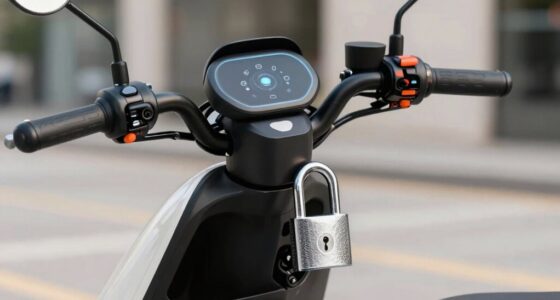
Before every ride, spend about 10 minutes checking your scooter’s safety features. Make sure your helmet fits snugly and straps are secure. Check tire pressure with a gauge and look for any damage. Test your brakes and signals for responsiveness, and inspect for loose parts or leaks. Also, review your route and safety gear to boost confidence and reduce risks. Continuing with these simple steps helps guarantee a smooth, safe ride every time.

Get bike and ride gear delivered free with Prime
- Fast, free delivery on millions of items
- Prime Video, Amazon Music and more included
- Member-only deals all year
Key Takeaways
- Inspect the helmet for a snug fit and secure straps to prevent head injuries.
- Check tire pressure with a gauge and look for visible damage to ensure stability.
- Squeeze brake levers and test lights/signals for proper functionality before riding.
- Look for loose bolts, leaks, or damage to scooter components to avoid malfunctions.
- Review navigation plans and choose safe routes to enhance safety and confidence.
Before hitting the road on your scooter, taking just 10 minutes to perform a quick safety check can make all the difference. It’s a simple step that guarantees you’re prepared and reduces the risk of accidents. Start by inspecting your helmet fit—this is vital for your safety. Your helmet should sit snugly on your head, with the straps securely fastened and no excessive movement. If it feels loose or shifts easily, it won’t provide proper protection in a fall. Adjust the straps so they’re tight enough to keep the helmet in place without causing discomfort. Remember, a well-fitted helmet is your best defense against head injuries, so don’t overlook this step.
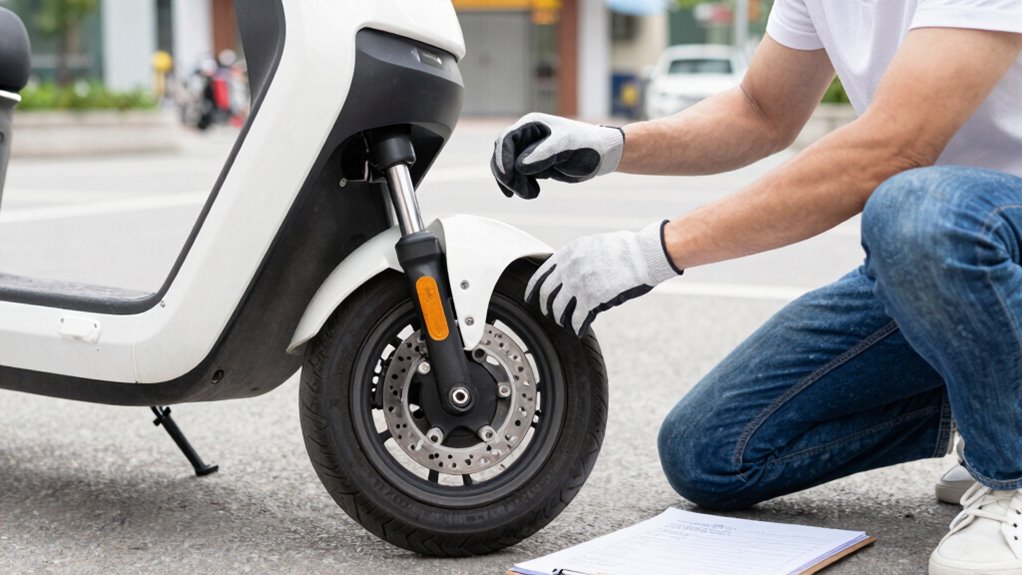
Next, check the tire pressure. Properly inflated tires are essential for safe riding—they improve stability, handling, and braking. Use a portable tire pressure gauge to quickly verify that your tires are within the recommended PSI range, usually marked on the sidewall. If they’re underinflated, add air until they hit the right pressure. Overinflated tires can be just as dangerous, reducing grip and increasing the risk of a blowout. Make sure to inspect the tires for any visible damage, such as cuts or embedded debris, which can compromise safety. Proper tire pressure isn’t just about performance; it’s about preventing flats and maintaining control. Additionally, familiarize yourself with navigation and mapping features or tools that can help you plan safer routes and avoid hazards during your ride.
While you’re at it, take a quick look at your brakes. Squeeze the brake levers to see if they feel responsive and check that the brake pads aren’t worn down too thin. If you notice any squeaking or reduced braking power, it’s time for maintenance. Also, ensure that your lights and signals are working—both front and rear—so you’re visible to others and can signal your intentions clearly. Confirm that your mirrors are properly adjusted, giving you a clear view of traffic behind you.
Finally, give your scooter a quick overall visual inspection. Check for loose bolts, leaks, or any parts that seem out of place. Make sure your battery or power source is adequately charged if applicable. With these simple checks, you’re not just riding; you’re riding smart. These few minutes can prevent mishaps, boost confidence, and keep your rides safe and enjoyable. Remember, a well-prepared scooter combined with a properly fitted helmet and correct tire pressure makes every trip safer, smoother, and more fun.
Popular right now

LG StanbyME 2 Max 32-Inch 4K Portable Smart Touchscreen TV

LG 55-Inch QNED73B Mini LED 4K Smart TV (2026)

Dyson V12 Detect Slim Absolute Cordless Stick Vacuum
As an affiliate, we earn on qualifying purchases.
Frequently Asked Questions
How Often Should I Perform a Full Scooter Maintenance Check?
You should perform a full scooter maintenance check at least once a month to guarantee safety and reliability. Incorporate routine maintenance into your schedule, inspecting brakes, tires, lights, and fluid levels. Regular checks help you stay prepared for emergencies and keep your scooter in top condition. If you notice any issues or after long rides, do a quick inspection. Staying proactive minimizes risks and ensures smooth, safe rides every time.
Are There Specific Safety Gear Recommendations to Follow During the Check?
Think of your safety gear as your armor before a battle. You should wear a helmet, gloves, and reflective clothing for protection and visibility. Check that your protective gear fits properly and is in good condition. Also, make certain your visibility accessories like lights and reflectors are working and clean. These steps help you stay safe and visible, just like a knight prepared for any challenge on the road.
Can I Perform the Safety Check on Any Type of Scooter?
Yes, you can perform the safety check on any type of scooter, but keep in mind universal safety procedures and scooter compatibility. Always inspect brakes, tires, lights, and the deck for damage. Different scooters may have unique features, so adapt your check accordingly. Ensuring compatibility with your model helps prevent accidents and keeps you safe during each ride. Regularly performing these checks is essential regardless of the scooter type.
What Should I Do if I Find a Mechanical Issue During the Check?
If you find a mechanical issue during your safety check, stop riding immediately. Don’t attempt mechanical repairs yourself unless you’re trained; instead, follow troubleshooting tips to identify the problem and report it to the maintenance team. They’ll handle mechanical repairs properly. Always prioritize safety and make certain the scooter is fully functional before riding again to prevent accidents or further damage. Your quick action keeps you safe and the scooter in top shape.
Is There a Recommended Checklist for After the Safety Check?
Did you know that riders who perform a post-ride inspection are 30% less likely to experience accidents? After every ride, use a checklist to confirm brakes, tires, lights, and signals are in good condition. Record these findings in your daily safety journal to track issues over time. This habit guarantees your scooter stays safe and reliable, helping you spot potential problems early and ride with confidence every day.
Conclusion
Taking just 10 minutes to do a safety check keeps your scooter’s health in top shape and your rides smooth as butter. Think of it as your daily shield, guarding you against surprises on the road. A quick glance over brakes, tires, and lights is like tuning a guitar — it guarantees everything’s in harmony. So, make this routine your daily ritual; it’s the small step that keeps your adventures safe and sound, riding on confidence.