To protect your privacy with a connected e-bike, start by disabling GPS when you don’t need it to prevent unwanted tracking. Check your device and app settings to enable encryption and limit permissions that share your personal data. Review privacy options to control what information is shared or anonymized. Regularly update your firmware and apps to keep security features current. Want to learn more ways to safeguard your ride? Keep going for essential tips to manage your e-bike privacy effectively.
Key Takeaways
- Disable GPS tracking when not needed to prevent unwanted location sharing.
- Enable encryption settings and keep firmware updated to secure data transmission.
- Review and limit app permissions to restrict access to personal information.
- Adjust privacy controls within device settings to manage data sharing and anonymize ride data.
- Regularly check for security updates and disable unnecessary features to enhance privacy.
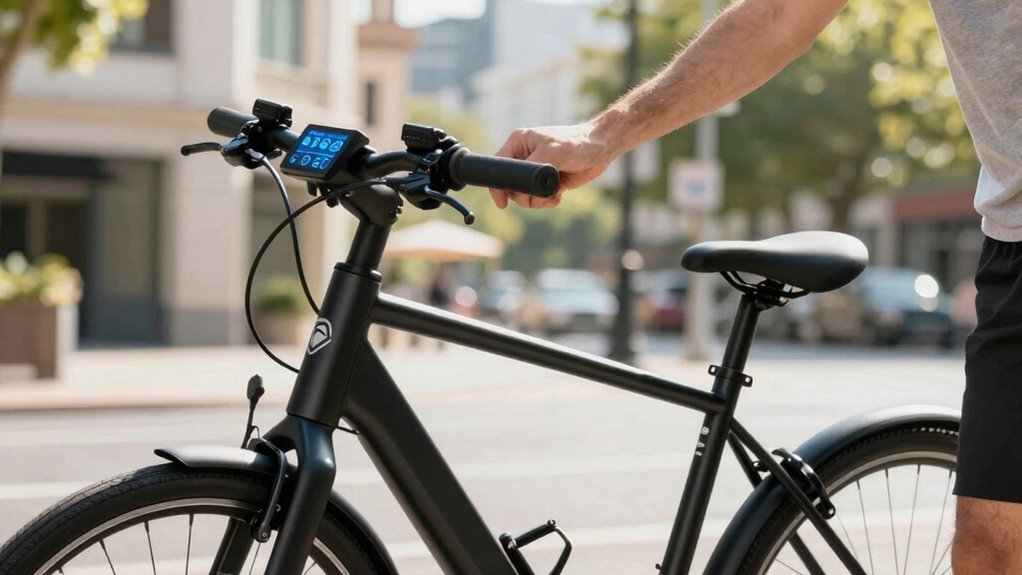
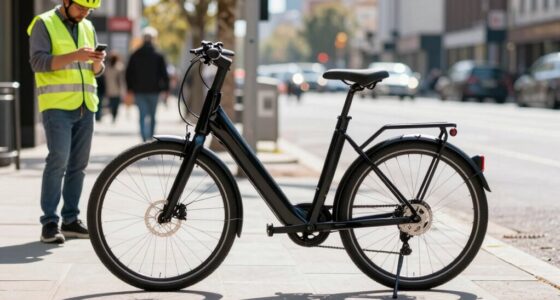
Have you ever contemplated what personal data your connected e-bike collects as you ride? Many e-bikes today come equipped with smart features like GPS tracking that monitor your location in real time, often for navigation, theft prevention, or ride analytics. While these features add convenience, they also raise important privacy concerns. By default, your e-bike might be transmitting your location data to manufacturers or third parties, which could be accessed without your knowledge. To protect your privacy, you should review the device’s settings and disable GPS tracking if you don’t need it constantly active. Turning off GPS when it’s unnecessary limits the amount of location data your e-bike shares, reducing the risk of unwanted tracking or data leaks.
Review your e-bike’s settings and disable GPS to protect your privacy and prevent unwanted data sharing.
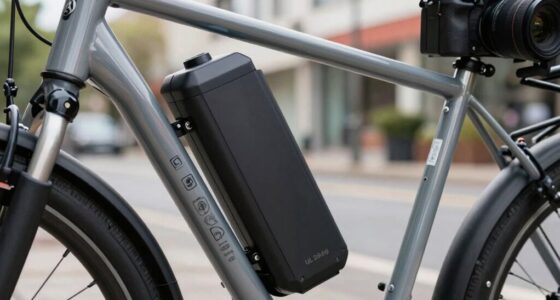
Data encryption is another critical aspect to think about. Many connected e-bikes use encryption protocols to secure data transmission between your bike and the app or cloud services. However, not all devices have robust encryption, leaving your information vulnerable to interception by malicious actors. It’s essential to check whether your e-bike manufacturer uses strong, up-to-date encryption standards. If you have the option, enable any available encryption settings or opt for firmware updates that improve security. Using encrypted communication ensures that even if data is intercepted, it remains unreadable and protected from unauthorized access.
Beyond GPS tracking and data encryption, it’s wise to scrutinize what other personal information your e-bike might collect. Some devices gather riding patterns, biometric data, or usage habits that could be sold or shared with third parties. Always review privacy policies and permissions before connecting your bike to any app or online service. Limit app permissions to only what’s necessary, and consider not sharing your personal details unless absolutely required. It’s also advisable to keep your e-bike’s firmware and associated apps updated, as manufacturers frequently release security patches to address vulnerabilities.
In addition, you should explore the privacy settings within the app or device interface. Many manufacturers provide options to control data sharing, anonymize your ride data, or even opt out of certain tracking features. Taking these steps empowers you to maintain greater control over your personal information. Additionally, understanding the role of color accuracy in home cinema projectors can help ensure that your viewing experience remains vivid and true to life. Remember, a connected e-bike can be a helpful tool, but it shouldn’t compromise your privacy. By actively managing GPS tracking, ensuring data encryption, and adjusting privacy settings, you can enjoy your rides with peace of mind, knowing your personal data is better protected from unwanted intrusion.
Frequently Asked Questions
Can My E-Bike’s Location Be Tracked Without My Knowledge?
Yes, your e-bike’s location can be tracked without your knowledge through bike tracking features. Many connected e-bikes share location data with manufacturers or third parties, posing privacy risks. To protect yourself, review your bike’s privacy settings, disable tracking if possible, and stay informed about data sharing policies. Taking these steps helps prevent unauthorized tracking and keeps your riding habits private.
Are Connected E-Bikes Vulnerable to Hacking?
Like a house with unlatched doors, connected e-bikes can be vulnerable to hacking if you don’t take precautions. Ensuring your E bike firmware updates are recent and secure strengthens defenses. Pay close attention to Bluetooth security, as weak connections can be exploited by hackers. Regularly updating firmware and using strong, unique passwords help keep your e-bike safe from cyber threats, so you can ride with peace of mind.
How Can I Disable Data Sharing Features on My E-Bike?
You can disable data sharing on your e-bike by turning off Bluetooth in the settings menu. First, check for firmware updates that might improve privacy controls. Then, access your bike’s Bluetooth settings and toggle it off to prevent it from transmitting data. Regularly review and update these settings, especially after firmware updates, to make certain your personal information stays private and your e-bike remains secure.
What Personal Information Is Collected by Connected E-Bikes?
Connected e-bikes collect personal information like your location, riding habits, and device details. They often use data encryption to protect your info, but it’s essential you give user consent before sharing data. Be aware of what’s collected, and review privacy settings to control your information. Disabling data sharing features and adjusting privacy options help make sure your personal data remains private and secure during your rides.
Is There a Way to Monitor Who Accesses My E-Bike Data?
Sure, you can monitor who accesses your e-bike data—if you enjoy feeling like the security guard of your own privacy. Enable data encryption and user authentication to track access attempts, giving you a clear view of every login. While it’s not foolproof, these settings act like digital gatekeepers, helping you spot unauthorized access and keeping your riding secrets safe from prying eyes.
Conclusion
Protect your privacy by personalizing your e-bike’s settings today. Don’t delay—disable data sharing, tighten tracking, and take control of what’s visible. By doing so, you’ll safeguard your security, silence snoopers, and stay simple with your sensitive information. Remember, a few quick tweaks can make a big difference, so stay savvy, stay secure, and keep your connected e-bike’s privacy in your hands. Stay safe, stay smart, and pedal peacefully!