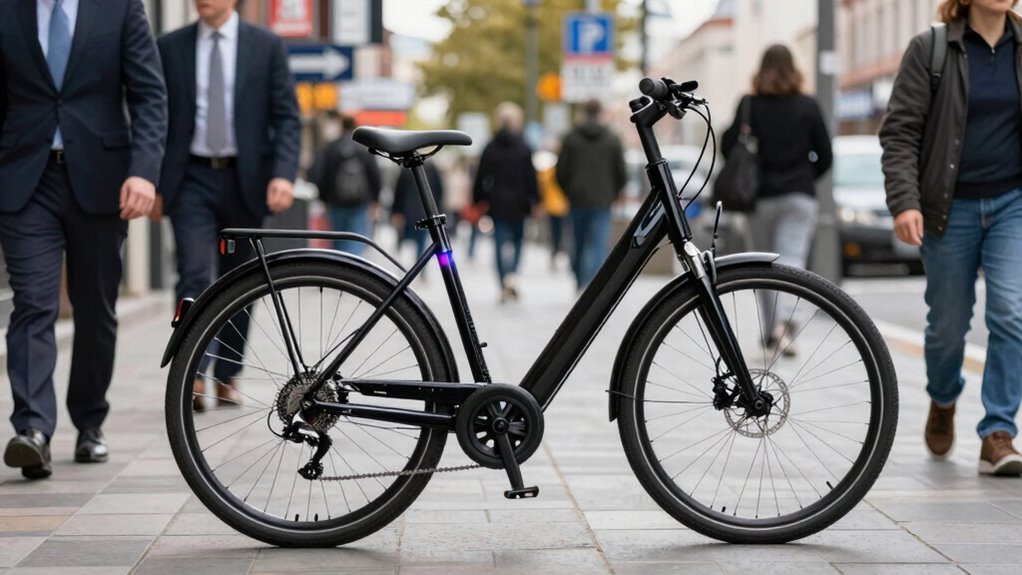

Whether you can ride an e-bike on sidewalks depends on where you are. Many cities and states restrict e-bike sidewalk use, especially for faster or higher-class models, while others permit it under certain conditions. Laws vary widely, so always check local regulations to stay legal and safe. Remember, sidewalk riding can pose risks to pedestrians and yourself. If you want to understand the specific rules in your area and how to stay compliant, keep exploring the details.
Key Takeaways
- E-bike sidewalk laws vary widely by city and state; always check local regulations before riding.
- Many jurisdictions allow sidewalk riding only for certain e-bike classes or age groups.
- Riding on sidewalks can pose safety risks to pedestrians and may be illegal in many areas.
- Bike lanes are often designated for e-bikes, but rules differ—verify local laws first.
- Responsible riding, including speed control and awareness, helps promote safety and legal compliance.

E-bike sidewalk rules vary widely depending on your location, so it’s important to understand the specific regulations in your area before riding. Many cities and states have different laws governing where you can and can’t ride your e-bike, especially concerning sidewalks and bike lanes. In some places, e-bikes are classified similarly to bicycles, allowing you to ride on bike paths and bike lanes, but in others, they are treated more like motorized vehicles, which might prohibit sidewalk use altogether. To stay compliant and avoid fines or accidents, you should always check local ordinances.
Understanding bike lane regulations is essential not only for legal compliance but also for ensuring pedestrian safety. In many urban areas, bike lanes are designated to provide a safe space for cyclists, separating them from pedestrians on sidewalks. Riding your e-bike in a bike lane generally offers a safer environment for both you and pedestrians, but only if it’s permitted by local laws. Some jurisdictions explicitly prohibit riding bikes, let alone e-bikes, on sidewalks to prevent conflicts with pedestrians. Others may restrict certain types of e-bikes—like Class 3 models—to roads only. Ignoring these rules can cause accidents or lead to hefty fines, so it’s essential to know where you’re allowed to ride.
Bike lane rules are vital for safety and legal riding; always check local laws before using bike lanes or sidewalks.
Even if riding on the sidewalk isn’t explicitly forbidden, you should always prioritize pedestrian safety. Pedestrians might not expect fast-moving e-bikes, especially on crowded sidewalks, which increases the risk of collisions. When you do ride on a sidewalk where it’s allowed, keep your speed low and be vigilant. Slow down around pedestrians, give audible signals when passing, and stay alert for children, seniors, or anyone who might unexpectedly step into your path. The goal is to share the space respectfully and avoid startling or injuring pedestrians. Additionally, understanding electric power generation concepts can help you better gauge your e-bike’s capabilities and riding endurance.
In many places, the default rule is that sidewalks are for pedestrians, and bikes or e-bikes should stay on designated bike lanes or roads. However, some localities may have exceptions, such as allowing e-bike use on sidewalks during certain hours or for specific age groups. To avoid misunderstandings, always review local laws or municipal guidelines before riding. If in doubt, opt for the bike lane or street, where your riding is more likely to be legal and safer for everyone involved. Remember, respecting bike lane regulations and prioritizing pedestrian safety keeps everyone safe and helps foster a community-friendly environment.
Frequently Asked Questions
Are E-Bikes Allowed on Pedestrian-Only Zones?
You generally can’t ride e-bikes in pedestrian-only zones because sidewalk regulations prioritize pedestrian safety. Many cities restrict e-bike access to protect walkers, so riding there could lead to fines or penalties. Always check local laws before entering these zones, and consider alternative routes. Respect pedestrian safety by following posted signs and regulations, and avoid riding your e-bike where it’s prohibited to guarantee everyone stays safe.
Do E-Bike Laws Vary Between Cities and States?
Yes, e-bike laws vary between cities and states because local regulations and enforcement practices differ widely. You need to check your specific area’s rules, as some places may have strict speed limits or restrictions on where e-bikes can be ridden, while others are more lenient. Always stay informed about your local laws to avoid fines or penalties, and respect designated areas for pedestrians and cyclists alike.
Can I Ride an E-Bike on Bike Paths?
Think of bike paths as the arteries of your city’s pulse, where you can ride your e-bike freely, but only if you follow the rules. You must adhere to e-bike speed regulations and wear appropriate e-bike helmet laws. Some areas restrict e-bikes on certain paths, so check local signage. Staying within these guidelines keeps your ride smooth and legal, ensuring you enjoy the journey without hitting legal speed bumps.
Are There Age Restrictions for Riding E-Bikes on Sidewalks?
Age restrictions for riding e-bikes on sidewalks vary by location, so check your local laws. Generally, kids under a certain age (often 12 or 14) may be prohibited from riding on sidewalks, and helmet laws often require younger riders to wear helmets. Insurance requirements might also apply, especially for higher-powered e-bikes. Always stay informed about local regulations to ride safely and legally.
How Do I Know if My E-Bike Is Street Legal?
You can’t judge a book by its cover, so first, check local laws to see if your e-bike is street legal. Make sure it’s registered if required, and confirm it meets speed limits and motor wattage. Don’t forget helmet requirements—most places mandate helmets for riders. If your e-bike has proper registration, safety gear, and adheres to local regulations, you’re on the right track to riding legally on streets.
Conclusion
So, while it might seem harmless to glide along the sidewalk on your e-bike, the rules rarely agree. You’d think convenience would outweigh safety, but the irony is, ignoring the laws could put pedestrians at risk—and get you fined. So go ahead, enjoy your ride, but remember: breaking the rules might just make your leisurely cruise a costly mistake. Sometimes, the most obvious shortcut leads to the biggest trouble.