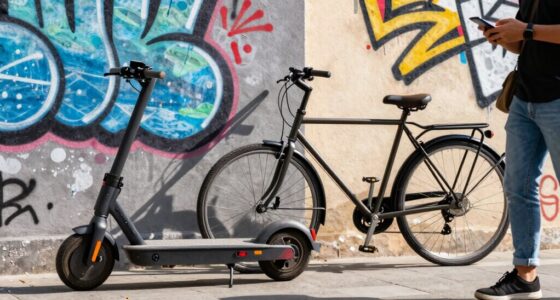
When flying with e-bike batteries, airline rules can catch you off guard if you’re not prepared. Most airlines follow international safety standards, requiring batteries to be in carry-on luggage with proper packaging, terminals taped, and within capacity limits (usually 100-160Wh). Always declare batteries at security, carry documentation, and check airline-specific policies to avoid delays or confiscation. If you want to know the full details on staying compliant, there’s more to uncover.
Key Takeaways
- Airlines generally follow international safety standards, requiring batteries to be in carry-on luggage with capacity limits of 100-160Wh.
- Proper packing, including original packaging and terminal protection, is essential to prevent short circuits and meet airline regulations.
- Batteries over 160Wh usually need special approval or are prohibited; always verify airline-specific policies before flying.
- Declare batteries at security checkpoints and carry documentation to demonstrate compliance with safety standards.
- Being aware of airline restrictions and properly handling batteries ensures smoother screening and prevents confiscation or delays.
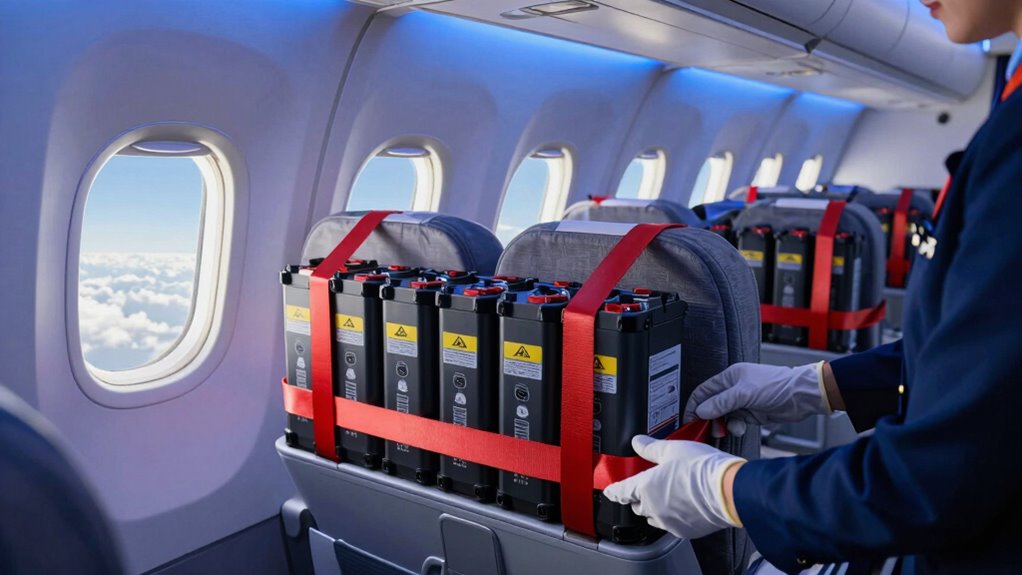
Traveling with e-bike batteries can be straightforward if you understand airline regulations and packing tips. Many riders worry about how to navigate the often confusing rules surrounding battery safety and airline policies. The key is knowing that most airlines follow international safety standards for lithium-ion batteries, which are used in e-bike packs. These standards emphasize proper packing, quantity limits, and safety precautions to prevent fires or damage during transit. When you’re aware of these regulations, you can avoid delays, confiscations, or even having your batteries rejected at security.
First, it’s essential to check airline regulations before packing. Many airlines require that lithium-ion batteries be carried in your carry-on luggage rather than checked baggage. This is because the crew can better respond to any issues that might arise, such as overheating or fire. You should also verify the specific capacity limits, which generally range from 100Wh to 160Wh per battery. Batteries exceeding these limits often need special approval or are prohibited altogether. Keep in mind that airlines are particularly strict about spare batteries; they usually must be kept in their original packaging or protected with tape to prevent accidental short circuits. This is a vital part of battery safety, as loose terminals can cause sparks or fires.
Packing your batteries properly is essential. Use original packaging or a protective case to prevent any contact between terminals and other metal objects. You should also avoid exposing batteries to extreme temperatures or moisture, which could compromise their safety and performance. Carrying a copy of your battery specifications and manufacturer’s safety instructions can be helpful at security checkpoints, especially if questions arise. Always declare your batteries if asked, and don’t try to hide them, as that can lead to complications or confiscation. Additionally, being familiar with vetted safety guidelines can help you better prepare for the security process.
Finally, it’s wise to arrive early at the airport to handle any additional screening or questions. Being prepared can ease the process, and showing that you’re aware of safety practices reassures airline staff. Remember, the main goal is to guarantee battery safety while adhering to airline regulations, so you can travel smoothly with your e-bike components. When you respect these rules, flying with e-bike batteries becomes much less stressful, and you can focus on enjoying your ride at your destination.
Frequently Asked Questions
Can I Carry Multiple E-Bike Batteries in One Flight?
You can carry multiple e-bike batteries on a flight, but you must adhere to airline regulations and battery capacity limits. Most airlines allow batteries with a capacity up to 100Wh in carry-on luggage, and some permit up to 160Wh with approval. Always check your airline’s specific rules, pack batteries properly to prevent short circuits, and carry them in your carry-on to guarantee safety and compliance.
Are Lithium-Ion Batteries Always Banned in Checked Luggage?
You shouldn’t assume lithium-ion batteries are always banned in checked luggage, but airline restrictions vary. Generally, airlines require you to carry batteries in your carry-on for safety, especially larger ones. Proper battery storage is essential—use original packaging or protective cases to prevent short circuits. Check your airline’s specific rules before flying, as some may have additional restrictions on battery capacity or quantity. Always prioritize safety and follow airline guidelines to avoid issues at the airport.
How Do Airline Policies Vary Internationally Regarding E-Bike Batteries?
Airline policies on e-bike batteries are like different languages, varying worldwide. You’ll find restrictions based on battery labeling, watt-hour ratings, and airline rules. Some airlines allow batteries up to 100Wh in carry-on, while others ban higher capacities altogether, especially in checked luggage. Always check specific airline restrictions before traveling, as policies can change quickly. Being informed helps you navigate international airline rules smoothly and avoid surprises at the airport.
What Are the Penalties for Non-Compliance With Battery Regulations?
If you don’t follow battery safety regulations, penalties can be severe. Airlines enforce penalties for non-compliance, which can include fines, confiscation of batteries, or denial of boarding. Penalty enforcement aims to guarantee safety and prevent hazards. To avoid these consequences, always check airline-specific rules, pack batteries properly, and declare them if required. Staying compliant helps you travel smoothly and keeps everyone safe.
Can I Ship My E-Bike Batteries Separately Instead of Flying With Them?
You can ship your e-bike batteries separately, but it’s a tightrope walk. You must guarantee battery compartment safety by following strict packaging regulations to prevent sparks from flying. Use approved containers, label everything clearly, and double-check airline rules. Shipping batteries separately often means declaring them properly and choosing a carrier familiar with lithium battery protocols. Always verify with your airline and shipping service to avoid surprises in transit.
Conclusion
When you fly with e-bike batteries, think of them as tiny, powerful passengers with their own rules. Just like a cautious traveler, airlines prioritize safety—sometimes leaving you in the dark about the full story. Remember the story of that traveler who almost lost their battery because of overlooked regulations? Stay informed and prepared, so your e-bike adventures stay smooth. After all, a little awareness keeps your journey flying high without surprises.