
With proper tools and guidance, you can handle many e-bike repairs yourself, like replacing the battery or cleaning the contacts, which helps extend its lifespan. Regularly update your firmware to improve performance and troubleshoot common issues using manufacturer instructions or online tutorials. The right-to-repair movement empowers you to manage maintenance without headaches, saving money and time. If you want to discover more tips to keep your e-bike running smoothly, keep exploring these practical solutions.
Key Takeaways
- Basic battery troubleshooting, like cleaning contacts and checking for damage, can often be done without professional help.
- Firmware updates are usually user-friendly, often available via smartphone apps or USB, requiring minimal technical skill.
- Many common e-bike issues can be resolved through manufacturer-provided guides and online tutorials.
- Replacing or repairing batteries with proper tools and instructions is feasible for DIY enthusiasts.
- The right-to-repair movement advocates for accessible information and tools, empowering riders to perform maintenance confidently.
As e-bikes become increasingly popular for commuting and recreation, the debate over the right-to-repair gains urgency. You want to keep your e-bike running smoothly without constantly relying on expensive repairs or dealership visits. Understanding what you can fix yourself is key to saving time and money, especially when it comes to battery maintenance and software updates. These are two areas where many riders often feel uncertain about their ability to troubleshoot and perform repairs independently.
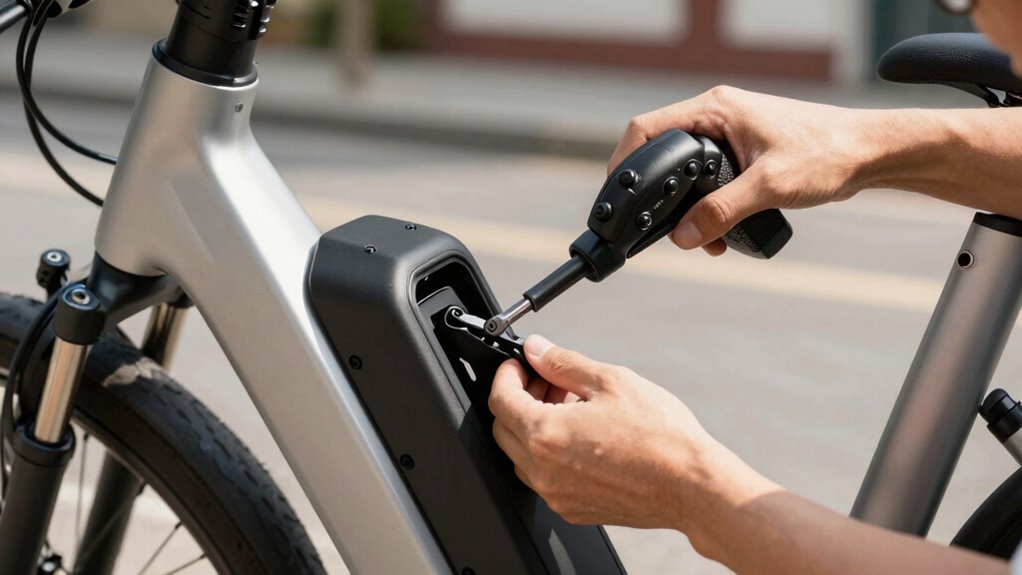
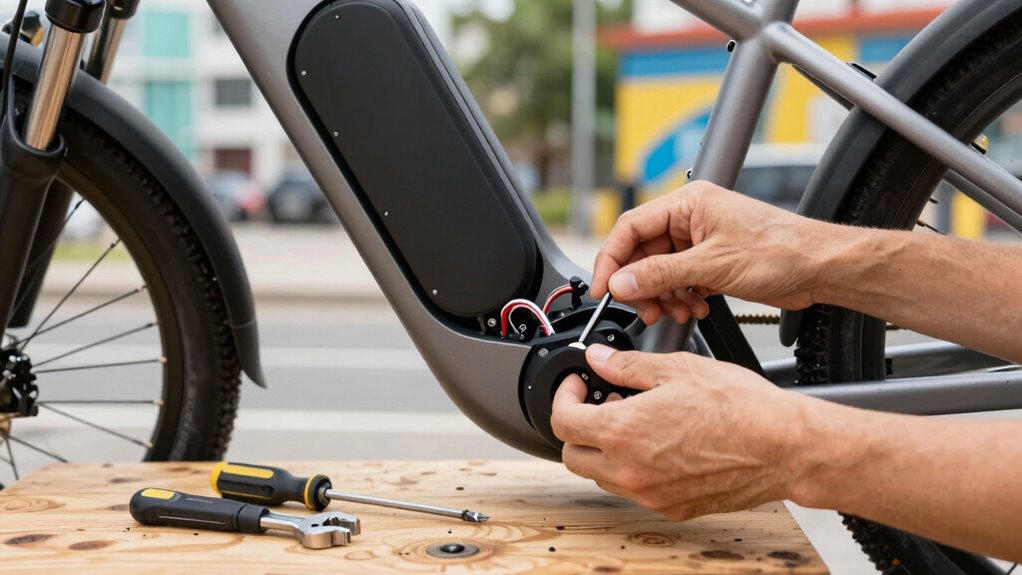
Battery maintenance is essential for your e-bike’s performance and longevity. You should regularly check the battery for signs of damage, such as swelling or corrosion, and keep it clean and dry. Properly charging your battery also plays an important role; avoid overcharging or letting it discharge completely, as these habits can shorten its lifespan. Most e-bike batteries come with user-friendly instructions on how to care for them, and keeping to these guidelines can prevent costly replacements. If your battery isn’t holding a charge like it used to, you might be able to recalibrate it or perform simple troubleshooting steps before considering a replacement. Many manufacturers provide detailed manuals or online resources that empower you to manage basic battery issues without needing a specialized technician. Additionally, battery replacement is often considered a repair that many riders can handle themselves with the right tools and guidance.
Regularly check, keep clean, and follow manufacturer instructions to extend your e-bike battery’s lifespan.
Software updates are another area where you can take control, often with minimal effort. Many e-bike brands now offer firmware updates that improve riding performance, fix bugs, or add new features. These updates are usually straightforward to install, often requiring just a smartphone app or a USB connection. By staying up-to-date with software releases, you guarantee your e-bike operates efficiently and securely. You don’t need to be a tech expert to handle these updates; most companies include step-by-step instructions or tutorials. Regularly checking for and installing software updates can prevent issues caused by outdated firmware, and it helps you maximize your e-bike’s capabilities.
While some repairs may still require professionals, many aspects of maintaining your e-bike, particularly battery care and software updates, are well within your reach. The right-to-repair movement emphasizes giving you the knowledge and tools to keep your bike in top shape without headaches. By learning a few basic maintenance steps and staying current with updates, you’re not only extending your e-bike’s lifespan but also ensuring a safer, more reliable ride. Empower yourself with the right information, and you’ll find repairing and maintaining your e-bike more manageable and less intimidating.
Frequently Asked Questions
Are E-Bike Repair Parts Widely Available for Consumers?
Yes, e-bike repair parts are generally accessible for consumers. You’ll find E bike component availability improving as more brands support the right-to-repair movement. Repair parts accessibility varies by brand and model, but online stores and local shops often stock common components like batteries, tires, and brake parts. This makes DIY repairs easier, saving you time and money, especially if you know what parts you need and where to get them.
Can I Legally Upgrade My E-Bike’s Software Myself?
Yes, you can often legally upgrade your e-bike’s software yourself, but you should be aware of legal considerations. Modifying your e-bike’s software, like changing speed limits or power settings, may violate local laws or warranty terms. Always research your area’s regulations and check your manufacturer’s warranty before proceeding. Doing so helps you avoid potential legal issues or voiding your warranty while customizing your e-bike to your preferences.
What Tools Are Essential for Basic E-Bike Repairs?
Fundamentally, you’ll want a trusty toolkit featuring basic repair tools and crucial maintenance gear. Think versatile wrenches, screwdrivers, tire levers, and a portable pump. These tools tackle tires, tighten bolts, and handle minor fixes swiftly. With these, you confidently conquer common repairs, keep your e-bike in prime condition, and prevent potential problems. Mastering these simple tools ensures maintenance becomes manageable, making your riding routine more reliable and enjoyable.
How Do Warranty Policies Affect DIY Repairs on E-Bikes?
Warranty policies often limit DIY repairs due to manufacturer restrictions and warranty exclusions. If you attempt repairs yourself, you risk voiding the warranty, making it harder to get free repairs or replacements later. Always check your e-bike’s warranty terms first. By understanding these restrictions, you can decide whether fixing your e-bike yourself is worthwhile or if professional service is a better option to avoid losing warranty coverage.
Are There Safety Risks in Repairing E-Bike Batteries at Home?
Fixing e-bike batteries at home is like walking a tightrope—you need to stay cautious. There are real safety risks, especially if you don’t pay attention to battery safety. Mishandling or damaging the battery can lead to fire hazards. Always wear protective gear, work in a well-ventilated area, and follow manufacturer instructions closely. If you’re unsure, it’s smarter to consult a professional to avoid dangerous accidents.
Conclusion
By understanding your e-bike’s right-to-repair rights, you’re holding the keys to your own maintenance kingdom. Think of it as tending a garden—you’re empowered to nurture and fix your bike without letting it become overgrown with restrictions and headaches. With this knowledge, you can confidently keep your e-bike running smoothly, ensuring it stays a trusty companion on your adventures. Take control, and turn maintenance into a rewarding journey rather than a tangled maze.