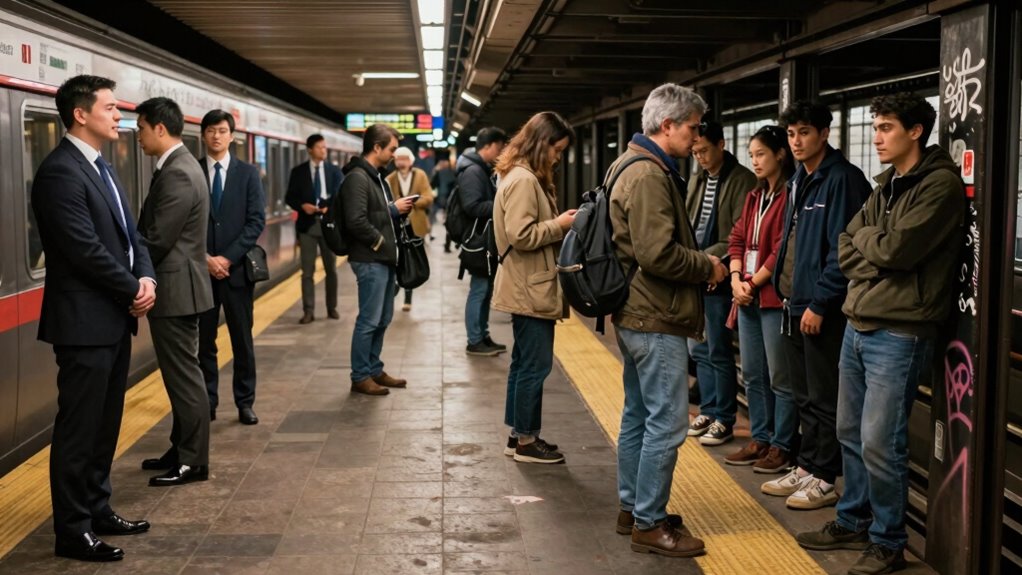

The 3-class system affects your daily commute by creating big differences in service quality and prices depending on what you pay. With premium, standard, and economy options, you might find yourself choosing between comfort and affordability. Higher classes often get priority boarding and cleaner spaces, but at steep extra costs. This setup can make your travel experience feel unequal and unfair, especially if you pay the same fare as someone in a lower class. To understand more about how this impacts your daily travel, keep exploring.

Get bike and ride gear delivered free with Prime
- Fast, free delivery on millions of items
- Prime Video, Amazon Music and more included
- Member-only deals all year
Key Takeaways
- Commuters face varied fare options, influencing affordability and travel choices across premium, standard, and economy classes.
- Service quality differences can lead to overcrowding and less comfort in lower classes, impacting daily travel experiences.
- Higher fares do not always guarantee better service, creating potential dissatisfaction and fairness concerns.
- Passengers must balance cost versus comfort, often accepting service disparities based on their budget.
- Fare segmentation reinforces inequalities, affecting perceptions of fairness and overall trust in the transit system.
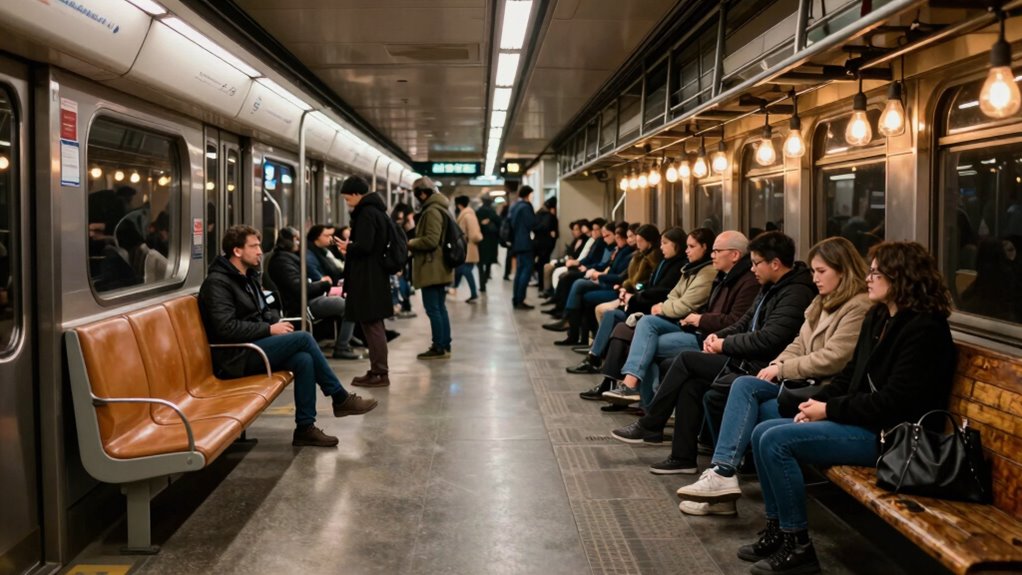
Have you ever wondered how the new 3-class system affects your daily commute? The introduction of this system reshapes how you experience traveling, especially when it comes to fare disparities and service quality. With three distinct classes—often labeled as premium, standard, and economy—you’ll notice that your ticket price no longer guarantees the same level of comfort or punctuality as before. Instead, fares are now more segmented, which means the cost of your ride can vary markedly depending on the class you choose. This can be frustrating if you’re used to a uniform experience every day. For some, the higher fares in premium classes promise better service, but the reality is that service quality isn’t always proportional to the ticket price. Sometimes, you might find that even in a higher class, delays or overcrowding still occur, which can be disappointing.
The disparities in fares also influence how you plan your commute. If you’re budget-conscious, you might opt for the economy class, but that often means dealing with more crowded conditions and potentially longer wait times. Conversely, choosing a higher class can offer a more comfortable ride, but at a steep increase in fare. This disparity can create a dilemma: do you prioritize affordability or comfort? The system’s design tends to favor those willing to pay more, which can deepen inequalities in service access. The people who can afford premium fares usually receive quicker boarding, better seating, and less crowded vehicles, which reinforces the gap between classes.
Service quality varies across the classes, and that’s where things become more noticeable. In premium classes, you might get priority boarding, cleaner environments, and more attentive staff, but these perks don’t always extend to every route or time slot. Meanwhile, economy class riders often face the brunt of overcrowding, less frequent service, and even maintenance issues. These disparities highlight that the system’s intent to segment services doesn’t always translate into a fair or consistent experience. You may find yourself paying more for what seems like marginal improvements, or worse, paying the same price in different classes but getting vastly different levels of service. Additionally, the introduction of a fare segmentation system can lead to perceptions of unfairness among commuters, impacting overall satisfaction.
Understanding the service quality differences across classes helps you better navigate the system and plan your travel more effectively. The variation in service standards across classes can sometimes be stark, making it essential to weigh the benefits and drawbacks of each option before your trip. Ultimately, the 3-class system forces you to think about your priorities. Are you willing to pay extra for comfort and speed, or do you prefer to save money despite the drawbacks? It’s a shift that impacts daily routines, making your commute more about balancing cost and convenience. While it aims to offer options, it also underscores the ongoing challenge of ensuring equitable service quality across all classes, leaving you to navigate fare disparities and varying experiences every day.
commuter train premium class seat
As an affiliate, we earn on qualifying purchases.
As an affiliate, we earn on qualifying purchases.
Frequently Asked Questions
How Does the 3-Class System Impact Commuter Ticket Prices?
The 3-class system affects your commuter ticket prices by creating different fare options, impacting ticket affordability. You might find that higher classes offer more comfort but come with increased prices, while lower classes keep fares cheaper but might have fare restrictions, like limited access or seating. These distinctions can make it challenging to choose the best option, depending on your budget and comfort preferences, ultimately shaping your daily commuting experience.
Are There Any Mobility Benefits for Lower-Class Commuters?
Lower-class commuters often face limited mobility benefits due to accessibility disparities within the 3-class system. You might find fewer affordable options and less convenient routes, which can hinder social inclusion. These disparities can restrict your ability to access essential services or employment opportunities, making it harder to participate fully in society. Addressing these issues requires policy changes that promote equity and improve transportation accessibility for all, regardless of class.
How Does the System Influence Commute Times Across Classes?
You’ll find that commute times are heavily influenced by class segregation and privilege disparity, with upper-class commuters often experiencing shorter, more efficient journeys. Studies show that lower-class travelers may spend up to 30% more time in transit due to limited access to premium transportation options. This system perpetuates inequality, making it harder for lower-class individuals to access opportunities, while privilege allows the upper class to enjoy faster, more reliable commutes.
Do Class Distinctions Affect Safety Standards on Transit?
Yes, class distinctions can impact safety standards on transit. Fare disparities often mean lower-cost sections may have fewer safety features or maintenance, leading to safety disparities. You might notice that higher-class areas receive better security and infrastructure, while lower classes face neglected safety measures. These differences create unequal safety conditions, making it vital for transit authorities to address disparities and guarantee safety standards are consistently high across all classes.
Can Commuters Switch Classes Easily or Permanently?
You can switch classes, but it’s not as simple as flipping a switch. Fare flexibility may allow some movement, but social mobility is limited by strict class boundaries. Moving from one class to another often involves significant hurdles, like higher fares or social expectations. So, while technically possible, changing classes permanently or casually remains an uphill battle, reinforcing the system’s rigid divisions and making mobility more of a myth than a reality.
economy class travel comfort accessories
As an affiliate, we earn on qualifying purchases.
As an affiliate, we earn on qualifying purchases.
Conclusion
As you step onto the train, the divide is clear—luxury, comfort, and speed for some, crowded benches for others. The 3-class system shapes your daily journey, turning a simple commute into a silent reminder of societal lines. Yet, amidst the hum of engines and the blur of passing streets, you hold the power to envision change—where every ride is equal, and every passenger is deserving of dignity. The choice to imagine a different future begins with you.
priority boarding pass for trains
As an affiliate, we earn on qualifying purchases.
As an affiliate, we earn on qualifying purchases.
train seat cushion for long commutes
As an affiliate, we earn on qualifying purchases.
As an affiliate, we earn on qualifying purchases.
Columbus Day / Indigenous Peoples' Day Picks
long weekend sales
As an affiliate, we earn on qualifying purchases.