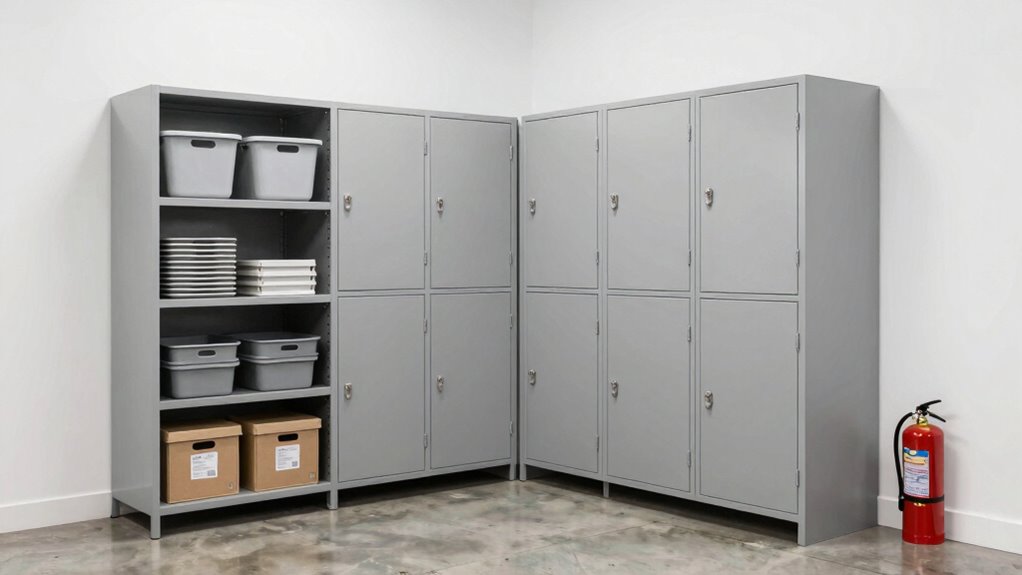

Safe storage in shared building areas means keeping your belongings organized and secured using lockable containers or lockers accessible only to authorized people. You should keep pathways, exits, and fire safety equipment clear of clutter, with bulky items stored on lower shelves to avoid injuries. Security measures like surveillance or personal locks protect your items from theft. Maintaining a tidy, well-labeled environment helps everyone access things safely. If you want to learn more about keeping shared spaces safe, keep exploring the key practices.
Open a free Amazon Business account
Business pricing, bulk buying and tax-exempt orders.
As an affiliate, we earn on qualifying purchases.
Key Takeaways
- Store items in lockable, sturdy containers accessible only to authorized personnel.
- Keep pathways, exits, and fire safety equipment unobstructed and easily accessible.
- Organize and label stored items to prevent accidents and facilitate quick identification.
- Ensure storage areas are well-ventilated and comply with fire safety standards.
- Regularly inspect storage spaces for hazards, damage, or security breaches.
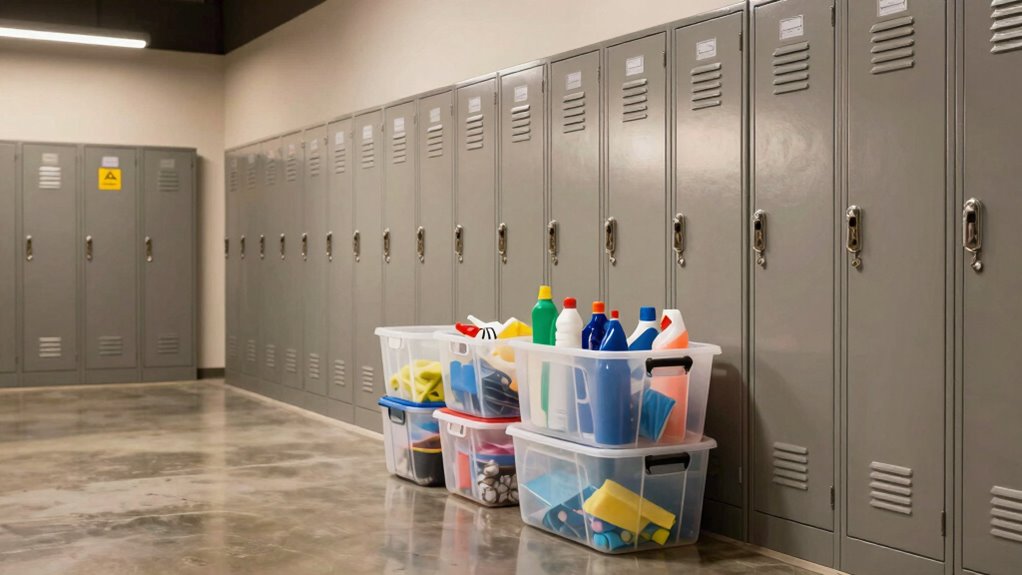
Have you ever wondered how to keep your belongings safe in shared building areas? It’s a common concern, especially when you share space with others and need to balance convenience with security. The key lies in understanding what counts as safe storage and how to implement effective security measures. Fire safety should be your top priority, so making sure that your stored items don’t block fire exits or fire extinguishers is essential. Avoid cluttering hallways or stairwells, which could hinder evacuation during emergencies. Use designated storage areas that are designed to meet fire safety standards, and always keep flammable items away from heat sources. Proper ventilation is also crucial, as it can prevent the buildup of fumes or heat that might increase fire risk. Additionally, understanding storage safety standards can help you choose the most secure and compliant options for your belongings. Regularly reviewing these standards ensures your storage practices stay up-to-date with the latest safety requirements.
Prioritize fire safety by keeping exits clear, avoiding clutter, and storing flammable items away from heat sources.
Security measures go hand in hand with fire safety. When choosing storage solutions, opt for sturdy, lockable containers or lockers that only you can access. This prevents unauthorized individuals from tampering with your belongings or stealing them. If the storage area has surveillance cameras or security patrols, make sure your items are stored in visible, well-monitored locations. Don’t leave valuables exposed or unsecured, especially in public or semi-public areas. Using personal locks or security seals on your storage units adds an extra layer of protection, giving you peace of mind that your belongings are safe from theft or vandalism. Properly labeled and organized storage can also deter theft by making it clear that your items are monitored.
Another aspect of safe storage involves organization. Keep your items tidy and clearly labeled so you can easily find what you need without rummaging through clutter. This reduces the risk of accidents, such as tripping or knocking over other items, which could cause damage or injury. Also, consider the weight and size of what you’re storing; heavy or bulky items should be placed on lower shelves to prevent falls. Additionally, implementing storage organization strategies can optimize space and safety, making it easier to maintain an orderly environment. Being aware of fire safety requirements can guide you in selecting the appropriate storage solutions that meet building safety codes. Be mindful of the storage policies set by the building management—some places have restrictions on what can be stored and where—so always follow those rules to ensure compliance with safety standards. Regularly reviewing your stored belongings can help maintain a safe and compliant environment and prevent hazards from developing over time.
Finally, maintain regular checks on your stored belongings. Periodically inspect your storage for signs of damage, pests, or security breaches. If you notice anything unusual, report it immediately to building management. By combining good organization, proper security measures, and adherence to fire safety protocols, you create a safe environment not just for your belongings but for everyone sharing the space. Safe storage isn’t just about protecting your items; it’s about fostering a secure, hazard-free environment for all residents.
lockable storage containers for shared spaces
As an affiliate, we earn on qualifying purchases.
As an affiliate, we earn on qualifying purchases.
Frequently Asked Questions
Are There Specific Regulations for Storing Hazardous Materials in Shared Areas?
Yes, there are specific storage regulations for hazardous materials in shared areas. You must follow local, state, and federal guidelines to guarantee safety. This includes proper labeling, secure containment, and designated storage zones away from common spaces. You’re responsible for adhering to these storage regulations to prevent accidents, spills, or exposure. Regular inspections and proper training also help maintain compliance and safety in shared building environments.
How Are Storage Responsibilities Shared Among Building Tenants?
You are responsible for maintaining proper storage etiquette in shared building areas, guaranteeing your items don’t obstruct pathways or violate safety standards. Surprisingly, 60% of building incidents involve improper storage, highlighting the importance of clear tenant responsibilities. You should store hazardous materials safely and keep common areas tidy. Sharing storage responsibilities means communicating with neighbors and following building regulations to prevent accidents and ensure everyone’s safety.
What Security Measures Are Recommended for Shared Storage Spaces?
You should implement access control systems, like key cards or locks, to restrict entry to shared storage areas. Installing surveillance systems, such as security cameras, helps monitor activity and deter theft or vandalism. Regularly review access logs and guarantee only authorized tenants can access the space. Combining these measures enhances security, reduces risks, and keeps shared storage areas safe for everyone.
Can Personal Items Be Stored Indefinitely in Shared Areas?
You shouldn’t store personal items indefinitely in shared areas. While occasional personal item storage is acceptable, indefinite storage can lead to clutter and safety hazards. Regularly check and remove items you no longer need, and label or organize your belongings to prevent disputes. Remember, shared spaces are meant for temporary storage—keeping personal items for extended periods isn’t recommended and could violate building policies.
Who Is Liable for Damages Caused by Improper Storage?
Did you know that 60% of building disputes involve storage issues? If damages occur due to improper storage, liability typically falls on the person responsible for violating storage policies. To avoid confusion, clear liability clarification should be outlined in your building’s policies. As a resident or user, you’re responsible for adhering to these policies, and the property management usually handles damages caused by non-compliance.
As an affiliate, we earn on qualifying purchases.
Conclusion
Remember, in shared spaces, your storage is the vessel that holds your peace of mind. Treat it like a fragile lighthouse guiding others safely through the darkness, ensuring nothing dangerous or disruptive takes hold. By respecting boundaries and securing your items, you become the steady beacon that keeps the community safe and harmonious. When everyone guards their storage like a treasured lighthouse, the shared environment shines brighter for all—safe, secure, and welcoming.
security locks for storage units
As an affiliate, we earn on qualifying purchases.
As an affiliate, we earn on qualifying purchases.
As an affiliate, we earn on qualifying purchases.
Fall Picks
fall essentials
As an affiliate, we earn on qualifying purchases.