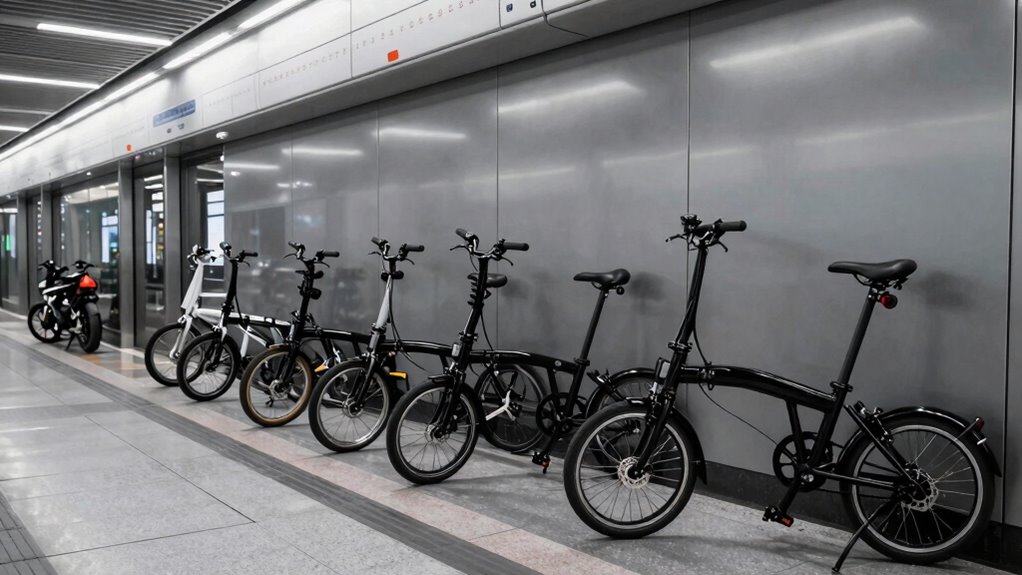

Transit systems treat folded e-bikes differently because they balance space constraints, safety, and regional policies. Some allow bikes onboard freely, especially if folded compactly, while others restrict them to prevent congestion or safety issues. Local laws and infrastructure also influence these rules, with bike-friendly cities more accommodating. Understanding these differences can help you navigate multi-modal travel more smoothly — if you want to know what factors impact these policies, keep exploring.
Key Takeaways
- Transit policies vary based on space availability and safety considerations in different regions.
- Bike-friendly cities often have clearer guidelines and dedicated storage options for folded e-bikes.
- Restrictions depend on transit system priorities, such as congestion management and passenger comfort.
- Local laws and infrastructure influence how transit agencies regulate folded e-bike boarding.
- Regional attitudes toward biking and multi-modal transit shape differing treatment of folded e-bikes.

As urban transit systems become more integrated with personal mobility options, folded e-bikes are emerging as a convenient solution for commuters. They offer the flexibility to combine biking with public transportation, making your daily commute smoother. But not all transit systems treat folded e-bikes the same way, especially when it comes to bike storage and boarding policies. Some systems see these bikes as a welcome addition, while others impose restrictions to maintain order and safety onboard.
Folded e-bikes are transforming commutes, but policies vary—some welcome them, others impose restrictions for safety and order.
You’ll notice that many transit authorities have designated areas or specific rules for storing folded e-bikes. Some buses and trains have racks or compartments where you can quickly stow your bike without blocking aisles or seats. Others might require you to keep your bike with you, either folded on your lap or in a bag, to prevent clutter. The approach often depends on the available space and the transit agency’s priorities. When bike storage is prioritized, it’s easier for you to bring your e-bike along without disrupting other passengers. Understanding transit policies can help you plan your trip more effectively and avoid inconveniences. Additionally, awareness of local regulations can ensure compliance and a smoother transit experience. Recognizing the importance of infrastructure can also influence how these policies are shaped and implemented.
Boarding policies vary widely, too. In some transit systems, you’re allowed to bring your folded e-bike on board without extra charges, provided it’s properly folded and doesn’t obstruct passage. These policies are designed to accommodate the growing demand for multi-modal commuting, recognizing that folded e-bikes can be a part of daily transit. Other systems, however, impose size or weight restrictions, or they might limit the number of bikes allowed during peak hours to prevent congestion. These restrictions often stem from concerns over safety and comfort, especially during busy times when space is at a premium. Additionally, some transit agencies have started implementing bike-friendly initiatives to promote sustainable transportation options.
The differing treatment of folded e-bikes also reflects regional attitudes and infrastructure. In cities with extensive bike-friendly policies, transit systems tend to be more accommodating, providing clear guidelines and ample space. Conversely, in areas where transit agencies face space constraints or safety concerns, restrictions are more common. You might find that some systems require you to notify staff before boarding or to use designated bike areas, while others leave it entirely up to individual discretion.
Additionally, the regulations surrounding folded e-bikes can vary based on local laws and infrastructure, influencing how transit systems manage these devices. Ultimately, understanding why some transit systems treat folded e-bikes differently hinges on their priorities around bike storage and boarding policies. It’s about balancing the convenience of multi-modal transit with safety and efficiency. As you plan your commute, always check local regulations beforehand. Knowing these rules helps you navigate different transit environments smoothly and ensures you can enjoy the full benefits of your folded e-bike without surprises.
As an affiliate, we earn on qualifying purchases.
Frequently Asked Questions
How Do Different Transit Systems Define “Folded” E-Bikes?
Different transit systems define “folded” e-bikes based on how compact they are for E bike storage and accessibility considerations. Some systems require the bike to be fully folded with handlebars and pedals tucked in, fitting into designated areas easily. Others focus on size limits, allowing slightly larger folded bikes. These definitions impact how you can carry and access your e-bike, influencing convenience and compliance with transit policies.
Are There Any Legal Restrictions on Transporting Folded E-Bikes?
You might find legal restrictions on transporting folded e-bikes vary by transit system. For example, in some cities, E bike regulations require you to keep your bike fully folded and secured; failure to do so could lead to fines. Always check insurance requirements and local rules beforehand. In a hypothetical case, neglecting these rules might invalidate your insurance if your bike causes damage or injury during transit.
How Do Size Limits Vary Between Transit Agencies?
Size limits for folded e-bikes vary by transit agency; some allow bikes up to 26 inches, while others set stricter boundaries. You should always check specific rules before your trip. Proper e-bike maintenance guarantees your bike stays within size limits, and practicing rider etiquette helps you navigate shared spaces smoothly. Respecting these limits and customs makes transit easier for everyone and keeps you compliant with local policies.
What Safety Measures Are Recommended for Carrying Folded E-Bikes?
You should prioritize safety by following recommended measures for carrying folded e-bikes. Guarantee battery safety by avoiding damage and keeping batteries away from extreme heat. Follow charging regulations strictly—never charge your e-bike onboard or in restricted areas. Secure your bike properly to prevent accidents, and handle batteries with care during transport. These steps help protect you and others, making transit safer and more enjoyable for everyone.
Do Policies Change During Peak Travel Hours or Special Events?
During peak hour policies and special events, transit systems often tighten regulations on folded e-bikes. You might find restrictions on bringing folded e-bikes onto trains or buses to manage crowding and safety. Some systems limit the number of bikes allowed or require you to fold and store your bike in designated areas. Always check specific transit authority rules before traveling during busy times to avoid inconveniences.
bike storage rack for public transit
As an affiliate, we earn on qualifying purchases.
As an affiliate, we earn on qualifying purchases.
Conclusion
As you navigate the bustling tapestry of transit policies, remember that folded e-bikes are like tiny ships sailing through a sea of commuters. Some transit systems welcome them aboard like friendly harbor masters, while others see them as unruly waves to be tamed. Ultimately, understanding these rules helps you chart a smooth course, turning what could be choppy waters into a calm journey. Embrace the ride, and let your folded e-bike be your loyal vessel.
As an affiliate, we earn on qualifying purchases.
As an affiliate, we earn on qualifying purchases.