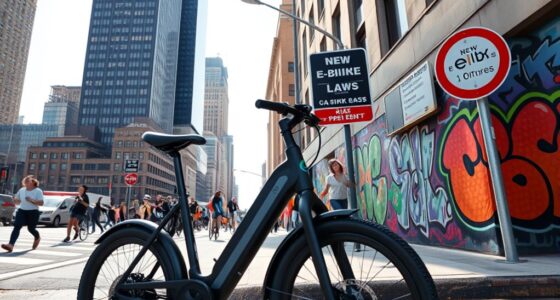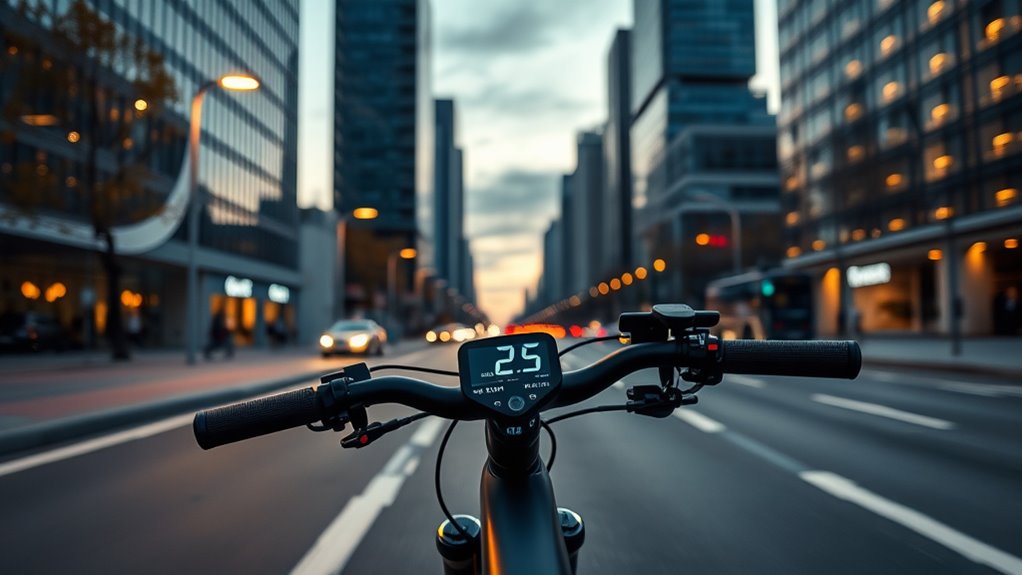

Cities enforce e-bike speed limits and geofencing through embedded technology that automatically restricts your bike’s speed in designated areas. They use intelligent zones where your e-bike slows down or stops to keep riders and pedestrians safe. Manufacturers often include tutorials and notifications to help you understand these features. Staying compliant helps prevent accidents and fines. Want to discover more about how these systems keep you and others protected?

Get bike and ride gear delivered free with Prime
- Fast, free delivery on millions of items
- Prime Video, Amazon Music and more included
- Member-only deals all year
Key Takeaways
- Cities implement geofencing technology in e-bikes to automatically restrict speeds in designated zones.
- Speed limits are embedded into e-bike firmware, enforcing compliance through automatic slowing or stopping.
- Municipal regulations often require e-bike manufacturers to include tutorials and alerts for zone-specific restrictions.
- Urban areas utilize awareness campaigns and in-app notifications to educate riders on speed and zone restrictions.
- Enforcement combines technological measures with rider education to promote safe riding and prevent violations.
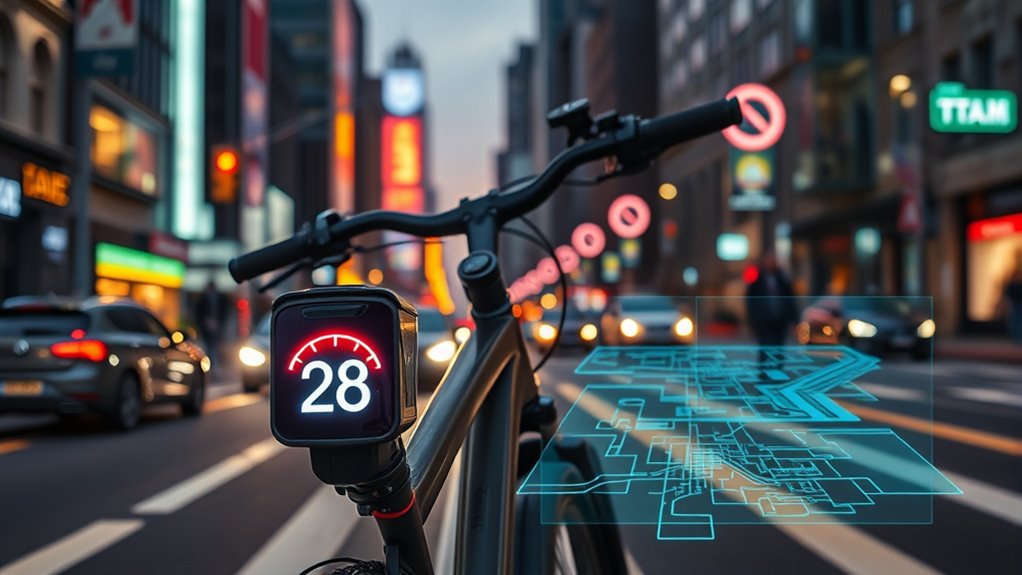
E‑Bike speed limits and geofencing are becoming essential tools to guarantee rider safety and comply with local regulations. These technologies help regulate how fast e-bikes can go and where they can operate, reducing accidents and ensuring smoother integration into urban environments. As a rider, understanding how these systems work can enhance your safety and improve your riding experience. One key aspect often overlooked is the importance of battery safety. When e-bikes are restricted to certain speeds and zones, it prevents overexertion of the battery, which can lead to overheating or other safety hazards. Properly managed speed limits help preserve your e-bike’s battery life and reduce the risk of thermal runaway, a dangerous situation caused by overheating. This not only protects your investment but also minimizes the chance of battery-related accidents, which can have serious consequences. Additionally, understanding the role of essential oils for safety can promote a calm mindset, helping riders stay alert and focused during their journeys.
Furthermore, rider education plays a vital role in making these technological measures effective. When cities implement speed limits and geofencing, they often accompany these with awareness campaigns to inform riders about the importance of adhering to restrictions. As a rider, you should be aware that respecting speed limits isn’t just about avoiding fines; it’s about ensuring your safety and that of others. Learning how geofencing works—like how your e-bike might automatically slow down or stop in certain zones—can help you navigate urban areas confidently. Many e-bike manufacturers now include tutorials or in-app notifications to educate users on safe riding practices and the reasons behind these restrictions. Proper rider education helps you understand that these measures are designed for your protection, especially in areas with high foot traffic or sensitive zones like parks and school zones.
As an affiliate, we earn on qualifying purchases.
Frequently Asked Questions
How Accurate Are E-Bike Speed Limit Enforcement Methods?
You can expect e-bike speed limit enforcement methods to be quite accurate, thanks to advanced speed limit sensors and GPS accuracy. These systems work together to monitor your speed in real-time, ensuring you stay within legal limits. While no system is perfect, most GPS-based enforcement is reliable enough for city regulation, especially when combined with sensors that detect when you’re exceeding speed thresholds.
Can Riders Bypass Geofencing Restrictions Legally?
You can’t legally bypass geofencing restrictions, even if it seems like a quick fix. Trying to do so often involves illegal modifications or user circumvention, which can get you into trouble. Think of it as walking a tightrope—you might think you’re clever, but authorities are quick to catch those who tamper with safety features. Stick to the rules; it’s the best way to stay on the right side of the law.
Do All Cities Implement the Same E-Bike Speed Regulations?
No, not all cities implement the same e-bike speed regulations. You’ll find that some cities have uniform policies promoting enforcement consistency, while others set varying limits based on local laws. This means you might experience different speed restrictions depending on where you ride. Always check local regulations before riding to guarantee you’re compliant, as enforcement can differ markedly from one city to another.
How Do E-Bike Manufacturers Ensure Compliance With Local Laws?
Imagine you’re riding an e-bike that automatically adjusts its speed based on your location. Manufacturers guarantee compliance with local laws by embedding geofencing technology and manufacturer compliance measures into the software. They regularly send software updates to enforce speed limits and adapt to new regulations, ensuring your bike stays within legal parameters. This proactive approach helps cities enforce rules while giving you a smooth, legal riding experience.
What Technology Is Used to Update Geofencing Zones Dynamically?
You use GPS tracking to update geofencing zones dynamically on your e-bike. This technology allows real-time updates by constantly monitoring your bike’s location. When zones change, the system automatically adjusts, ensuring compliance with local laws. With real-time updates, cities can quickly modify no-go zones or speed limits, and your e-bike’s software receives these changes instantly, keeping you compliant without manual intervention.
As an affiliate, we earn on qualifying purchases.
Conclusion
Imagine cruising through a city where your e-bike gently slows down as you near busy intersections, thanks to smart geofencing. Just last month, a rider in Amsterdam was surprised when her bike automatically limited her speed near a school, keeping kids safe. These tech tools act like invisible traffic cops, seamlessly guiding you and protecting communities. As cities embrace these systems, they’re paving the way for safer, smarter urban adventures—making every ride smoother and more secure.
As an affiliate, we earn on qualifying purchases.
As an affiliate, we earn on qualifying purchases.
Halloween Picks
halloween
As an affiliate, we earn on qualifying purchases.