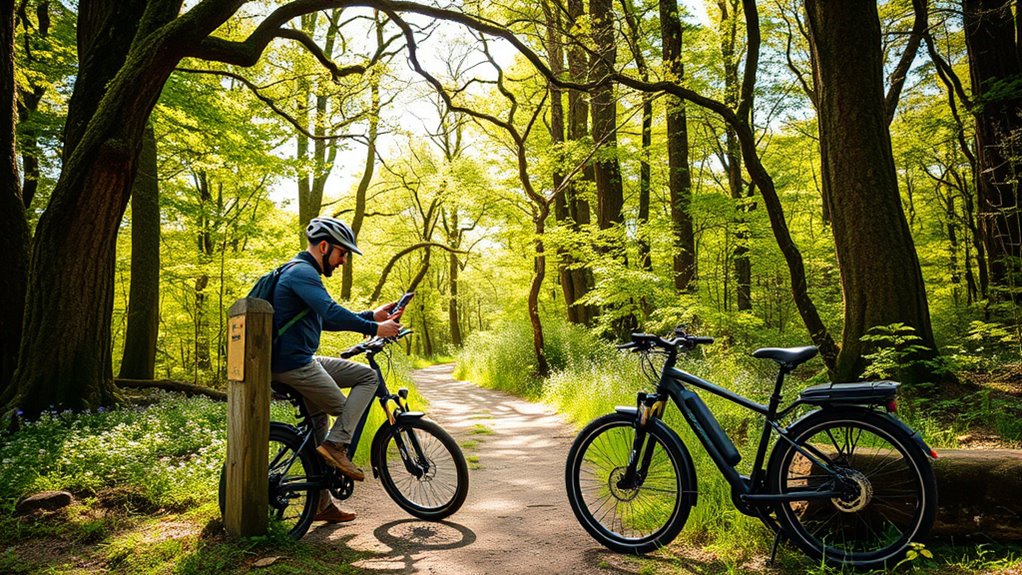

Whether you need a permit to ride an e-bike on public trails depends on local rules, trail classifications, and environmental protections. Some areas treat e-bikes like traditional bikes, allowing unrestricted access, while others restrict certain classes or require permits—especially in protected parks or sensitive environments. Checking with local agencies or official trail websites guarantees you stay compliant. If you want to learn more about specific regulations in your area, continue exploring the details below.

Get bike and ride gear delivered free with Prime
- Fast, free delivery on millions of items
- Prime Video, Amazon Music and more included
- Member-only deals all year
Key Takeaways
- Permit requirements vary by state, park, and local jurisdiction; some areas allow e-bike riding without permits.
- Check trail-specific rules, as classifications (Class 1, 2, or 3) determine if permits are needed.
- Consult official agency websites or contact authorities for the most current permit and access policies.
- Some regions require permits or registration for certain e-bike classes, especially in protected or sensitive areas.
- Compliance with local regulations ensures responsible riding and helps avoid fines or trail access issues.
Are you aware of the permit requirements for riding e-bikes on trails? Many riders assume that since e-bikes are motorized, they automatically need special permissions, but that’s not always the case. To stay compliant, you need to understand the specific e bike regulations and trail access policies that apply in your area. These rules can vary widely depending on the state, national park, or local jurisdiction, so it’s vital to research beforehand. Some regions treat e-bikes like traditional bicycles, allowing unrestricted trail access, while others impose restrictions based on motor power, speed, or classification.
Understanding local e-bike regulations ensures responsible riding and trail access compliance.
Trail access policies are designed to balance rider enjoyment with environmental protection and safety. Many parks and trail systems categorize e-bikes into different classes—Class 1, 2, and 3—each with its own set of rules. For example, Class 1 e-bikes, which assist only when you pedal and have a top speed of 20 mph, are often permitted on most trails without special permits. Conversely, Class 3 e-bikes, which can reach higher speeds and have throttle assist, might require a permit or be restricted from certain areas. It’s essential to verify which class your e-bike falls into and whether that class is allowed on specific trails.
In some locations, trail access policies are explicitly outlined, making it easier for riders to know where they can go without worry. Other areas, however, may have ambiguous or evolving regulations, requiring you to consult local agencies or official websites. If you’re unsure, contacting the managing agency or park office can save you from potential violations. Some jurisdictions even require online permits or registration for certain classes of e-bikes, especially if riding in protected or sensitive environments. Failing to adhere to these rules can lead to fines or trail bans, so it’s better to be informed.
Even if a permit isn’t explicitly needed, understanding the e bike regulations in your area helps guarantee you’re riding responsibly. These regulations are put in place to protect natural resources, other trail users, and yourself. Always check for updates before heading out, as policies can change, especially as e-bike popularity grows. By familiarizing yourself with local trail access policies and e bike regulations, you’ll enjoy your rides more confidently and responsibly, knowing you’re respecting the rules designed to keep everyone safe and the environment healthy.
As an affiliate, we earn on qualifying purchases.
Frequently Asked Questions
Can I Ride an E-Bike on Private Trails Without a Permit?
You can generally ride an e-bike on private trails without a permit, but it depends on the landowner’s rules. Trail access varies, and some owners may require permits or restrictions for e-bike use. Always check with the landowner or manager first to avoid trespassing or violations. Understanding permit requirements guarantees you stay legal and respect private property rights while enjoying your ride.
Are E-Bike Permits Different for Different States or Regions?
Did you know that nearly 80% of states have varying regulations for e-bike permits? Your permit requirements differ based on state regulations and regional policies. You’ll find some places require specific permits, while others don’t. Always check local laws before riding, as permit rules can change between regions. Staying informed helps you ride legally and safely, ensuring you enjoy your e-bike adventures without unexpected legal issues.
How Long Does a Typical E-Bike Trail Permit Last?
A typical e-bike trail permit usually lasts between one to three years, depending on your location. You should check your local agency’s rules for specific trail duration. When your permit nears expiration, you’ll need to contemplate permit renewal to keep riding legally. Keep track of renewal deadlines to avoid fines or restrictions, and always guarantee your permit remains current for uninterrupted access to public trails.
Are There Age Restrictions for Obtaining an E-Bike Trail Permit?
You might wonder about age restrictions and permit eligibility for e-bike trail permits. Typically, authorities set age limits to ensure safety, often requiring riders to be at least 16 or older. These restrictions help determine if you’re eligible to obtain a permit. To find out your specific area’s rules, check local regulations, as age restrictions vary by location. Making sure you meet permit eligibility criteria keeps your riding legal and safe.
Do Electric Mountain Bikes Require Special Registration or Insurance?
Oh, sure, because riding an electric mountain bike feels so risky, right? Actually, electric bike regulations vary by location, but generally, you don’t need special registration or insurance requirements just to hit the trails. Still, some areas might have specific rules, so it’s smart to check local laws first. No need for extra paperwork—just enjoy your ride knowing you’re following the rules!
As an affiliate, we earn on qualifying purchases.
Conclusion
In the end, it’s best to do your homework before hitting the trails. Regulations can vary, and ignorance isn’t an excuse when you get caught. Getting the right permit shows you’re playing by the rules and respecting the environment. Remember, it’s better to be safe than sorry—don’t let a small oversight turn into a big headache. Stay informed, stay prepared, and enjoy your ride without a hitch. After all, knowledge is power on the trail.
As an affiliate, we earn on qualifying purchases.
As an affiliate, we earn on qualifying purchases.
Halloween Picks
halloween
As an affiliate, we earn on qualifying purchases.