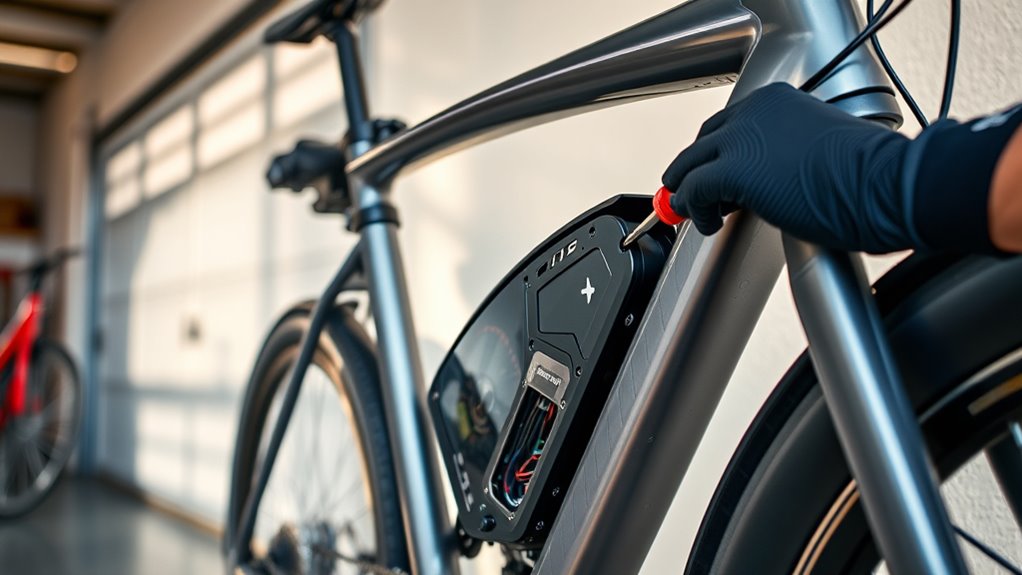

You have the legal right to fix most parts of your e-bike, including tires, brake pads, and some electronic parts. However, your warranty might restrict certain repairs, especially for batteries or electronic controls, unless done through authorized services. Manufacturers may limit access to repair tools or info, but laws are increasingly supporting rider rights. To keep your e-bike in great shape without risking issues, it’s helpful to understand these rules—more details follow if you continue exploring.

Get bike and ride gear delivered free with Prime
- Fast, free delivery on millions of items
- Prime Video, Amazon Music and more included
- Member-only deals all year
Key Takeaways
- Riders generally can replace tires, brake pads, and other non-electronic components without voiding warranty.
- Battery replacement may be restricted; check warranty terms before attempting to replace or repair.
- Manufacturers are increasingly required to provide access to repair manuals and spare parts for third-party repairs.
- Unauthorized repairs on electronic systems like motors or controllers can void warranties and may violate regulations.
- Staying informed about current legislation and manufacturer policies ensures legal and safe repairs of e-bikes in 2025.

As e-bike popularity surges, so does the debate over the right-to-repair, which is essential for riders who want to maintain and extend the life of their bikes. When it comes to fixing your e-bike, understanding what you’re legally allowed to do is vital. Many manufacturers offer battery warranties that cover certain defects for a set period, but these warranties often come with restrictions. For example, if you attempt to replace the battery yourself or have an unauthorized repair shop do it, you might void your warranty. This can be frustrating because replacing a worn-out battery is often necessary to keep your e-bike running smoothly, and doing so outside authorized channels may seem tempting but could jeopardize your warranty coverage.
Understanding e-bike repair rights and warranty restrictions is key to maintaining your bike properly.
However, the landscape is shifting, and more jurisdictions are recognizing your right to perform component replacement on your e-bike. You should be able to replace parts like tires, brake pads, and even certain electronic components without fear of losing warranty protections. Manufacturers are increasingly required to provide access to spare parts and repair information, making it easier for you to perform basic repairs and replacements. This movement aims to empower riders, reduce electronic waste, and lower repair costs. For example, if your motor or controller fails after the warranty period, you might be able to replace or repair these components independently or at a local shop, instead of being forced to buy a new bike.
It’s essential to familiarize yourself with local laws and manufacturer policies to understand what repairs are legal. Some brands have begun to open up their repair manuals and provide parts to third-party repair shops, fostering a more competitive and accessible repair environment. Still, some manufacturers try to restrict repairs by locking firmware or using proprietary parts that are difficult to replace without special tools or authorization. As a rider, your best move is to stay informed about your rights and the warranties attached to your e-bike. Know what’s covered, what isn’t, and how replacing components like batteries might impact your warranty status. Being aware of the regulatory landscape can help you make informed decisions about repairs and avoid unintended warranty violations. The good news is that you generally have the right to replace many parts on your e-bike, especially non-electronic components. When it comes to electronics, including batteries, you should check your warranty terms carefully. While some warranties might limit or void if you replace a battery yourself, others are designed to protect your right to component replacement. Ultimately, understanding your rights helps you keep your e-bike in top shape without unnecessary legal or financial risks.
As an affiliate, we earn on qualifying purchases.
Frequently Asked Questions
Can I Legally Upgrade My E-Bike’s Battery Myself?
You can generally upgrade your e-bike’s battery yourself, but you must prioritize battery safety and follow DIY repair guidelines. Make sure the new battery is compatible with your e-bike model and adheres to safety standards. Carefully disconnect the old battery, install the new one correctly, and avoid shortcuts. Always check local regulations, as some areas may have restrictions on DIY upgrades to guarantee safety and compliance.
Are There Restrictions on Repairing High-Voltage Components?
You should be cautious with high voltage restrictions when repairing e-bike components, as working with high-voltage parts can be dangerous. Repair safety is essential, so only attempt repairs if you’re trained and equipped to handle high-voltage systems safely. Otherwise, it’s best to consult a professional. Unauthorized or unsafe repairs could lead to injury or void warranties, so always prioritize safety and adhere to any legal limits.
Do I Need Special Tools to Fix E-Bike Electronics?
You’ll need some specific tools to fix e-bike electronics, especially if you’re dealing with battery issues or electronic diagnostics. Basic battery tools like multimeters and specialized connectors help you safely test and handle batteries. For more complex problems, electronic diagnostics tools are essential to identify faults accurately. While you can perform many repairs yourself, make sure you have the right tools to avoid damaging sensitive components or voiding warranties.
Is There a Legal Limit to What Repairs I Can Perform?
There are legal repair limits and restrictions you should be aware of. While you generally can perform repairs on your e-bike, some repairs, especially involving electronics or safety features, might be constrained by law or warranty terms. These repair restrictions are designed to ensure safety and compliance. Always check local regulations and your warranty conditions before attempting repairs, and consider professional help for complex issues to stay within legal repair limits.
How Does Warranty Affect My Right to Repair E-Bike Components?
Your warranty can be voided if you repair e-bike components against manufacturer restrictions. Manufacturers often include clauses that limit repairs you can do without losing warranty coverage. So, if you perform unauthorized repairs, warranty claims may be denied, and you could be responsible for repairs. Always check your warranty terms carefully before fixing any parts yourself, and consider whether your repairs align with manufacturer rules to avoid voiding your warranty.
As an affiliate, we earn on qualifying purchases.
Conclusion
By understanding your rights and what you can legally fix on your e-bike, you’re like a skilled captain steering your own vessel through uncharted waters. Knowing these boundaries empowers you to navigate repairs confidently, avoiding rough seas of legal trouble. As the rules evolve, staying informed keeps your journey smooth and your ride sustainable. Remember, you hold the compass—your knowledge is the wind in your sails, guiding you toward a future where you’re always in control of your e-bike’s destiny.
electric bike battery replacement kit
As an affiliate, we earn on qualifying purchases.
As an affiliate, we earn on qualifying purchases.
As an affiliate, we earn on qualifying purchases.
Halloween Picks
halloween
As an affiliate, we earn on qualifying purchases.