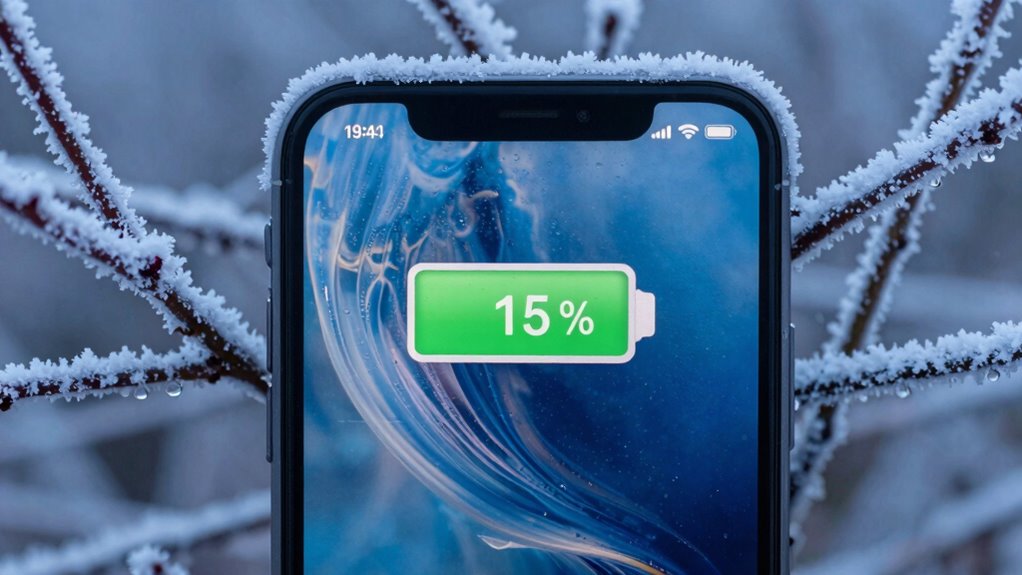

Cold weather slows down the chemical reactions inside your battery, reducing its ability to produce power for starts. As a result, your battery’s percentage drops faster because it can’t hold a charge as well in the cold. Poor maintenance and frequent short trips make things worse, especially when the battery isn’t fully recharged. To understand how to keep your battery working smoothly in winter, keep exploring the tips that follow.

Get bike and ride gear delivered free with Prime
- Fast, free delivery on millions of items
- Prime Video, Amazon Music and more included
- Member-only deals all year
Key Takeaways
- Cold temperatures slow chemical reactions inside the battery, reducing its power output.
- Reduced capacity from aging or poor maintenance makes batteries more vulnerable to cold-induced charge loss.
- Infrequent or incomplete charging during cold weather causes faster battery percentage drops.
- Short trips limit recharging, leading to quicker capacity decline in cold conditions.
- Without proper maintenance, batteries are less equipped to handle temperature-related performance issues.

When the temperature drops, your car’s battery can lose a significant portion of its charge, making it less reliable and harder to start. Cold weather directly affects the chemical reactions inside the battery, reducing its ability to produce the power needed for ignition. As a result, you might notice your battery percentage dropping faster than usual, especially if you’re frequently starting your car in chilly conditions. This isn’t just a matter of inconvenience; it can also signal that your battery’s overall lifespan is shortening. Cold weather accelerates the natural aging process of your battery, especially if its charging habits haven’t been optimal. A poorly maintained or aging battery is more vulnerable to cold-related drops in charge, which can leave you stranded when you least expect it. Proper charging habits and regular maintenance can help mitigate these effects and prolong your battery’s life.
Cold weather reduces battery charge and lifespan, making reliable starts more difficult in winter.
Your charging habits play a crucial role in how well your battery withstands cold weather. If you often let your battery sit unused for extended periods or neglect regular maintenance, it may not be holding a full charge when winter hits. Over time, sulfation can build up on the battery plates, reducing its capacity to hold a charge. This makes it even more susceptible to temperature fluctuations. Proper charging habits, like ensuring your battery is always topped up and avoiding deep discharges, can help extend its lifespan. When your battery is consistently well-charged, it’s better equipped to handle the extra strain caused by cold temperatures, maintaining a more stable percentage and reducing sudden drops.
Additionally, the way you use your vehicle impacts how quickly the battery percentage drops in cold weather. Frequent short trips don’t give your alternator enough time to fully recharge the battery, which can lead to a gradual decline in charge over time. When combined with low temperatures, this issue becomes more pronounced, causing rapid percentage drops. To counteract this, it’s wise to check your battery’s health regularly, especially before winter, and consider investing in a battery warmer if you’re in an extremely cold climate. Good charging habits, like ensuring your battery is fully charged before the cold season and avoiding unnecessary electrical loads when starting your car, can make a significant difference.
In essence, understanding how cold weather impacts your battery’s lifespan and adopting proper charging habits will help you avoid unexpected breakdowns. Keeping your battery healthy and fully charged, especially during winter, ensures it can deliver reliable starts and maintain a steady charge, even when the mercury drops.
As an affiliate, we earn on qualifying purchases.
Frequently Asked Questions
Can Using a Phone in Cold Weather Damage the Battery Permanently?
Using your phone in cold weather won’t cause permanent battery damage directly, but it can worsen battery degradation over time. Cold sensitivity makes batteries less efficient, causing them to drain faster and potentially accelerate wear. While brief exposure won’t harm your battery, prolonged cold use can weaken its capacity long-term. Keep your device warm when possible, and avoid exposing it to extreme cold for extended periods to protect your battery’s health.
Does Keeping the Device Warm Help Maintain Battery Percentage?
Think of your battery as a delicate plant needing warmth to thrive. Keeping your device warm acts like battery insulation, preventing the cold from sapping its energy too quickly. Warm device tips, like using a phone case or keeping it close to your body, help maintain battery percentage. Staying warm guarantees the battery’s chemical reactions stay steady, so your device lasts longer and performs better in chilly conditions.
Are Certain Phone Models More Affected by Cold Weather?
Yes, certain phone models are more affected by cold weather due to differences in battery design and quality, impacting battery lifespan and how temperature effects influence performance. Devices with older batteries or lower-quality components tend to lose charge faster in cold conditions. You should check your phone’s specifications and consider using protective measures like insulating cases or keeping it warm to minimize temperature effects and prolong your battery’s lifespan.
How Does Cold Weather Impact Wireless Charging Efficiency?
Ever notice your wireless charging feels slower in cold weather? It’s ironic, but temperature effects actually hinder wireless charging efficiency. Cold temperatures cause the battery and charging components to contract slightly, reducing the transfer of energy. So, instead of a quick power-up, you get a sluggish charge. Keep your device warmer to maintain ideal wireless charging performance, because chilly conditions aren’t just uncomfortable—they’re also a sneaky energy thief.
Can Battery Calibration Improve Performance in Cold Temperatures?
Battery calibration can help improve performance in cold temperatures by ensuring your device accurately reads its battery health and charge level. When you calibrate, you reset the battery’s internal measurements, which can be affected by temperature effects. This process helps your device better manage power, reducing unexpected drops in battery percentage during cold weather. Keep in mind, though, calibration isn’t a fix for underlying temperature-related battery degradation.
12V battery charger for cold weather
As an affiliate, we earn on qualifying purchases.
As an affiliate, we earn on qualifying purchases.
Conclusion
So, here’s the irony: while you’re bundled up to beat the cold, your phone’s battery is secretly melting down faster than ever. Cold weather tricks your battery into thinking it’s already drained, leaving you stranded just when you need your device most. Ironically, the chill meant to keep you warm could leave you disconnected and frustrated. Next time, stay cozy and keep that battery alive—because in winter, it’s the cold that really drains you.
As an affiliate, we earn on qualifying purchases.
battery health tester for vehicles
As an affiliate, we earn on qualifying purchases.
As an affiliate, we earn on qualifying purchases.
Halloween Picks
halloween
As an affiliate, we earn on qualifying purchases.