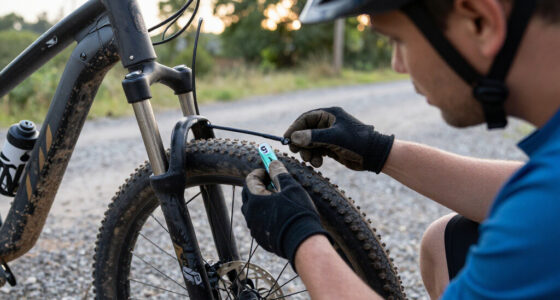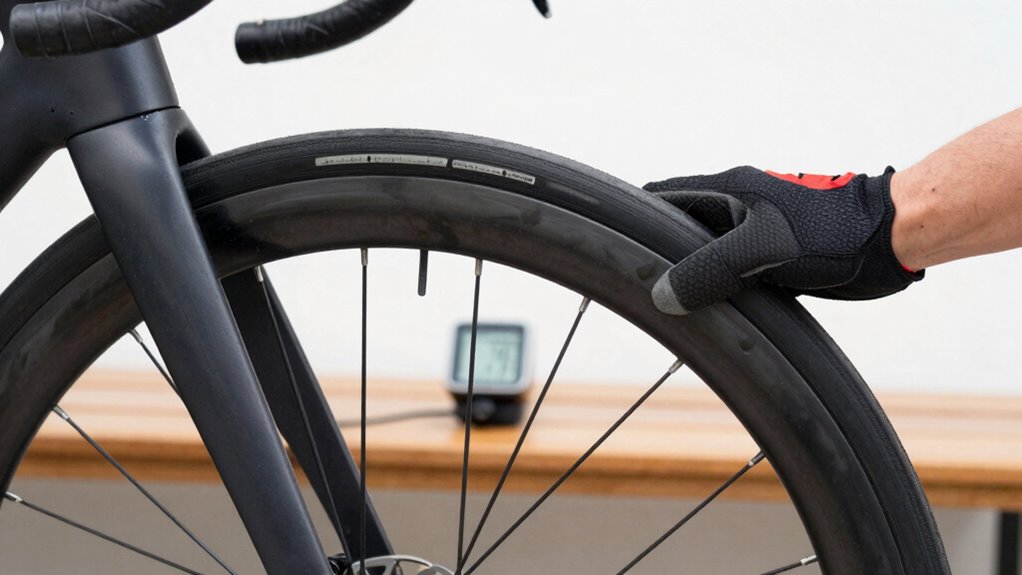

Adjusting your tire pressure based on rider weight is key for safe, smooth riding. Heavier riders should increase pressure within the bike manufacturer’s recommended range to improve stability and prevent flats, while lighter riders can lower it for comfort and better grip. Keep in mind, riding terrain and gear load also matter—so checking your tires regularly helps optimize performance. To learn more about fine-tuning your pressure for different situations, continue exploring these tips.

Get bike and ride gear delivered free with Prime
- Fast, free delivery on millions of items
- Prime Video, Amazon Music and more included
- Member-only deals all year
Key Takeaways
- Start with manufacturer’s recommended tire pressure range as a baseline.
- Increase pressure within the range for heavier riders to improve stability and prevent pinch flats.
- Use lower end of the range for lighter riders to maximize comfort and grip.
- Adjust tire pressure higher when carrying extra gear or passengers.
- Regularly check and fine-tune pressure based on riding conditions and rider weight.
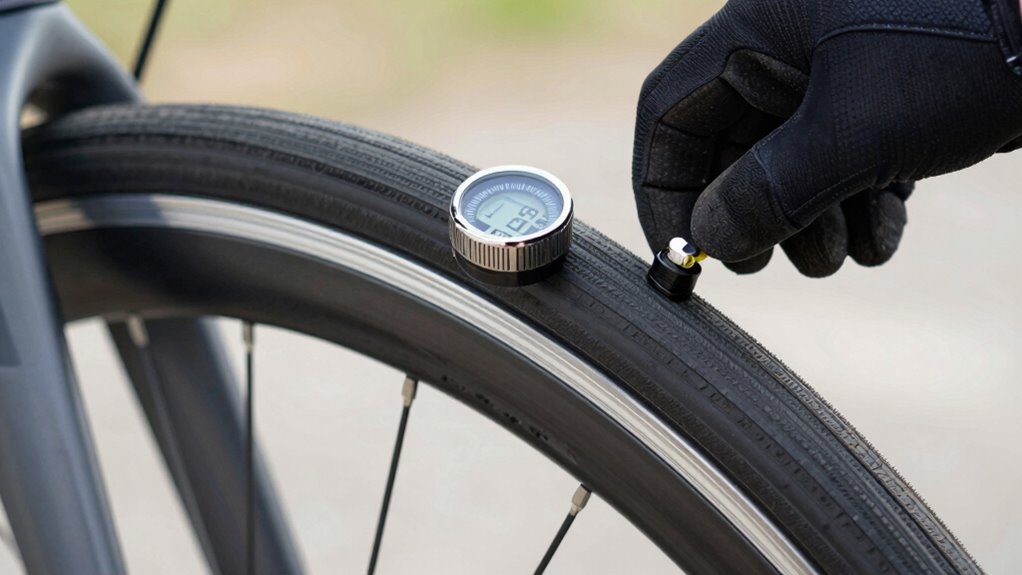
Proper tire pressure is indispensable for ideal riding performance and safety, and it often depends on your weight. When you’re setting up your bike, understanding tire pressure guidelines tailored to rider weight can make all the difference. Your weight directly influences how much pressure your tires need to perform effectively, affecting handling, comfort, and tire longevity. If you’re too light on your tires, they’ll feel soft, making your ride sluggish and increasing the risk of punctures. Conversely, if you’re too heavy, overinflated tires can lead to a harsh ride and quicker tire wear. That’s why rider weight adjustment is essential when determining the right tire pressure.
Proper tire pressure varies with rider weight for optimal safety and performance.
Start by consulting your bike’s manufacturer recommendations, which typically provide baseline tire pressure ranges. These guidelines are often a good starting point but don’t account for variations in rider weight. For heavier riders, increasing the tire pressure slightly within the recommended range can improve stability and reduce tire deformation. Lighter riders, on the other hand, should aim for the lower end of the spectrum to maintain comfort and grip. For example, if the tire pressure guidelines suggest a range of 80-100 psi, a rider on the heavier side might set their tires closer to 100 psi, while a lighter rider might find 80 psi more suitable.
Adjusting your tire pressure based on rider weight isn’t just about safety; it also impacts your riding experience. Correct pressure ensures your tires maintain proper contact with the ground, which improves traction and cornering. It also helps prevent pinch flats and uneven tire wear. To fine-tune your tire pressure, consider your typical riding conditions—pavement, off-road, or mixed terrain—and your personal comfort preferences. If you notice your bike feels sluggish or your tires feel soft after a ride, it might be time to tweak your tire pressure accordingly using the rider weight adjustment as a guide. Additionally, understanding piercing care and hygiene can help keep your tires and equipment in optimal condition for a safer ride.
Remember that changes in load, such as carrying gear or riding with a passenger, will also influence the ideal tire pressure. In these cases, add a small increase within the recommended range to compensate for the added weight. Regularly checking your tire pressure with a reliable gauge is a simple but critical habit. It ensures that your tire pressure aligns with your rider weight and riding conditions, keeping your performance consistent and your safety prioritized. By understanding and applying tire pressure guidelines tailored to rider weight, you’ll enjoy a smoother, safer, and more efficient ride every time.
As an affiliate, we earn on qualifying purchases.
Frequently Asked Questions
How Often Should I Check My Tire Pressure?
You should check your tire pressure at least once a week to maintain proper tire pressure maintenance. Regular bike safety checks help you catch any issues early, ensuring a smoother ride and reducing the risk of flats or accidents. Always verify your tires are inflated to the recommended PSI, especially before long rides or when riding with extra weight. Consistent checks keep your bike safe and performing at its best.
Does Tire Pressure Affect Bike Handling?
Think of your bike’s handling as a dance—tire pressure consistency keeps every step smooth. When your tire pressure isn’t right, especially with rider weight impact, it’s like trying to glide on a rocky path. Properly inflated tires improve grip, stability, and control, making your ride safer and more responsive. So, yes, tire pressure directly influences bike handling, and maintaining it ensures your ride remains a graceful, confident dance on the road.
What Tools Are Best for Measuring Tire Pressure?
You should use digital gauges or analog pumps to measure your tire pressure accurately. Digital gauges provide precise readings and are easy to read, making them ideal for quick checks. Analog pumps often have built-in pressure gauges, allowing you to monitor pressure as you inflate. Both tools help guarantee your tires are at the right pressure, enhancing ride quality and safety. Choose the one that fits your comfort and convenience.
Can Incorrect Tire Pressure Damage My Bike?
Yes, incorrect tire pressure can damage your bike. Under-inflated tires cause uneven tire wear and increase puncture risk, making your ride less safe and more prone to flats. Over-inflated tires reduce grip and can lead to a harsher ride, potentially damaging the tire structure. Maintaining proper tire pressure helps prevent these issues, ensuring your bike performs safely and efficiently, and extends the lifespan of your tires.
Should Tire Pressure Be Adjusted for Different Terrains?
Just like a chameleon adapts to its surroundings, you should adjust your tire pressure for different terrains. Maintaining tire pressure consistency is key on smooth pavements, but for rocky trails or sand, terrain-specific adjustments improve grip and comfort. By tweaking your pressure accordingly, you minimize risks of flats and enhance performance. Always assess your riding surface and change your tire pressure to match the terrain’s demands for a smoother, safer ride.
mountain bike tire pressure pump
As an affiliate, we earn on qualifying purchases.
As an affiliate, we earn on qualifying purchases.
Conclusion
So, next time you hit the road, remember that your rider weight influences your tire pressure more than you think. It’s almost like the bike’s whispering secrets just for you, guiding you to a smoother, safer ride. When you get it right, every mile feels lighter, and the journey becomes more personal. Sometimes, it’s those small adjustments that turn a good ride into a truly memorable one—proof that details matter more than we realize.
As an affiliate, we earn on qualifying purchases.
bike tire pressure adjustment tools
As an affiliate, we earn on qualifying purchases.
As an affiliate, we earn on qualifying purchases.
Halloween Picks
halloween
As an affiliate, we earn on qualifying purchases.