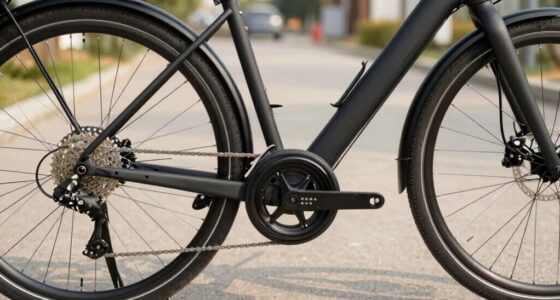
Most people assume solar panels can directly charge e-bikes, but it’s more complicated. Solar panels generate DC electricity that needs proper regulation and conversion through components like inverters and charge controllers. Without these, the energy can’t flow efficiently or safely into your e-bike’s battery. Plus, you need a dedicated storage system to use the energy later. Want to find out how a complete solar setup makes this process possible? Keep going to learn more.
Key Takeaways
- Solar panels produce DC electricity that requires regulation before it can safely charge e-bike batteries.
- Directly connecting panels to e-bikes bypasses necessary voltage and current management, risking damage.
- Solar panels do not store energy; dedicated batteries and controllers are needed for effective charging.
- Inverters and charge controllers are essential to convert and regulate power for safe e-bike charging.
- Proper system design integrates components to efficiently transfer solar energy into usable e-bike power.

Have you ever considered how solar panels can power your e-bike and revolutionize your daily commute? It sounds simple: set up some solar panels, and your bike gets charged directly from the sun. But in reality, the process isn’t that straightforward. Solar panels generate electricity through a process called energy conversion, transforming sunlight into usable electrical power. This power then needs to be stored properly if you want to use it later, which is where battery storage comes into play. Many people assume that placing solar panels on their homes or bikes will directly charge their e-bikes, but that’s not quite how it works.
Most e-bike charging systems are designed to connect to the grid or a standard power outlet, not directly to solar panels. When you try to connect solar panels directly to your e-bike, you’re missing a vital step: managing the energy conversion and storage process. Solar panels produce DC (direct current) electricity, but your e-bike’s battery system may require a specific voltage and current. This mismatch can prevent direct charging, which is why a simple connection usually won’t work. Instead, you need an intermediary device—a charge controller—that regulates the power coming from the solar panels, ensuring the correct voltage and protecting the battery from overcharging or damage.
Connecting solar panels directly to an e-bike isn’t effective without a charge controller to regulate voltage and protect the battery.
Even with a proper charge controller, the solar panels are still not directly charging your e-bike in real time. Instead, they charge a dedicated battery bank or energy storage system. This setup allows you to store energy during sunny days and use it later, whether that’s overnight or on cloudy days. Without proper battery storage, the energy generated by solar panels would go to waste when the sun isn’t shining. By storing energy in a well-designed battery system, you can reliably power your e-bike without interruptions, regardless of weather conditions. Additionally, proper system integration ensures the entire process functions smoothly and efficiently. A comprehensive understanding of solar energy systems can help optimize the setup for maximum efficiency.
Furthermore, system components such as inverters and charge controllers are crucial to convert and regulate the power effectively, making the setup more practical for everyday use. When designing a solar-powered e-bike charging setup, it’s important to consider the energy flow throughout the system to avoid inefficiencies or potential damage. Understanding this process helps clarify why solar panels don’t charge e-bikes the way many assume. It’s not just about placing panels in the sun; it’s about managing the entire energy conversion and storage process. Without the right hardware—like a charge controller and battery storage—you won’t be able to harness solar energy efficiently for your e-bike. Instead, you’ll be left with a solar setup that needs additional components to make the system practical and effective. Properly system design is essential to create an efficient and reliable solar-powered e-bike charging solution. So, if you want solar power to truly support your e-bike, plan for a holistic system that includes proper energy conversion and reliable battery storage.

50W Smart Solar Boost-Buck MPPT Solar Charge Controller Solar Panel for 12V/24V36V/48V Lead-Acid, LiFePO4, Gel, Flooded Batteries in Golf Cart Vehicles Trolling Motor E-Bike E-Scooter Forklift
- MPPT Boost-Buck Technology: Efficiently charges various battery voltages
- High Conversion Efficiency: Up to 95% MPPT and 93% conversion
- Wide Compatibility: Supports multiple battery chemistries and voltages
As an affiliate, we earn on qualifying purchases.
As an affiliate, we earn on qualifying purchases.
Frequently Asked Questions
Can Solar Panels Directly Power an E-Bike During a Ride?
No, solar panels can’t directly power your e-bike during a ride. Solar panel efficiency isn’t high enough for real-time charging, and most e-bike batteries aren’t compatible with direct solar input. Instead, solar panels are better suited for generating electricity that you store in a compatible charger or power station. This way, you can charge your e-bike battery safely and efficiently, ensuring your ride isn’t interrupted.
How Much Solar Energy Is Needed to Fully Charge an E-Bike?
Imagine a warm sunbeam gently soaking your e-bike’s battery, ready to restore its energy. To fully charge your e-bike, you need enough solar energy matching its battery capacity, typically around 300-500 watt-hours. Considering solar panel efficiency, you’ll need a panel system of about 100-200 watts. This setup captures enough sunlight to recharge your battery, turning sunshine into the power you need for your next adventure.
Are Portable Solar Chargers Effective for E-Bike Users?
Portable solar chargers can be effective for e-bike users, especially with portable power options that suit your needs. However, their efficiency depends on solar efficiency and weather conditions. You’ll get better results on sunny days, but don’t expect rapid charging or high power output. These chargers work best for maintaining your e-bike’s battery during trips or emergencies, rather than fully charging it quickly.
How Do Weather Conditions Affect Solar Charging for E-Bikes?
Weather conditions considerably impact solar charging for your e-bike. When shadows cast over the panels, they reduce sunlight exposure, decreasing efficiency. Additionally, temperature impacts performance; extreme heat can lower output, while cold weather might slow down energy production. You’ll get the best results on clear, sunny days with minimal shadows and moderate temperatures, ensuring your solar panels operate at peak efficiency and keep your e-bike charged effectively.
What Is the Cost Comparison Between Solar Charging and Traditional Charging?
Solar charging generally costs less over time compared to traditional electricity, but initial investments can be higher due to solar panel efficiency and setup. You’ll need panels compatible with your e-bike’s battery, which may affect overall costs. While traditional charging has lower upfront expenses, solar offers savings on energy bills long-term. Your choice depends on your budget, energy goals, and the compatibility of solar panels with your e-bike’s battery system.

30 Pcs Photovoltaic Power Source Labels 4 x 1 Inch Solar Panel Safety Sticker Outdoor PV System Warning Label Waterproof Outdoor Electrical Panel Sign for Solar Inverter Battery Storage
- Quantity and Size: 30 labels, 4 x 1 inches each
- Design: High-contrast red and white warning label
- Material: Durable waterproof vinyl with protective coating
As an affiliate, we earn on qualifying purchases.
As an affiliate, we earn on qualifying purchases.
Conclusion
So, next time you dream of solar panels magically fueling your e-bike, remember: those sleek panels soaking up the sun aren’t exactly your personal charging station. Instead, they sit proudly on rooftops or car roofs, quietly missing the thrill of powering your ride. Ironically, while they capture sunlight beautifully, they rarely turn it into enough juice for your daily commute. Turns out, your e-bike’s real secret weapon isn’t solar—just a good old-fashioned plug.
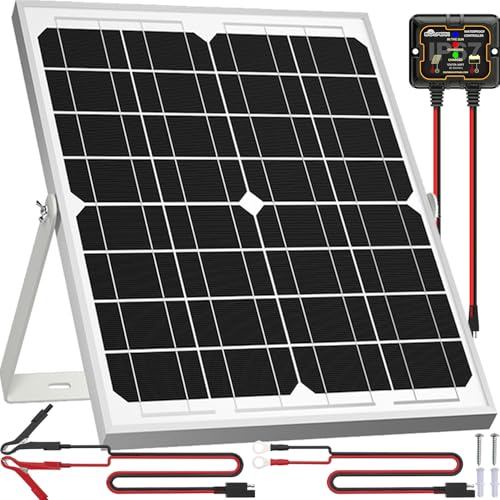
SOLPERK Solar Panel Kit 20W 12V, Waterproof Solar Battery Trickle Charger Maintainer + Smart MPPT Controller + Adjustable Mount Bracket for Boat Car RV Motorcycle Marine Automotive
- High Conversion Efficiency: 21%-30% cell efficiency for reliable charging
- Universal Battery Compatibility: Charges various 12V rechargeable batteries
- Durable Waterproof Design: Low-iron tempered glass and corrosion-resistant frame
As an affiliate, we earn on qualifying purchases.
As an affiliate, we earn on qualifying purchases.

ECO WORTHY 10000W Output Complete Off-Grid Solar Panel Kit for Home| 10KW 120V/240V Output Split Phase Inverter| 48V 314Ah16.1kWh High Capacity Energy Storage| 2950W Solar Panel PV| Whole House System
- Power Output: 10kW with split-phase support
- Solar Panels: 5 × 590W panels, 2950W capacity
- Energy Storage: 48V 314Ah LiFePO₄ battery
As an affiliate, we earn on qualifying purchases.
As an affiliate, we earn on qualifying purchases.