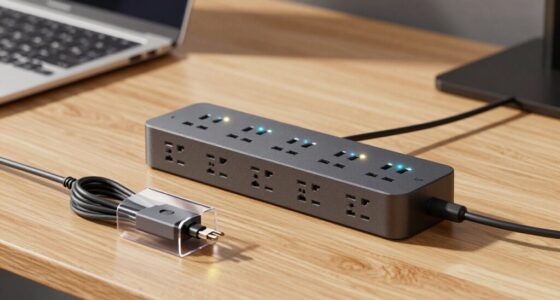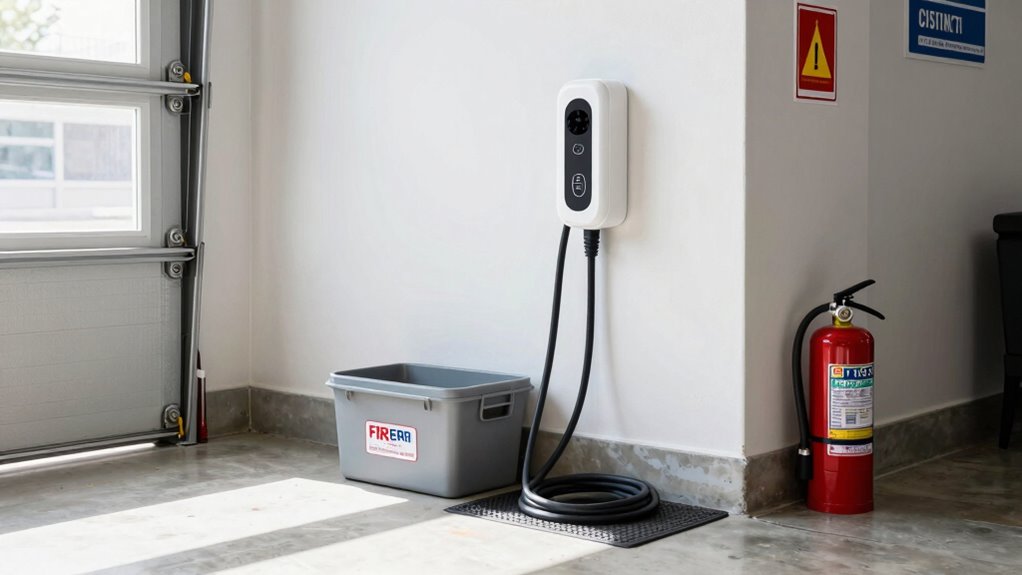

To build a cleaner, safer charging corner, choose a sturdy, non-flammable surface away from water and high-traffic areas. Mount the station at an accessible height near your electrical panel to avoid extension cords and keep cords organized with hooks or reels. Guarantee good lighting, proper ventilation, and electric safety practices, including surge protectors and damage inspections. Keep the area clutter-free and well-organized to prevent hazards, setting you up for a smooth and secure charging experience—there’s more to optimize this space effectively.
Key Takeaways
- Choose a sturdy, non-flammable wall-mounted location away from water and high-traffic areas.
- Install proper lighting and ventilation to ensure safety during nighttime use and heat dissipation.
- Use cable management solutions like hooks or reels to keep cords organized and off the floor.
- Ensure electrical outlets and wiring meet EV power requirements and are protected by surge protectors.
- Keep the area clean, clutter-free, and regularly inspect cords and equipment for damage.
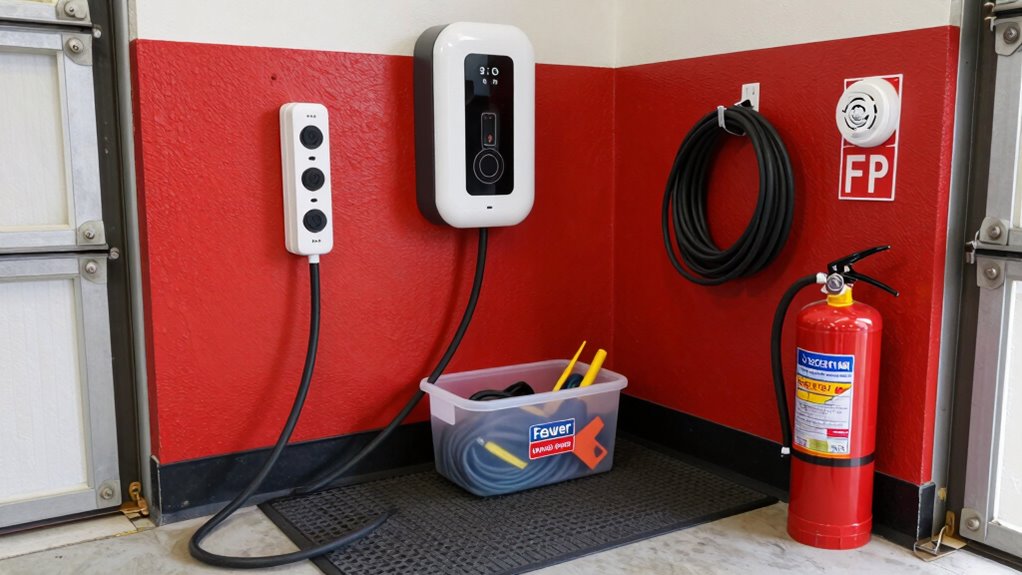
Have you ever wondered how to make your charging area safer and more organized? Creating a dedicated space for your electric vehicle (EV) charging isn’t just about plugging in; it’s about guaranteeing safety and efficiency. Electric vehicle safety should be at the forefront of your planning, which means paying close attention to where you place your charging station. Proper charging station placement minimizes risks such as electrical fires, tripping hazards, and damage to your vehicle or garage. Start by choosing a spot away from water sources and high-traffic areas. Keep the station on a sturdy, non-flammable surface, ideally close to your main electrical panel, so you don’t need long extension cords that can create tripping hazards or electrical overloads.
Choose a safe, accessible spot away from water and high traffic for your EV charging station.
When deciding on placement, consider accessibility. You want your charging station at a height and location that makes plugging in and unplugging easy without forcing you into awkward positions. Avoid placing the charger near combustible materials like paper, boxes, or gasoline cans. It’s smart to mount the station on a wall if possible, freeing up floor space and reducing clutter. This also helps prevent accidental damage to the charger or cord. Additionally, verify the outlet and wiring are rated for the power your EV requires. Overloading circuits can lead to overheating or electrical failure, which compromises safety. Understanding electrical safety is essential to prevent hazards.
Organizing your charging corner goes beyond just placement. Use cable management tools such as hooks, clips, or cable reels to keep cords tidy and off the floor. This reduces tripping hazards and keeps the area neat. Regularly inspect your cords and plugs for signs of wear or damage, and replace them immediately if needed. Good lighting is a simple but vital addition; it makes plugging in safer during nighttime and helps you spot any issues quickly. If you’re installing a dedicated charging station, consider adding a surge protector to guard against electrical spikes. This extra layer of protection ensures your vehicle’s battery and your home’s electrical system stay safe. Proper ventilation can help prevent heat buildup and improve overall safety during charging. Good electrical wiring practices are equally important to ensure your setup remains safe and reliable over time.
Finally, think about ventilation. Although charging stations don’t emit fumes, a well-ventilated garage prevents heat buildup and ensures any potential electrical issues can dissipate safely. Keep your garage clean, free of clutter, and well-organized, so your charging corner remains a safe haven for your vehicle and your household. By paying attention to electric vehicle safety and carefully selecting your charging station placement, you create a safer, more efficient space that makes charging your EV hassle-free and secure.
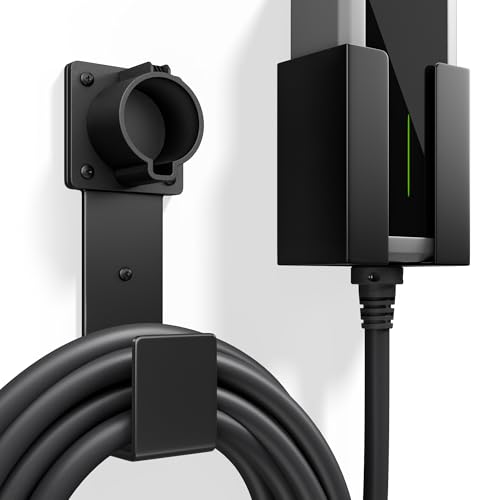
EV Charger Holder Wall Mount – J1772 Cable Organizer & Nozzle Holster with Storage Box for Electric Vehicle Charging
Fit J1772 Connector: Designed to securely hold standard J1772 charging connectors, keeping them stable, properly positioned, and protected…
As an affiliate, we earn on qualifying purchases.
As an affiliate, we earn on qualifying purchases.
Frequently Asked Questions
What Safety Certifications Should Charging Equipment Have?
You should look for charging equipment that has safety certifications like UL or IEC standards, ensuring it meets rigorous safety and quality benchmarks. Make sure it complies with grounding requirements, which prevent electrical shock hazards. Certification standards verify the equipment’s safety features and reliability, so always choose chargers with recognized certifications and proper grounding to keep your garage safe and reduce the risk of electrical issues.
How Often Should I Inspect Electrical Outlets?
Did you know that electrical outlets are involved in over 20% of home electrical fires? You should inspect your outlets at least once every six months to guarantee outlet maintenance and circuit safety. Look for signs like scorch marks, loose plugs, or sparks. Regular inspections help prevent hazards, protect your equipment, and keep your garage safe. Address any issues immediately to maintain a secure charging corner.
Can I Use Extension Cords for Charging?
You shouldn’t rely on extension cords for charging your devices, as they pose extension cord hazards and can lead to electrical dangers. Safety extension cords are designed for temporary use only and may not handle the continuous current needed for charging. Instead, install properly rated outlets in your garage or use a dedicated charging station to guarantee safe, reliable power access without risking fire or electrical shocks.
What Ventilation Is Needed for Charging Electronics?
Imagine a gentle breeze flowing through your garage, keeping the air fresh as you charge your devices. Proper ventilation requirements are essential to prevent heat buildup and dissipate any fumes or fumes from electronic charging. To optimize airflow, consider installing exhaust fans or vents that promote continuous air exchange. This guarantees safe, efficient charging, reduces overheating risks, and keeps your garage environment clean and comfortable for both you and your electronics.
How to Prevent Water Damage in the Charging Area?
To prevent water damage in your charging area, use waterproof covers on all electronic devices and outlets. Make certain the space has proper drainage solutions, like a sloped floor or drainage mats, to direct water away from electronics. Keep the area dry by regularly checking for leaks or spills, and consider installing a moisture alarm. These steps help protect your devices and keep your charging corner safe and dry.

Gisafai 100 Pcs Cable Support J-Hook, 3/4 Inch Metal Garage Hooks for Hanging, Heavy Duty Network for Cable and Wire Management Wall Attaching J Utility, G60 Galvanized Steel, Silver
Quality Material: our heavy duty cable supports are made of galvanized G60 steel, reliable and sturdy, serviceable and…
As an affiliate, we earn on qualifying purchases.
As an affiliate, we earn on qualifying purchases.
Conclusion
By creating a dedicated, organized charging corner, you’re not just protecting your devices—you’re safeguarding your family and home. It’s easy to overlook small hazards, but taking these steps demonstrates you care. Don’t let clutter or unsafe wiring cause a preventable accident. A little effort now ensures peace of mind tomorrow. You deserve a safe, efficient space that keeps everyone secure, so take action today—you won’t regret making your garage safer for everyone who uses it.

Dent Fix DF-601 Surge Protector
Acting like a sponge to soak up electrical surges, this unit protects sensitive electronic components when mig and…
As an affiliate, we earn on qualifying purchases.
As an affiliate, we earn on qualifying purchases.

ISKYDRAW LED Garage Light 240W, 24000LM Garage Lights Ceiling LED with 8+1 Deformable Panels, 6500K Daylight Garage Ceiling Lights, Bay Lighting for Workshop Workbench Basement Attic
24000LM Ultra Bright Garage Light: Equipped with 264 high-quality LED chips, ISKYDRAW garage lights delivers 24000 lumens of…
As an affiliate, we earn on qualifying purchases.
As an affiliate, we earn on qualifying purchases.