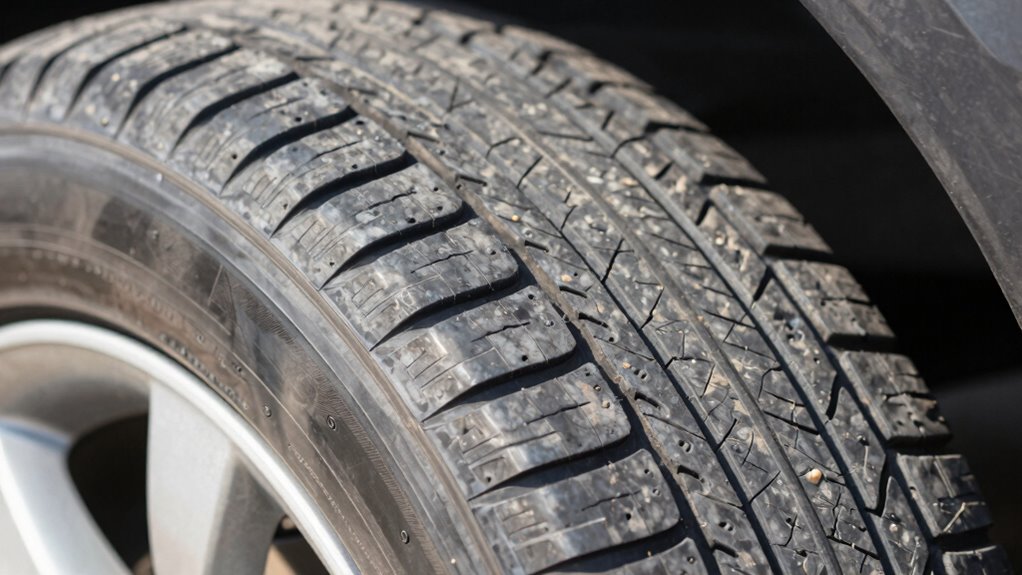
To check your tire sidewalls for damage, start by visually inspecting the entire surface for cuts, cracks, bulges, or blisters. Feel for irregularities that may not be visible, especially around the sidewall edges. Look for signs of embedded objects like nails or glass. Confirm your tires are properly inflated, as both over- and under-inflation can cause damage. Pay attention to uneven wear or environmental effects. Keep an eye on these key signs, and you’ll discover more ways to keep your tires safe.
Key Takeaways
- Visually inspect the entire sidewall for cuts, cracks, bulges, or blisters indicating structural damage.
- Tactilely feel the surface for irregularities or subtle issues that may not be visible.
- Look for signs of bulges or blisters, which suggest internal damage and require immediate replacement.
- Check for embedded objects like nails or glass that can cause leaks or blowouts.
- Ensure proper tire inflation to prevent sidewall damage from excessive flexing or vulnerability.

Your tires are your vehicle’s first line of defense on the road, so regularly inspecting the sidewalls for damage is essential for safety. While many drivers focus on the tread depth, checking the sidewalls is equally important. Damage to the sidewalls can compromise tire integrity even if the tread looks fine. Start by visually examining the entire sidewall surface for cuts, cracks, bulges, or blisters. These signs indicate structural problems that could lead to sudden tire failure. Small cuts might seem minor, but they can worsen over time, especially when exposed to heat or road debris. Cracks often indicate aging rubber or exposure to harsh conditions, so if you notice any, it’s time to think about replacing the tire.
Bulges or blisters on the sidewall are particularly dangerous. They suggest that the internal layers of the tire are compromised, which could cause the tire to blow out unexpectedly. If you detect any bulges, don’t delay—replace the tire immediately. Next, check the tire tread depth, but remember, the sidewall inspection is just as important. Proper inflation levels are essential for preventing sidewall damage too. Under-inflated tires can cause the sidewalls to flex excessively, leading to cracks or even sidewall bulges over time. Over-inflated tires, on the other hand, might make the sidewalls more vulnerable to cuts from road hazards. Use a reliable tire pressure gauge to verify your tires are inflated to the manufacturer’s recommended levels, which you can find in your vehicle’s manual or on a sticker inside the driver’s door.
While inspecting, also look for any embedded objects like nails or glass that could puncture the sidewall, as these can cause slow leaks or sudden blowouts. Don’t forget to check for uneven wear patterns, which might indicate alignment issues or suspension problems that could stress your tires unevenly. Proper tire maintenance involves not just visual inspections but also making sure your tires are correctly inflated and that the tread depth remains above the safety threshold. Remember, a tire’s sidewall damage isn’t always obvious from a glance; sometimes, feeling for irregularities by running your hand over the surface can reveal subtle issues. Regularly inspecting your tires and addressing any damage promptly keeps you safer on the road and helps extend the lifespan of your tires. Additionally, understanding tire sidewall damage and its causes can help prevent future issues and improve overall vehicle safety. Maintaining awareness of biodiversity and conservation principles encourages responsible vehicle use and environmental care, including proper tire care. Proper tire care also involves understanding the effects of harsh conditions, which can accelerate sidewall deterioration. Being aware of these factors allows you to take proactive measures to protect your tires from damage caused by environmental factors.

Rlcvecv 3 Pcs Sidewall Tire Repair Kit, Tire Puncture Repair Kit Portable Sidewall Emergency Repairs Tool Compatible with ATV UTV SXS Lawnmower Tractor RZR Talon KRX
- Material: Heavy-duty metal construction
- Installation: Quick, tool-assisted setup
- Use Case: Emergency sidewall repairs
As an affiliate, we earn on qualifying purchases.
As an affiliate, we earn on qualifying purchases.
Frequently Asked Questions
How Often Should I Check My Tire Sidewalls for Damage?
You should check your tire sidewalls for damage every month or so, especially before long drives. Regularly inspecting allows you to catch issues early and guarantees safety. Also, incorporate tire rotation and oil changes into your vehicle maintenance routine, roughly every 5,000 to 7,500 miles. These practices help prevent uneven wear and damage, keeping your tires in good shape and extending their lifespan.
Can Minor Sidewall Cracks Be Ignored?
Minor sidewall cracks, depending on their severity, shouldn’t be overlooked. Small cracks may seem harmless, but they can worsen over time, leading to potential blowouts. Evaluate crack severity carefully—if cracks are shallow and superficial, you might consider repair options like sealing or patching. However, if cracks are deep or extensive, it’s safest to replace the tire. Regularly inspecting and addressing cracks ensures your safety and prolongs your tire’s lifespan.
What Tools Are Best for Inspecting Sidewall Damage?
You should use a flashlight and a magnifying glass to inspect sidewall damage closely. A tire tread depth gauge can help you check for uneven wear caused by wheel misalignment. Look for cracks, bulges, or cuts, and use these tools to detect issues that might not be obvious. Regular inspections with proper tools guarantee your tires stay safe, and addressing problems early can prevent further damage or accidents.
Does Sidewall Damage Affect Tire Warranty?
Sidewall damage can affect your tire warranty, especially if it’s linked to manufacturing defects or impacts tire longevity. Manufacturers typically won’t cover damages caused by punctures or cuts, but if the damage stems from a manufacturing flaw, your warranty might still be valid. Always inspect for cracks or bulges, and contact your tire provider to clarify coverage, ensuring your tires stay safe and perform well for a longer period.
When Should I Replace a Tire With Sidewall Damage?
You should replace a tire with sidewall damage if it shows significant cracks, bulges, or cuts, as these weaken the structure. Tire aging and exposure to road hazards accelerate deterioration, increasing the risk of blowouts. Even minor damage warrants caution, but if the sidewall damage is severe or compromised, replacing the tire immediately guarantees your safety on the road. Regular inspections help catch issues early before they become dangerous.

ETENWOLF Tire Pressure Gauge for Cars 0-75 PSI with Large Glow Dial
- Calibration Standard: ANSI B40.1 Grade A accuracy
- Pressure Range: 0-75 PSI for various vehicles
- Glow Dial: Easy reading in darkness
As an affiliate, we earn on qualifying purchases.
As an affiliate, we earn on qualifying purchases.
Conclusion
Regularly inspecting your tire sidewalls is like giving your car a health check-up—small issues can quickly turn into big problems if ignored. I once overlooked a tiny crack on my tire’s sidewall, only to find it worsened during a long drive, nearly causing a blowout. Think of your tires as the shoes of your car; taking a moment to check for damage keeps your journey smooth and safe. Stay vigilant, and your car will thank you.

AUTOWN Tire Repair Kit – 68pcs Heavy Duty Tire Plug Kit, Universal Tire Repair Tools to Fix Punctures and Plug Flats Patch Kit for car Motorcycle, Truck, ARB,ATV, Tractor, RV, SUV, Trailer
- High-Quality Steel Construction: Made of refined, durable steel for tough repairs
- Safe and Long-Lasting: Offers strong adhesion, flexibility, and shock absorption
- Universal Tire Repair Kit: Suitable for cars, motorcycles, trucks, RVs, and more
As an affiliate, we earn on qualifying purchases.
As an affiliate, we earn on qualifying purchases.
embedded object removal tool for tires
As an affiliate, we earn on qualifying purchases.
As an affiliate, we earn on qualifying purchases.