TL;DR
Start with a properly fitted helmet, front and rear lights, a strong lock, and a small repair kit; then add accessories that solve a real problem on your usual rides. Before you buy, check mounting points, weight limits, and electrical compatibility, since a similar-looking battery, charger, rack, or child seat may not be suitable for your bike.
An electric bike can turn a grocery run into a quiet glide past traffic, until your bags swing into the wheel or you arrive home in the dark with no lights. The right electric bike accessories help your bike fit real life: they can improve safety, comfort, security, and carrying capacity.

Get bike and ride gear delivered free with Prime
- Fast, free delivery on millions of items
- Prime Video, Amazon Music and more included
- Member-only deals all year
You don’t need to buy every gadget on the shelf. Start with the route you actually ride: a wet commute, a dim bike path, a steep hill, or a weekly trip to the market each calls for different gear. The best choices depend on how the bike is ridden, its design, and whether each accessory is compatible with its frame, rack, battery, and controls.
This guide helps you choose what to buy first, what to check before ordering, and where extra gear can create new problems. You’ll also find practical advice on locks, cargo, range, repairs, and family use, so you can spend money on accessories that earn their space on the bike.
Begin with a fitted helmet, front and rear lights, a lock, and repair supplies suited to your tires.
Check both the bike and rack load limits before carrying cargo or fitting a passenger seat.
Use only manufacturer-approved batteries and chargers; matching connectors alone do not prove compatibility.
Choose fenders, bags, mirrors, and comfort upgrades around your actual route and weekly habits.
Before riding with new gear, make sure it clears tires, brakes, lights, cables, sensors, and folding parts.
Start With Four Accessories That Make Everyday Rides Safer
For most riders, the first electric bike accessories to buy are a properly fitted helmet, front and rear lights, a strong lock, and a way to handle a basic flat tire. Together, they address the everyday risks of being harder to see, leaving a valuable bike parked, or getting stranded with a soft tire miles from home.
A helmet should sit level and snug, with the straps forming a neat V beneath your ears; it shouldn’t rock when you shake your head. Add a white front light and red rear light, even if your bike has built-in lamps. If the built-in lights run from the main battery, check the manual for how they work when the bike is switched off. A rechargeable set gives you flexibility when you use another bike or leave the e-bike parked.
For example, a rider who leaves work at dusk may be visible on the bright main road but disappear against the dark trees on the last stretch of path. Reflective details on a jacket, bags, or ankle bands can catch a car’s headlights as your legs move. A bell helps you announce yourself to people walking ahead; use it early and courteously, rather than waiting until you’re right behind them.
Choose a lock you’ll actually carry. A sturdy U-lock or chain gives you a practical starting point: secure the frame to a fixed object and include a wheel when you can. In a busy city, a second lock or tracker may add protection, but no lock can guarantee that a bike won’t be stolen. Carry a tire lever, suitable tube or patch kit, and compact pump if you know how to use them. Your exact kit depends on your tire type and bike model.
Popular right now

Hisense 43-Inch R6 Series 4K UHD Smart Roku TV (43R6G)

TCL 55-Inch T7 Series 4K QLED Smart Google TV, 55T7

VIZIO 65-Inch V-Series 4K HDR Smart TV
As an affiliate, we earn on qualifying purchases.
Choose a Rack or Bag That Keeps Your Cargo Steady
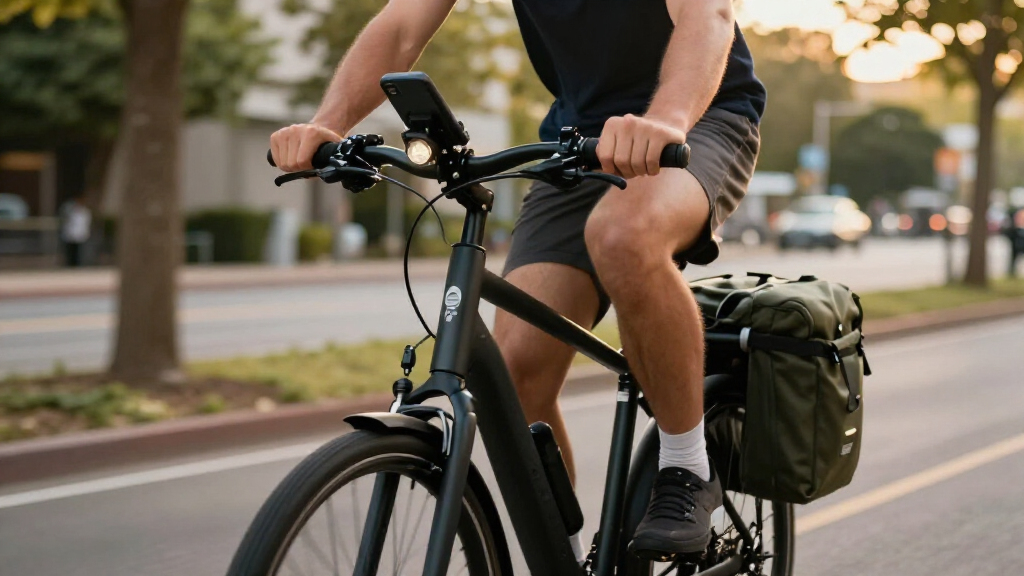
A rack, panniers, or basket makes an electric bike more useful by carrying shopping and work gear without loading your shoulders. The right setup keeps the load secure and balanced, while the rack’s rated capacity and the bike maker’s instructions set the limits for what you can carry.
Check the rack’s own weight rating and the bike’s frame or rack limit before loading it. A rack rated for 25 kilograms cannot raise a bike’s lower limit. Keep heavier items low and spread between both sides if you use panniers. That matters on an e-bike because a heavy bag perched on one side can make slow turns and parking feel awkward.
Imagine buying a week of groceries on the way home. Two panniers let you place milk and cans low, one on each side, while bread and leafy greens sit in a lighter top bag. A front basket can work well for a small jacket or lunch, but a bulky load may make steering feel heavy. Use straps or closures so nothing slips into the wheel or hangs near the chain.
Child seats, passenger seats, and trailers call for extra care. A rack or frame suitable for luggage may not be approved for a passenger. Confirm that the specific bike and mounting point are rated for the seat or trailer, then follow the maker’s weight limits and fitting instructions. If you drive to a trailhead, check a car rack’s e-bike weight capacity and frame fit too; removing the battery may be recommended to reduce carried weight.
Make Your Commute More Comfortable in Bad Weather
Fenders, comfortable contact points, and weather gear make an electric bike easier to ride day after day. Fenders cut down the stripe of road spray across your back, while well-fitted grips, a saddle that suits you, and a correctly adjusted seat can ease pressure on longer rides.
On a rainy commute, full fenders can stop water and grit from splashing up from the tires. Add a rain jacket with a bright color, gloves that still let you use the brakes, and a bag cover if your panniers aren’t waterproof. A mirror can help you check traffic behind you without twisting your shoulders sharply. Keep any mirror positioned so it doesn’t interfere with the controls.
Comfort is personal, so treat a saddle or suspension seatpost as a fit choice rather than an instant cure. If your hands go numb after twenty minutes, grips with a broader palm area may feel better, but bar position and saddle height can contribute too. A rider who cycles three flat kilometers to a station may prefer simple ergonomic grips, while someone riding rough paths for an hour might appreciate a suspension seatpost.
Check that fenders, mirrors, and bags won’t block lights, brake cables, sensors, or a folding mechanism. Follow the accessory maker’s fitting instructions and your bike’s manual. A fender that rubs a tire can make an irritating scrape on every rotation; a bag strap near the wheel can create a more serious hazard. If a new noise appears after fitting gear, stop and inspect the setup before riding again.
Check Battery and Charger Compatibility Before You Extend Your Range
A spare battery or portable charger can support longer rides only when the bike maker approves it for your exact system. Battery voltage, connectors, charging protocols, and output all matter, so a plug that appears to fit does not prove that the battery or charger is compatible.
Range also changes with the ride itself. Hills, cold weather, low tire pressure, rider and cargo weight, and higher assist levels can all shorten a charge. That means a second battery may help on a long route, but it adds weight to the bike or your bag. A commuter who runs out of charge during a steep winter ride may get less distance than expected, even with the same battery that carried them farther on a mild, flat day.
Before a long trip, check the battery level, route profile, and charging options at your destination. Follow the manufacturer’s instructions for charging and storage, and use reputable, approved equipment. Battery systems are not universally interchangeable, even as manufacturers improve battery management and energy density. Avoid relying on an unverified charger because its connector looks familiar.
For a routine commute, a rack bag with room for a charger may be more practical than a spare battery, provided you can recharge at work and your charger is designed for the bike. For touring, confirm the manufacturer’s supported battery options and plan stops around realistic range. A phone-connected display or navigation app can help track the trip, but keep your attention on the road and pull over before interacting with your phone.
Use This Five-Step Check Before You Buy Any Accessory
Before you buy an electric bike accessory, check what it mounts to, what weight it must handle, and whether it works with the bike’s electrical and mechanical systems. A few minutes with your bike manual can prevent an expensive return or an unsafe fit.
- Name the problem. Do you need to carry lunch, see better at dusk, or fix a puncture? A clear need keeps you from buying gear that stays in a closet.
- Find the mounting point. Check for rack eyelets, handlebar space, seatpost clearance, and any folding parts that must remain free.
- Check limits and measurements. Compare rack and frame load limits, wheel size, tire width, and the accessory’s fit range.
- Check electrical compatibility. For batteries, lights, or chargers, confirm the bike maker’s approved system and instructions. Similar connectors don’t guarantee a match.
- Inspect the fitted setup. Turn the handlebars, check the brakes and lights, and look for straps or cables near tires and moving parts before your first ride.
Take a phone mount as a simple example. It may fit your handlebar but cover a display, crowd a brake lever, or leave the phone bouncing on rough pavement. Check the mount’s grip and placement while the bike is stationary, then use voice directions or stop safely if you need to change a route.
The same careful check applies to repair gear. Some e-bikes have heavier wheels or components that make wheel removal less straightforward than on a standard bicycle. Learn what your particular model requires, and practice a repair at home so the first attempt doesn’t happen in the rain beside a busy road.
Spend First on the Accessories You’ll Use Every Week
The most useful electric bike accessories are the ones that solve a problem on your regular rides. A commuter will often get more value from lights, a lock, fenders, and panniers than from a spare battery; a trail rider may put a repair kit, pump, and sturdy bags higher on the list.
Consider Maya, who rides four kilometers to work and stops at the grocery store twice a week. She starts with lights and a U-lock, then adds fenders because rainy streets leave her coat streaked with grime. A pair of panniers keeps groceries off her back and stops a tote bag from swinging toward the wheel. Each item answers a recurring annoyance.
New products include integrated lights, built-in locks and trackers, phone-linked displays, and cargo-focused bike designs. GPS or cellular tracking may help you locate a missing bike, but some services need a subscription and a tracker does not guarantee recovery. Think about whether you will charge, maintain, and use an app-connected feature before paying for it.
Prioritize spending in a simple order: protective and visibility gear first, then security and basic repairs, then cargo and weather gear, followed by comfort or range upgrades that match your route. Check local riding rules for lights and helmets, since requirements vary by market and can change. With electric bike accessories, a short compatibility check and a clear use case do more for your ride than a long shopping list.
Frequently Asked Questions
What accessories do I need first for an e-bike?
Start with a properly fitted helmet, front and rear lights, a practical lock, and repair supplies for your tire type. Add fenders or a rack if your daily rides call for them.
Can I use any battery or charger with my electric bike?
No. Use a battery or charger approved for your specific bike system, and check voltage, connector, charging protocol, and output. A plug that fits does not prove compatibility.
Will a second battery increase my e-bike’s range?
It can if your bike supports that battery, but the extra weight matters. Hills, temperature, tire pressure, cargo, and assist level also affect how far you can ride.
Can I fit a child seat or passenger seat to my e-bike?
Only if the bike and the specific mounting point are rated for that seat and load. Check the manufacturer’s instructions; a rack approved for bags may not be approved for passengers.
Are regular bike accessories suitable for electric bikes?
Many standard accessories work, including some bags, bells, and mirrors. Check wheel and frame fit, load limits, and clearance from the motor system, battery, wiring, brakes, lights, and folding parts.
Conclusion
Choose accessories by asking one practical question: what problem will this solve on the rides you already take? Start with a helmet, lights, a lock, and basic repair gear, then add cargo, weather, comfort, or range equipment that fits your bike and your routine.
Before you roll away, inspect the fit and check the maker’s limits. A steady pannier, a bright rear light, and a lock you carry can turn an ordinary ride into a dependable habit.