
TL;DR
Start with a properly fitted helmet, front and rear lights, a sturdy lock, and a way to carry essentials. Then choose comfort, weather, or cargo accessories to fit your routes and your bike’s mounting points, load limits, motor, and battery system. Use only manufacturer-approved or explicitly compatible batteries and chargers.
Your e-bike may glide past traffic with a soft motor hum, but a dim light or wobbly rack can turn a smooth ride into a stressful one. The right electric bike accessories help you see, be seen, carry what you need, and feel more comfortable over the miles.

Get bike and ride gear delivered free with Prime
- Fast, free delivery on millions of items
- Prime Video, Amazon Music and more included
- Member-only deals all year
You don’t need to buy a catalog’s worth of gear at once. Start with the essentials, then add pieces that suit how your bike is used: a rainy commute, a grocery run, a weekend trail ride, or a school drop-off. You’ll learn what to prioritize, how to check fit and load limits, and why the bike’s motor and battery system matter when you choose electrical gear.
Think of your setup like a good tool kit: each piece should solve a real problem. A bright rear light may be more useful than a fancy phone mount if you ride home at dusk; a well-secured pannier can beat a backpack when you’re carrying a laptop and groceries.
Start with a fitted helmet, front and rear lights, a sturdy lock, and a practical way to carry essentials.
Check mounting points, electrical connectors, and the bike’s frame and rack limits before buying accessories.
A tracker or alarm can support a lock, but it cannot replace physically securing the frame to a fixed object.
Only use batteries and chargers that the bike manufacturer supports or explicitly lists as compatible.
Test cargo and comfort changes on a quiet, familiar route before relying on them in traffic.
Buy These Four Accessories Before Your First Long Ride
Electric bike accessories worth buying first are a properly fitted helmet, front and rear lights, a sturdy lock, and a simple way to carry essentials. Together, they address four different risks: injury, being overlooked, theft, and losing control of the things you bring. That makes them a stronger first investment than a collection of convenience upgrades. If your rides end after dark or start before sunrise, prioritize lights because visibility depends on both being seen and being able to read the road ahead.
Start with the helmet: it should sit level, feel snug, and stay put when you shake your head. A poor fit can let it shift at the moment you need it, so use the maker’s adjustment instructions and check the safety standards and helmet rules that apply where you ride; local requirements can vary by bike class and location. Next, make sure drivers and other riders can see you from both ends. Integrated lights can draw power from the main battery, which means fewer separate charging routines, but they may be harder to replace or may depend on the bike’s system. Standalone models are easier to install and can serve as backups, though you’ll need to keep them charged.
For security, choose a lock you can use to secure the frame to a fixed object, then add a second lock or a way to secure removable wheels if your parking spot calls for it. A tracker or alarm adds another layer, but it cannot physically hold your bike; its value is in helping you notice movement or aid recovery. For instance, a commuter who parks outside a café can use a frame lock plus a chain around a fixed rack, and stash a compact repair kit in a small bag. The extra lock takes more time to carry and use, but that tradeoff may make sense where a bike is left unattended often.
These four first purchases make a practical starting point: helmet, lights, lock, and carrying option. A bell, reflective decals, or reflective clothing can help you communicate and stand out, especially on crowded streets or dim paths. The best combination depends on your routes, the weather, and the places where you leave the bike; buying for those conditions helps keep the setup useful rather than heavy with gear that rarely leaves home.
Popular right now

Sony WH-1000XM6 Wireless Noise-Canceling Headphones, Black

KitchenAid 5.5-Quart Bowl-Lift Stand Mixer, Porcelain White

Bose QuietComfort Wireless Noise-Cancelling Headphones, Petal Pink
As an affiliate, we earn on qualifying purchases.
Match Lights, Helmets, and Locks to the Ride You Actually Take
Electric bike accessories for safety work best when they suit your route, riding hours, and parking habits. A short daytime ride on a separated path calls for different visibility gear than a winter commute through busy intersections. The practical question is what problem you encounter most: poor visibility, unpredictable traffic, or long periods parked in public. Matching gear to that problem avoids spending on features that add little protection in your usual conditions.
Use a front light to help you see the road and a rear light to help others spot you; check local rules for required lighting. If you ride after dark, reflective details on a jacket, bag, or ankle can move as you pedal and catch a driver’s eye, while lights give a steady point of visibility. Neither guarantees that others will notice you, so use them alongside predictable riding and a position that gives you room to react. A bell gives you a clear way to signal on shared paths. Imagine approaching a blind bend on a riverside trail: a brief bell ring can alert a walker before you come around it, reducing the chance that either of you has to make a sudden move.
A helmet should fit your head and the type of riding you do; no accessory can promise injury prevention. Follow the helmet maker’s fit and care directions, and replace a helmet after a crash if its instructions say to. A rear-view mirror can also help you check traffic without repeatedly turning your head, though it doesn’t replace looking over your shoulder before changing position. The mirror trades a quicker glance for a narrower view: traffic can move between checks, and judging distance in a mirror takes practice.
Lock strategy matters as much as lock style. Secure the frame to a fixed object, choose a visible parking place when possible, and protect removable parts where practical. An alarm or GPS tracker can help you respond if the bike moves, but treat it as a backup to a physical lock because alerts do not stop someone from lifting or cutting a bike. For a quick grocery stop, a café-locking routine that includes the frame and a solid rack is far more dependable than relying on an app alert alone. For longer parking, carrying a heavier second lock may be worthwhile; a lock that is too bulky to bring consistently offers less protection than one you actually use.
Make Your E-Bike More Comfortable Without Guessing at Fit
Electric bike accessories such as an adjusted saddle, ergonomic grips, a suspension seatpost, and mirrors can make longer rides more comfortable and controlled. Fit matters more than a shiny finish: a saddle that suits one rider can leave another shifting around after ten minutes. Small contact points often make the biggest difference because your hands and seat stay in touch with the bike for the whole ride. Addressing fit can also help you stay relaxed and attentive; persistent pain can distract you even when the bike itself is working well.
Begin with adjustments before shopping. If your knees feel cramped, the saddle may sit too low; if you slide forward, its angle may need attention. Make one change at a time and test it on a familiar loop. A rider who commutes 25 minutes each way might notice that a modest saddle-height adjustment eases knee strain more than an expensive seat upgrade. Changing one thing at a time makes the result easier to judge and helps avoid masking a fit problem with a part that only feels better briefly.
Grips can help if your palms tingle or your wrists feel bent, while a suspension seatpost can soften sharp bumps on rough pavement. The tradeoff is that a softer setup may feel less direct, and a seatpost must match the frame and rider’s weight range. Neither accessory fixes a poorly sized bike, so persistent discomfort may call for a shop fitting. A mirror can reduce the need to twist around in traffic, but it takes practice to judge distance accurately. Think of it like learning a new instrument: at first you check it deliberately, then the glance becomes part of your routine.
Comfort choices depend on your body, riding position, and surface. For a smooth city route, ergonomic grips may be enough; for broken pavement, tire pressure and a suspension post could matter more. Test inexpensive adjustments first, keep the original parts until you know the change works, and ask a mechanic for help if an accessory affects steering, brakes, or frame fit. That sequence limits unnecessary purchases and keeps a comfort tweak from creating a handling problem.
Carry Groceries, a Laptop, or a Child Within the Bike’s Limits
Electric bike accessories for carrying include racks, panniers, baskets, child seats, and trailers, but your bike’s weight limits and mounting points decide what is safe to fit. Check the frame, rack, and accessory instructions before loading anything. A powerful motor may help you get moving with cargo, but it does not raise the bike’s rated capacity or make extra weight disappear when you brake or corner. Weight affects stopping and balance, so the limit is about how the bike behaves under load as well as whether the rack can hold the items.
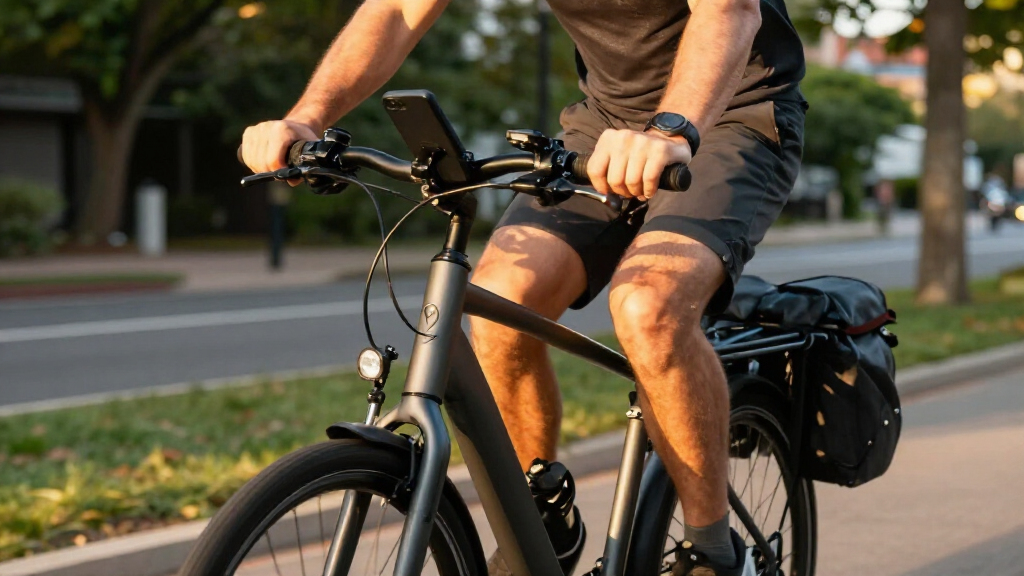
A rear rack with panniers keeps a laptop and groceries low and balanced. A front basket offers quick access to a jacket, though heavy front cargo can affect steering. For example, a rider bringing home a full bag of produce may find that two balanced panniers feel steadier than one overloaded basket. The panniers take a little longer to load, but spreading weight between them can reduce side-to-side imbalance. Secure loose straps so they cannot catch in a wheel.
Child seats and trailers need special care. Check whether your bike supports the seat or hitch, follow both manufacturers’ instructions, and account for the extra length, weight, and stopping distance. Practice on a quiet, flat route before taking a trailer into traffic. A trailer can offer more room and leave the rear rack available, but its extra length changes turning and maneuvering; a child seat keeps the setup shorter but adds weight higher on the bike. Helmets and suitable safety gear matter for everyone riding, with specific rules depending on age and location.
Before a loaded trip, walk the bike and check that the rack is firmly mounted, the load stays within limits, and nothing blocks lights or interferes with the brakes. The bike may handle differently with cargo, especially at low speed or on a tight turn. Take a short test ride in an empty parking lot; that ten-minute rehearsal can reveal a shifting bag before you discover it halfway through an intersection. If the bike feels unstable or takes longer to stop than expected, reduce or redistribute the load before riding in traffic.
Choose Battery and Charging Gear That Your E-Bike Supports
Electric bike accessories that connect to the battery require exact compatibility with your bike’s system. A spare battery or larger-capacity battery can extend available energy only when the manufacturer supports that option; chargers are not universal. Voltage, connectors, battery management, and mounting can differ even between models from the same brand. A mismatch can prevent charging or operation and may damage components, so a familiar brand name or a plug that fits is not enough evidence of compatibility.
Check the manufacturer’s compatibility list before buying a battery, charger, or integrated light. A connector that appears to fit does not prove that the electrical system matches. Use the specified charger, follow the maker’s charging and storage guidance, and stop using a battery that looks damaged or behaves unusually. If you’re unsure about a connection or battery fault, ask the manufacturer or a qualified e-bike shop. This extra check can feel slower than buying a generic accessory, but it protects the battery system and gives you a clear answer about warranty and support.
Consider a commuter whose round trip is close to the bike’s practical range. A compatible spare battery may make the ride easier to plan, while a phone mount only helps if the phone stays visible without distracting the rider. Range changes with assist level, terrain, temperature, tire pressure, cargo, and riding style, so a bigger battery doesn’t guarantee a fixed distance in every condition. It can provide a useful buffer, but carrying the spare adds weight and cost; improving tire pressure or reducing cargo may be simpler if the range gap is small.
Small electrical accessories can bring convenience: integrated lights may use the main battery, while standalone lights can be charged separately and carried as backups. App-connected alarms and displays can also be useful, but features may depend on a particular brand, software support, or network access. Ask the shop to confirm compatibility in writing if the accessory’s connection is unclear. Knowing whether an accessory draws from the bike battery or needs its own charging helps you plan for a ride without discovering a dead light or alarm at the start.
Build a Weather and Repair Kit You’ll Actually Carry
Electric bike accessories for rain and roadside repairs can turn a miserable stop into a manageable one. Fenders keep much of the road spray off your clothes, while waterproof panniers protect a laptop or spare layer. Gloves and weather-appropriate clothing help you stay comfortable, but your bike’s battery and electrical parts still need care according to the maker’s guidance. The useful kit is the one sized for your ride: carrying every possible tool adds weight, while leaving out a basic puncture fix can turn a small problem into a long walk.
Keep a compact pump, tire-repair supplies, and a multitool suited to your bike’s fasteners. Add a phone and water for longer rides. If you get a puncture on a commute, a small repair kit can help you reach work instead of walking the bike through rain with a wet sleeve stuck to your arm. Check tire and tube sizes before buying supplies; a kit that doesn’t fit your wheels adds weight without much help. Practice using the repair items at home so you know which tools fit and how long the job takes before you need them beside the road.
Some e-bike parts need tools or knowledge beyond a basic roadside repair. Follow the service guidance for brakes, electrical wiring, and motor components, and use a qualified mechanic for safety-critical repairs such as brakes, airbags if your transport setup includes them, or high-voltage EV systems. If your e-bike or battery may be affected by a recall, check the relevant official recall information, including NHTSA listings where applicable, and follow the manufacturer’s instructions. Knowing which jobs you can handle and which need a shop keeps a roadside fix from introducing a fault that affects braking or electrical safety.
Store the bike and battery as the manufacturer directs, especially after a wet ride or in very hot or cold conditions. A cover can help protect a parked bike from weather, but it does not replace correct battery storage or charging. A simple habit helps: after a rainy commute, wipe the frame, check the lights, and let the bike dry in a suitable place before charging. That routine can reveal a light or connection issue early and keeps weather protection from being mistaken for maintenance.
Frequently Asked Questions
What accessories should I buy first for an electric bike?
Start with a well-fitting helmet, front and rear lights, a sturdy lock, and a way to carry essentials. Add a bell, reflective clothing, comfort upgrades, or weather gear based on your routes and riding hours.
Can I use regular bicycle accessories on an e-bike?
Often, yes, but check the accessory’s mounting style and weight rating against your bike. Pay extra attention to racks, child-carrying gear, lights, and anything that connects to the electrical system.
Can I use a different charger or add a second battery?
Only use a charger and battery combination the manufacturer supports or explicitly lists as compatible. Similar-looking plugs can hide differences in voltage, battery management, or mounting, so confirm the exact model before connecting it.
How can I make my e-bike harder to steal?
Lock the frame to a fixed object in a visible place and secure removable parts when practical. An alarm or GPS tracker can help you notice movement or support recovery, but it works as an added layer alongside a physical lock.
Will a child seat or trailer fit my electric bike?
It depends on the bike’s design, mounting points, and weight limits. Follow the bike and accessory manufacturers’ instructions, then practice with the added load on a quiet route because extra weight changes handling and stopping distance.
Which accessories can increase an e-bike’s range?
A manufacturer-supported higher-capacity battery can provide more available energy, but it does not promise a fixed distance. Assist level, hills, temperature, tire pressure, cargo, and riding style all affect real-world range.
Conclusion
Buy accessories in the order your rides demand: safety and visibility first, then security, comfort, and carrying gear. Check fit, electrical compatibility, and load limits before you pay; those details matter more than a premium label.
Build a setup that makes your regular ride feel calmer and more useful. When the light clicks on, the lock snaps shut, and your groceries ride steady beside you, your e-bike starts working like it belongs in your everyday life.