
Many people skip proper wiring inspections and battery maintenance when setting up home charging stations, risking electrical fires. They often overlook installing dedicated circuits, using appropriate wiring rated for the load, or regularly inspecting batteries for damage. Failing to follow these safety steps increases the chances of overheating, shorts, and fires. To protect your home and loved ones, it’s essential to follow fire-safe setup practices—keep going, and you’ll discover key safety tips to prevent hazards.
Key Takeaways
- Many overlook proper wiring rated for charging load, increasing fire risk from overheating and short circuits.
- Skipping regular battery inspections can hide damage that may cause overheating or fires.
- People often neglect dedicated circuits, risking overloads and electrical fires in the home.
- Failing to use safety-certified chargers with safeguards can lead to dangerous overcharging or shorting.
- Ignoring professional installation and local safety standards increases the likelihood of fire hazards.
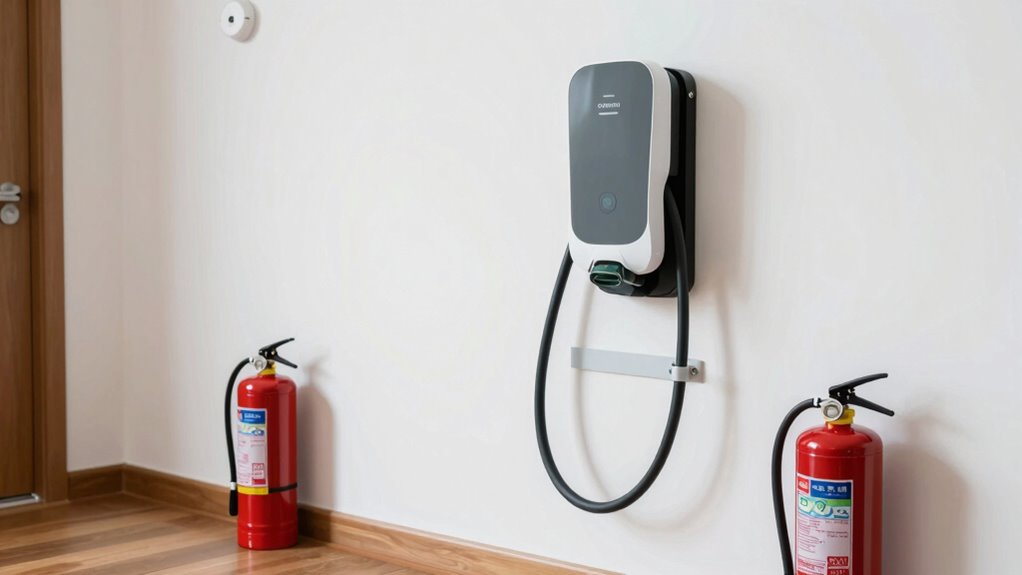
Setting up a fire-safe home charging station is essential to protect your property and loved ones from potential electrical fires. Too often, people overlook the importance of proper battery maintenance and wiring safety when installing chargers for electric vehicles or other rechargeable devices. Neglecting these aspects can lead to dangerous situations, including overheating, short circuits, or even fires. To guarantee your home charging setup is safe, you need a clear plan that emphasizes proper battery care and secure wiring.
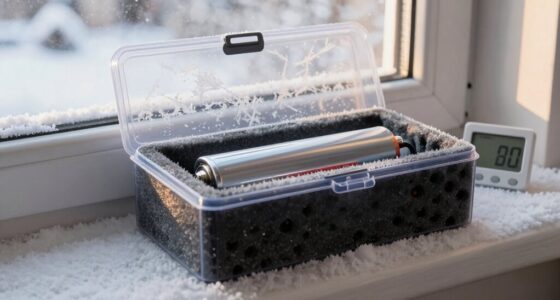
Battery maintenance is critical because batteries can degrade over time, especially if they’re not maintained properly. Regularly inspecting your batteries for signs of damage, swelling, or corrosion is vital. If you notice any abnormalities, replace or repair the batteries immediately. Proper maintenance also includes avoiding overcharging or excessive discharging, which can stress the battery and increase risk. Using chargers with built-in safeguards like overcurrent protection helps prevent damage caused by electrical surges or faults. Keeping your batteries clean and free of debris reduces the chance of short circuits. When your batteries are in good condition, they’re less likely to overheat or cause fires, making your entire charging setup safer. Additionally, understanding the contrast ratio of your electrical components can help you assess the effectiveness and safety of your wiring and insulation.
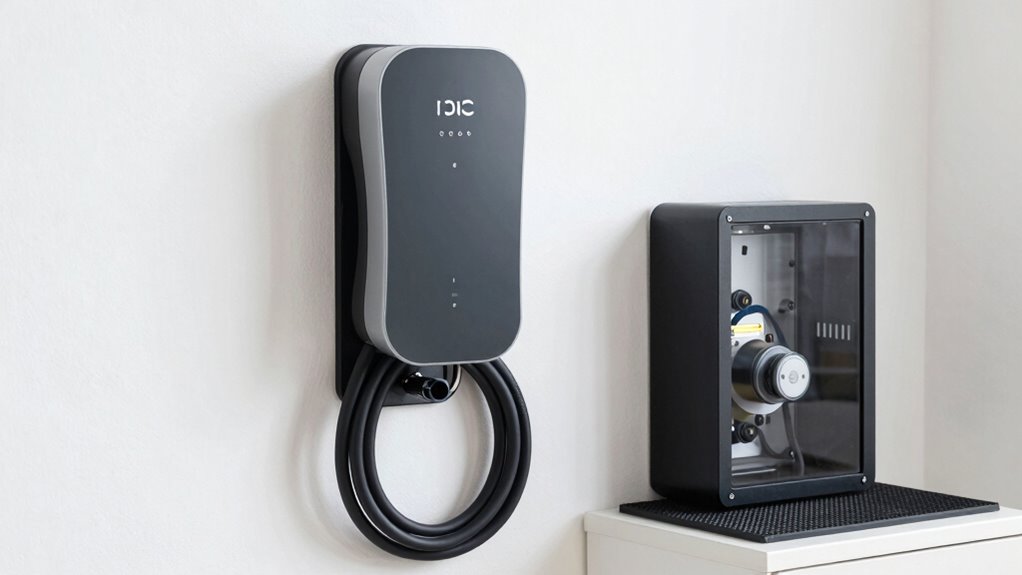
Wiring safety is another crucial component that many people overlook. The electrical wiring connecting your charger to your home’s power supply must be correctly installed and rated for the load. Faulty or outdated wiring can cause overheating, sparks, or electrical fires. Always use high-quality cables that meet safety standards, and ensure they are rated for outdoor or indoor use, depending on your setup. Secure all wiring connections tightly to prevent loose contacts, which can generate heat and increase fire risk. Avoid running wires through areas where they might be pinched or damaged, and keep them away from flammable materials. Installing a dedicated circuit for your charging station is highly recommended, as it prevents overloads on your main electrical system. If you’re unsure about wiring safety, consulting a licensed electrician guarantees that your setup complies with local codes and safety regulations.
Frequently Asked Questions
How Often Should I Inspect My Charging Equipment for Safety?
You should examine your charging equipment at least once a month for safety. During these checks, focus on battery maintenance and plug connection checks to ensure everything’s secure and undamaged. Look for frayed cords, loose connections, or signs of wear. Regular inspections help prevent potential hazards, keep your charging setup safe, and extend the lifespan of your equipment. Stay vigilant to protect your home and loved ones.
Are There Specific Fire-Resistant Materials Recommended for Home Charging Areas?
You should use fire-resistant paints and fireproof wall coverings in your home charging area to enhance safety. These materials help contain potential fires and prevent flames from spreading. Look for products rated specifically for fire resistance, and guarantee proper installation. Combining these materials with regular inspections of your charging equipment creates a safer environment, reducing fire risks and protecting your home and loved ones.
What Are Signs of Potential Electrical Fire Hazards During Charging?
You need to stay alert for fire hazard indicators during charging. Watch for signs like burning smells, sizzling sounds, or sparks—these electrical fire signs warn of serious danger. Overheating outlets, flickering lights, or scorched cords also signal potential hazards. If you notice any of these, disconnect the charger immediately. Ignoring these signs could lead to a fire, so always stay vigilant and address issues before they escalate.
Can Regular Household Outlets Handle EV Charging Safely?
Regular household outlets can handle EV charging if you choose the right charging station placement and consider electrical outlet upgrades. Avoid plugging your charger into overloaded outlets or extension cords, which can cause hazards. It’s best to have a dedicated outlet installed, especially for faster charging, and make sure your wiring meets safety standards. Upgrading your electrical outlet enhances safety and prevents potential fire risks during charging.
What Is the Best Way to Train Family Members on Fire Safety During Charging?
You should train your family on ev safety protocols by holding regular family fire drills that include charging scenarios. Teach everyone how to disconnect charging safely, recognize signs of electrical issues, and respond quickly if a fire occurs. Reinforce the importance of never leaving charging equipment unattended and make sure everyone knows emergency contact numbers. Practicing these steps helps keep your family safe during EV charging and builds confident, quick responses during emergencies.
Conclusion
So, think twice before you neglect this essential step. Ignoring a fire-safe charging setup might seem harmless now, but the risk lurks quietly in the background. One small oversight could turn your home into a hazard you never saw coming. Are you willing to take that chance? Stay vigilant, prioritize safety, and don’t let a simple mistake turn into a devastating disaster. Because in this game, safety isn’t just an option—it’s your last line of defense.