Hydraulic brake bleeding is the vital step that removes air bubbles from your brake lines, preventing the dreaded spongy brake pedal feel. When done correctly, it guarantees your brakes respond quickly and effectively, restoring maximum stopping power. Using the right tools and fresh brake fluid, you can prevent air from compromising your braking performance. Keep going to discover the simple steps and tips for mastering this essential maintenance process.

Get bike and ride gear delivered free with Prime
- Fast, free delivery on millions of items
- Prime Video, Amazon Music and more included
- Member-only deals all year
Key Takeaways
- Properly bleeding the brakes removes air bubbles that cause sponginess, restoring firm pedal feel.
- Using the correct brake fluid and ensuring its cleanliness prevents air from entering the system.
- Applying consistent pressure with appropriate bleeding tools ensures thorough air removal.
- Bleeding should be performed from the furthest wheel to the closest to effectively eliminate trapped air.
- Regular brake fluid replacement and maintenance prevent air ingress and maintain optimal braking performance.

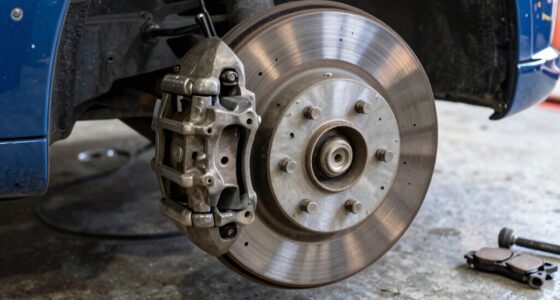
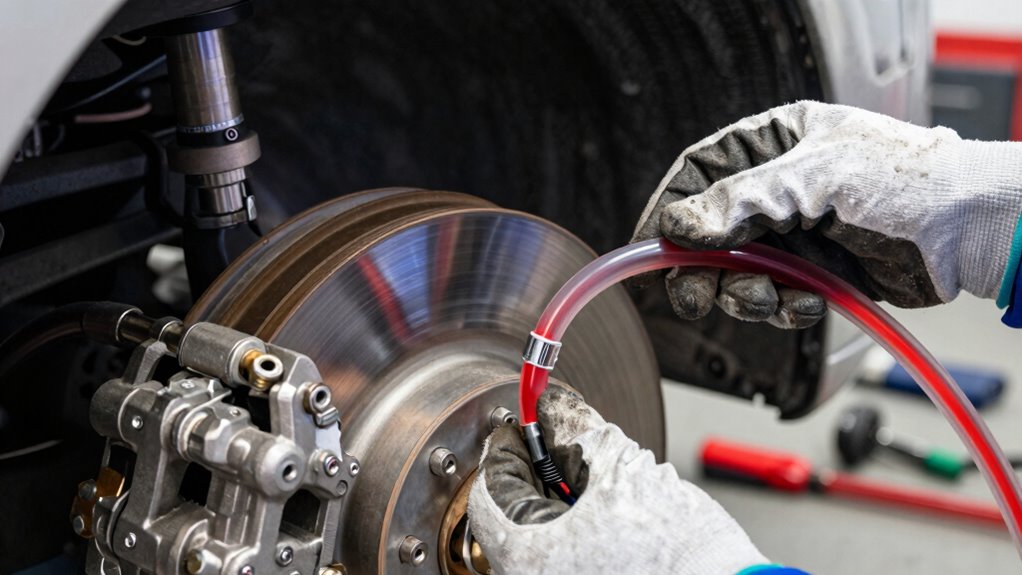
Hydraulic brake bleeding is a essential maintenance process that removes air bubbles from your brake lines to guarantee maximum stopping power. When your brake pedal feels spongy or soft, it’s usually a sign that air has entered the hydraulic system, compromising brake performance. To restore proper braking, you need to eliminate these air pockets through bleeding. This process involves using specific bleeding equipment, such as a brake bleeder kit, a syringe, or a turkey baster, to push or pull brake fluid through the system and expel trapped air. Proper fluid management during bleeding is crucial to prevent introducing additional air or contaminants into the system.
Hydraulic brake bleeding removes air bubbles to ensure optimal stopping power.
Before starting, it’s necessary to understand the different brake fluid types available. Most vehicles use DOT 3, DOT 4, or DOT 5.1 brake fluids, each with different boiling points and compatibility. Using the correct brake fluid type is essential because mixing incompatible fluids can cause damage or reduced braking efficiency. Always check your vehicle’s manual to confirm the recommended brake fluid and verify you’re using fresh, uncontaminated fluid during the bleeding process. Old or contaminated brake fluid can introduce moisture and degrade braking performance, so it’s wise to replace it regularly.
When it comes to bleeding equipment, you have several options depending on your comfort level and tools available. A simple manual bleeding kit might suffice for basic maintenance, but more advanced setups like a pressure or vacuum bleeder can make the process faster and more thorough. Using proper bleeding equipment ensures you can apply consistent pressure or vacuum, making it easier to push out air bubbles without creating new ones. Some systems even feature built-in reservoirs or one-way valves to prevent fluid from draining back into the master cylinder, giving you better control over the bleeding process.
As an affiliate, we earn on qualifying purchases.
Frequently Asked Questions
How Often Should I Bleed My Hydraulic Brakes?
You should bleed your hydraulic brakes every 6 to 12 months, or whenever you notice spongy brakes or reduced performance. Regularly check your brake pad wear and rim alignment, as these can affect brake efficiency. If you notice a decline in braking feel, it’s a good idea to bleed your brakes sooner. Keeping up with this maintenance guarantees smooth operation and safe riding, preventing issues caused by air bubbles or contamination.
Can I Bleed Brakes Without Professional Tools?
Yes, you can bleed brakes without professional tools using a DIY method and a brake fluid kit. Simply follow the instructions included with the kit, which usually involve removing old brake fluid and replacing it with fresh fluid. Make sure to keep the brake fluid reservoir topped off and bleed the brakes in the correct order. With patience and careful attention, you can effectively maintain your brakes at home.
What Are Signs of Air in the Brake Lines?
You’ll notice signs of air in the brake lines when your brake fluid becomes dark or cloudy, and you see visible air bubbles rising in the master cylinder or brake lines. If your brake pedal feels soft or spongy instead of firm, that’s another clear sign. These symptoms indicate air has entered the system, compromising braking performance. Address the issue promptly by bleeding the brakes to restore proper brake fluid pressure and safety.
Is Hydraulic Brake Bleeding Necessary After Every Ride?
You don’t need to bleed your brakes after every ride, but regular maintenance is vital. Did you know that brake pad wear and tire pressure issues can impact braking performance more than air in the lines? If you notice spongy brakes or decreased stopping power, bleed your hydraulic brakes promptly. Incorporating routine tire pressure checks and brake pad inspections ensures your braking system stays responsive, preventing accidents and keeping you safe on every ride.
How Do I Know if My Brake Fluid Is Contaminated?
You can tell if your brake fluid is contaminated by checking for a dark, cloudy appearance or a burnt smell. If your brakes feel spongy or less responsive, fluid contamination might be the cause. Perform brake fluid testing using a test kit, which reveals moisture levels and dirt in the fluid. Regular testing guarantees your brake system stays clean, safe, and efficient, preventing spongy brakes and maintaining ideal performance.
As an affiliate, we earn on qualifying purchases.
Conclusion
Think of hydraulic brake bleeding as the final brushstroke in a masterpiece—without it, your brakes remain fragile and uncertain. Just like the alchemist’s quest to turn base metals into gold, this simple step transforms your braking system from sluggish to responsive. Don’t let air pockets undermine your safety or turn your ride into a perilous journey. Master this one step, and your brakes will perform with the reliability of a well-tuned legend.
As an affiliate, we earn on qualifying purchases.
As an affiliate, we earn on qualifying purchases.
Fall Picks
fall essentials
As an affiliate, we earn on qualifying purchases.