
To keep disc brakes quiet in wet weather, choose moisture-resistant pads like metallic or semi-metallic ones, and regularly clean your rims with a degreaser to prevent dirt buildup. Confirm your calipers are properly aligned and replace worn pads promptly. Lubricate caliper pins to avoid squeaking, and soften your braking with gentle, gradual stops. Proper system adjustments and maintenance are key. For more tips on mastering quiet braking in wet conditions, stay tuned.

Get bike and ride gear delivered free with Prime
- Fast, free delivery on millions of items
- Prime Video, Amazon Music and more included
- Member-only deals all year
Key Takeaways
- Use moisture-resistant brake pads, such as metallic or semi-metallic, for consistent, quiet braking in wet conditions.
- Regularly clean rims and brake components to remove dirt, oil, and grime that cause noise and uneven wear.
- Ensure brake calipers are properly aligned and pads are centered on the rotor for smooth contact.
- Lubricate caliper pins and moving parts with appropriate lubricants to prevent squealing.
- Brake gently and avoid sudden stops to reduce vibrations and noise in wet weather.

Wet weather can cause your disc brakes to squeal or grind, making riding uncomfortable and distracting. When moisture gets into the brake system, it can lead to noise and reduced braking performance. To keep your brakes quiet, you need to pay attention to both the brake pad materials and rim cleanliness. The type of brake pads you use influences how well your brakes handle wet conditions. Some materials, like metallic or semi-metallic pads, tend to perform better in wet weather because they are more resistant to moisture and provide consistent braking. Conversely, organic or resin pads might absorb water, leading to increased noise and less effective stopping power. Choosing the right brake pad material is essential for minimizing squeal and grinding when riding in damp conditions.
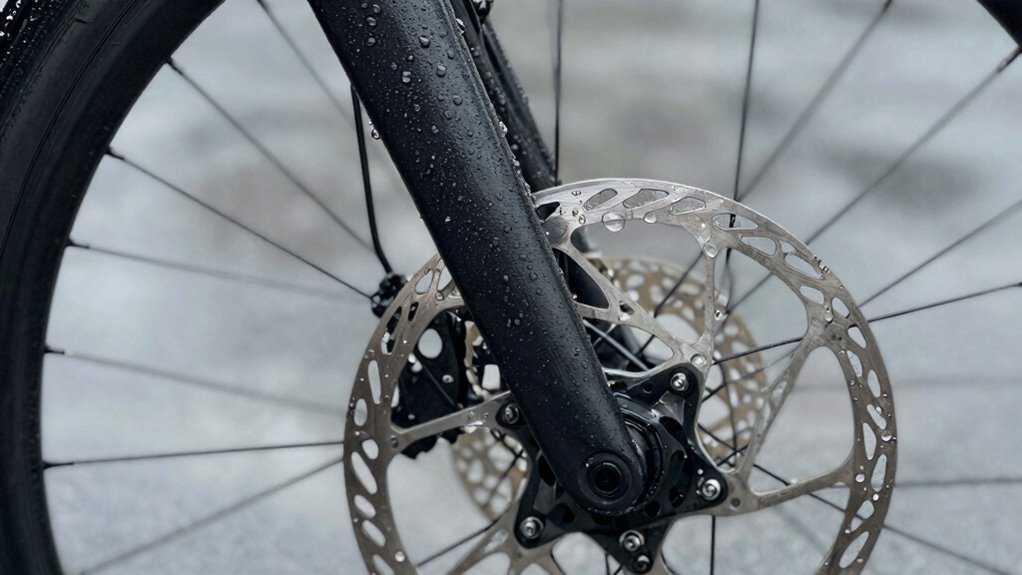
Wet weather can cause disc brake squeal; choosing moisture-resistant pad materials helps maintain quiet, effective braking.
Another key factor is rim cleanliness. Even though disc brakes are designed to work independently of the rim, keeping your rims clean can greatly reduce noise issues. Dirt, oil, or grease on the rim surface can cause uneven braking and vibrations, which often result in squealing or grinding sounds. Regularly wipe down your rims with a clean, dry cloth after rides, especially in wet weather. If you notice any buildup of grime or oil, use a mild degreaser to thoroughly clean the surface before riding again. Clean rims ensure that your brake pads grip properly, reducing the chances of noise and uneven wear. Proper maintenance of the brake system, including checking for wear and tear, is crucial to keep everything functioning smoothly in wet conditions. Additionally, using appropriate cleaning techniques can further enhance your brake performance and quietness.
In addition to choosing suitable brake pad materials and maintaining rim cleanliness, you should also verify your brake system is properly adjusted. Misaligned calipers or worn-out brake pads can worsen noise issues in wet weather. Make sure your brake pads are centered correctly on the rotor and replace them if they’re worn down. Proper adjustment ensures even contact between the pads and rotor, which minimizes vibrations and sound. Applying a light coating of lubricant to the caliper pins can also help prevent squeaking caused by metal-on-metal contact. Regular maintenance and timely replacements play a fundamental role in keeping your disc brakes quiet, regardless of the weather. Moreover, proper lubrication can help reduce the likelihood of metal-on-metal contact that causes squealing noises. Regularly inspecting brake system components can also help catch potential issues early before they lead to noise or failure.
Furthermore, inspecting your brake system regularly for corrosion or rust can help you address potential issues before they cause noise or failure. Finally, riding technique matters too. Braking gently and gradually can prevent excessive vibration and noise. Avoid sudden, hard stops that can cause the brake pads to chatter or squeal. By paying attention to brake pad materials, keeping your rims clean, and maintaining your brake system, you can greatly improve your riding experience in wet weather. These simple steps help guarantee your disc brakes stay quiet, reliable, and efficient, no matter how damp the conditions get.
Popular right now

Ninja Luxe Café Premier 3-in-1 Espresso, Drip Coffee, and Cold Brew Machine

De'Longhi Classic Signature Espresso Machine with Adjustable Milk Frother

Ninja Foodi Smart XL 6-in-1 Indoor Grill and Air Fryer, 4 Qt, FG551
As an affiliate, we earn on qualifying purchases.
Frequently Asked Questions
Can Using Ceramic Brake Pads Reduce Noise in Wet Conditions?
Yes, ceramic brake pads can reduce noise in wet weather. They’re designed to produce less squeal and chatter compared to traditional pads, especially in damp conditions. Ceramic pads resist water buildup and heat, which helps keep your brakes quieter and more consistent during wet weather. By choosing ceramic pads, you’ll likely experience fewer noise issues and improved braking performance when conditions are less than ideal.
Does Applying Anti-Squeal Lubricant Help in Wet Weather?
Applying anti-squeal lubricant can help in wet weather, but water intrusion often diminishes its effectiveness. Think of it like wearing rain boots; they keep your feet dry, but if water seeps in, the protection fades. Similarly, lubricant forms a barrier that reduces squeal, yet persistent water can wash it away or compromise its effectiveness. Regular maintenance and selecting the right lubricant guarantee your disc brakes stay quiet despite wet conditions.
How Often Should I Clean My Disc Brakes for Noise Prevention?
You should clean your disc brakes every few hundred miles or whenever you notice noise. Regular brake caliper maintenance and checking brake pad materials help prevent squealing, especially in wet weather. Use a soft brush and brake cleaner to remove dirt, grime, and brake dust. Keeping your rotors and pads clean reduces moisture buildup, ensuring quieter braking and extending the lifespan of your brake components.
Are There Specific Brake Rotor Designs That Are Quieter When Wet?
Did you know that some brake rotor designs can reduce noise by up to 50% in wet conditions? You should look for rotors made from quieter materials like carbon composites or stainless steel. Additionally, rotors with noise dampening coatings are your best bet—they absorb vibrations and dampen sounds. Choosing these specialized designs can considerably minimize squeal and chatter, keeping your rides smoother and quieter even in rainy weather.
Is It Safe to Ride With Brake Noise During Rainy Days?
Riding with brake noise during rainy days isn’t always unsafe, but it signals you should check your brake pad materials and overall bicycle maintenance. Noisy brakes might reduce your stopping power or indicate moisture buildup. To stay safe, make sure your brake pads are appropriate for wet conditions and keep your discs clean. Regular maintenance helps prevent issues, so if noise persists, consider visiting a bike shop to inspect and adjust your brakes.
Conclusion
Keeping your disc brakes quiet in wet weather isn’t just about comfort—it’s about safety too. Did you know that wet conditions cause up to 70% of brake failures? By regularly cleaning your rotors, applying proper brake pads, and avoiding sudden stops, you can reduce noise and improve braking performance. Stay proactive, and you’ll enjoy safer, quieter rides even when the weather’s less than ideal. Your bike’s reliability depends on it—stay vigilant!