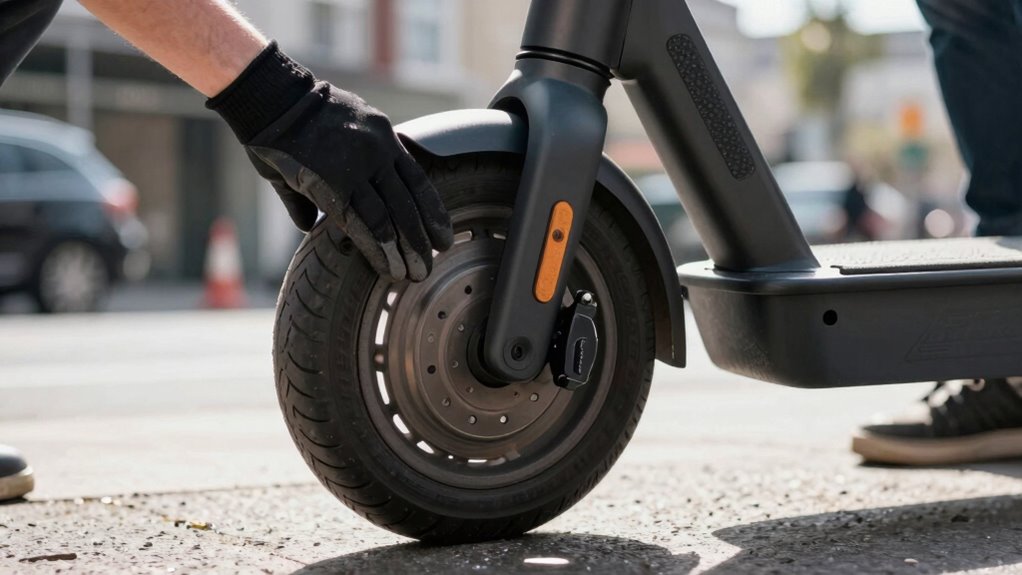

Before you ride, check your scooter’s battery to make certain it’s fully charged and the contacts are clean, especially if it’s removable. Inspect the tire pressure to match the recommended psi for better handling and safety. Test your brakes and lights to confirm they respond properly. Conduct a quick visual scan of the scooter for any loose parts or damages. Keeping these essentials in mind helps you ride confidently and safely, and you’ll find even more tips to keep you prepared.
Key Takeaways
- Verify the battery is fully charged and contacts are clean for reliable power.
- Check tire pressure to ensure optimal handling and safety.
- Test brakes for responsiveness and wear before riding.
- Confirm all lights and signals function properly for visibility.
- Perform a quick visual inspection of scooter components for any damage or loose parts.
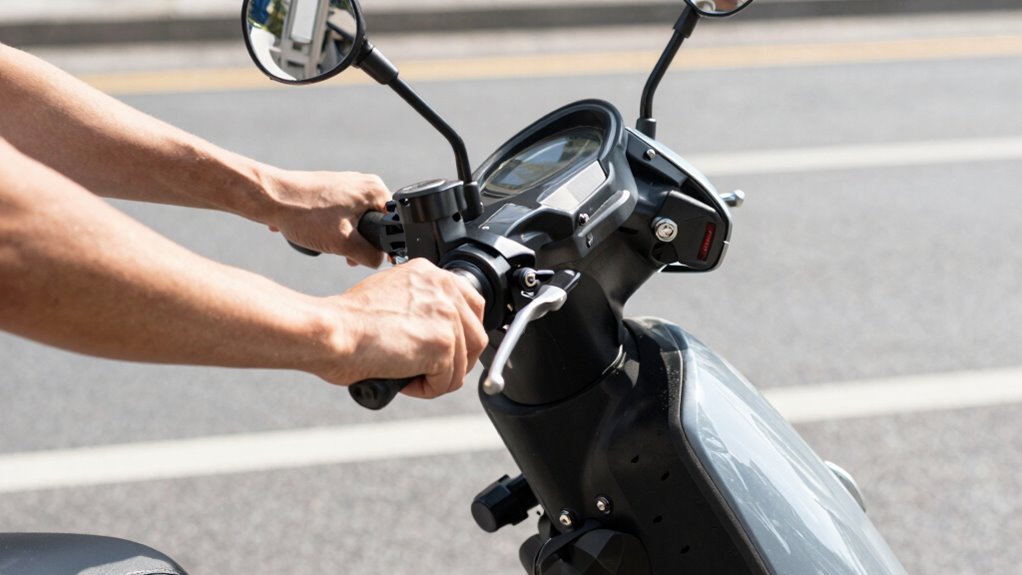
Before hopping on your scooter, it’s crucial to perform a quick pre-ride check to make sure everything is in proper working order. This simple step can prevent breakdowns, improve safety, and extend your scooter’s lifespan. Two key areas to focus on are battery maintenance and tire pressure. Neglecting these aspects can lead to reduced performance or even accidents, so it’s worth taking a few minutes to inspect them carefully.
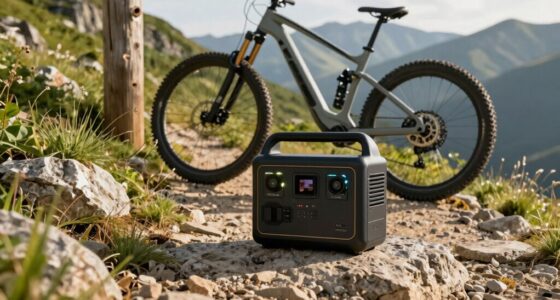
Start with the battery. If your scooter is electric, you want to ensure the battery is fully charged before heading out. Check the battery indicator or display panel to see if the charge level is sufficient. If your scooter has removable batteries, make sure they’re securely connected and free of corrosion or dirt. Proper battery maintenance involves keeping the connections clean and avoiding extreme temperatures that could damage the cells. If you notice any unusual power loss or inconsistent performance, it might be time for a deeper inspection or professional servicing. A well-maintained battery ensures reliable rides and longer intervals between charges, so don’t overlook this crucial aspect.
Ensure your electric scooter’s battery is fully charged, clean, and free of corrosion for reliable, longer-lasting rides.
Next, examine the tire pressure. Properly inflated tires are essential for safe handling, comfort, and efficiency. Use a reliable tire pressure gauge to check the psi against the manufacturer’s recommended levels, which you can usually find in the user manual or on a sticker on the scooter itself. Under-inflated tires can cause sluggish response, poor traction, and increased wear, while over-inflated tires might lead to a harsh ride or increased risk of punctures. Adjust the pressure accordingly, making sure both tires are evenly inflated. This simple check not only enhances your safety but also improves battery efficiency, as properly inflated tires reduce rolling resistance. Regularly inspecting your tires and keeping them at the proper pressure is a key part of comprehensive scooter maintenance. Additionally, ensuring your tires are in good condition can help prevent biodiversity impacts related to waste and resource use from frequent replacements.
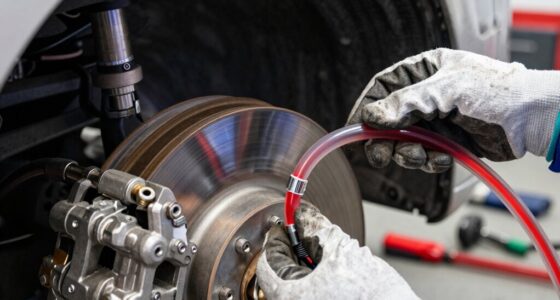
In addition to these primary checks, glance over the brakes, lights, and signal indicators. Make sure the brakes respond well and aren’t worn out, as faulty brakes can be disastrous. Confirm that all lights—front, rear, and any turn signals—are functioning properly, especially if you plan to ride during low-light conditions. Conducting these quick checks before each ride ensures your scooter is in top shape and ready to handle the road ahead confidently. Taking a few moments now saves you from potential hazards later, making your scooter rides safer and more enjoyable.
electric scooter battery charger
As an affiliate, we earn on qualifying purchases.
As an affiliate, we earn on qualifying purchases.
Frequently Asked Questions
How Often Should I Perform Pre-Ride Checks on My Scooter?
You should perform pre-ride checks every time you plan to ride your scooter. Start with battery maintenance by guaranteeing it’s fully charged and functioning properly. Check tire pressure to prevent flats or accidents, and inspect brakes and lights for safety. Regularly monitoring these aspects helps prevent issues during your ride, keeps your scooter in top condition, and ensures a safe, smooth journey each time you hit the road.
Are There Specific Tools Needed for Pre-Ride Scooter Inspections?
Did you know that 60% of scooter accidents are caused by mechanical issues? For pre-ride inspections, you only need a few tool essentials like a tire pressure gauge, Allen wrenches, and a flashlight. An inspection checklist helps *guarantee* safety by covering brakes, tires, lights, and signals. These simple tools and a thorough checklist keep your ride safe, reliable, and ready for the road every time you hop on.
What Signs Indicate My Scooter Needs Professional Maintenance?
You should seek professional maintenance if you notice signs like declining battery health, where your scooter’s range diminishes quickly, or if the tire pressure feels consistently low despite regular inflation. Also, watch for unusual sounds, braking issues, or difficulty accelerating. These signs indicate underlying problems that need expert attention to make certain your scooter remains safe and reliable. Regular checkups can prevent more costly repairs down the line.
How Do Weather Conditions Affect Pre-Ride Safety Checks?
Weather conditions greatly impact your pre-ride safety checks. Weather hazards like rain, snow, or strong winds can make riding dangerous, so you should check for wet or icy surfaces, and verify your tires have proper traction. Temperature effects also matter; extreme heat can cause battery or tire issues, while cold weather may reduce battery life and affect braking. Always adapt your checks based on current weather to stay safe.
Can Neglecting Pre-Ride Checks Cause Scooter Accidents?
Neglecting pre-ride checks can lead to scooter accidents, putting your safety at risk. Imagine your scooter as a trusted steed—if you overlook maintenance reminders like brakes, tires, or lights, it’s like ignoring essential signals. Without these checks, your scooter may falter unexpectedly, causing a fall or collision. Regular scooter safety inspections ensure smooth rides, prevent accidents, and keep you confident on every journey. Always prioritize your safety first.

ETENWOLF T300 Digital Tire Pressure Gauge 3-200 PSI, Industrial Tire Gauge Calibrated to ANSI B40.7 Grade 2A(Plus-Minus 0.5%), Replaceable AAA Batteries (Vivid Orange)
PROCESS LEVEL ACCURACY: Each ETENWOLF’s digital tire pressure gauge is calibrated manually to ANSI B40.7 Grade 2A(plus-minus 1…
As an affiliate, we earn on qualifying purchases.
As an affiliate, we earn on qualifying purchases.
Conclusion
So, next time you hop on your scooter, remember those quick checks—tires, brakes, lights—because a simple glance can prevent a mishap. Funny how a small habit can save you from unexpected trouble, isn’t it? Just yesterday, I almost skipped my pre-ride, but catching a loose brake saved me from a sudden stop. It’s the little things that make all the difference, so stay vigilant and enjoy your ride with confidence.
scooter brake light
As an affiliate, we earn on qualifying purchases.
As an affiliate, we earn on qualifying purchases.

TRKIMAL Adjustable Locking Spanner Wrench Clutch, Wrench Holder Hub Rotor Flywheel Sprocket Spanner Wrench Set Fan Clutch Removal Tool for Scooter Motorcycle Accessories
Specification: Length: 11.8in (30cm). Arms Opening Width: 0.7in-4.25in (1.8cm-10.8cm); The large end of pin: 0.35in/9.00mm; small end of…
As an affiliate, we earn on qualifying purchases.
As an affiliate, we earn on qualifying purchases.