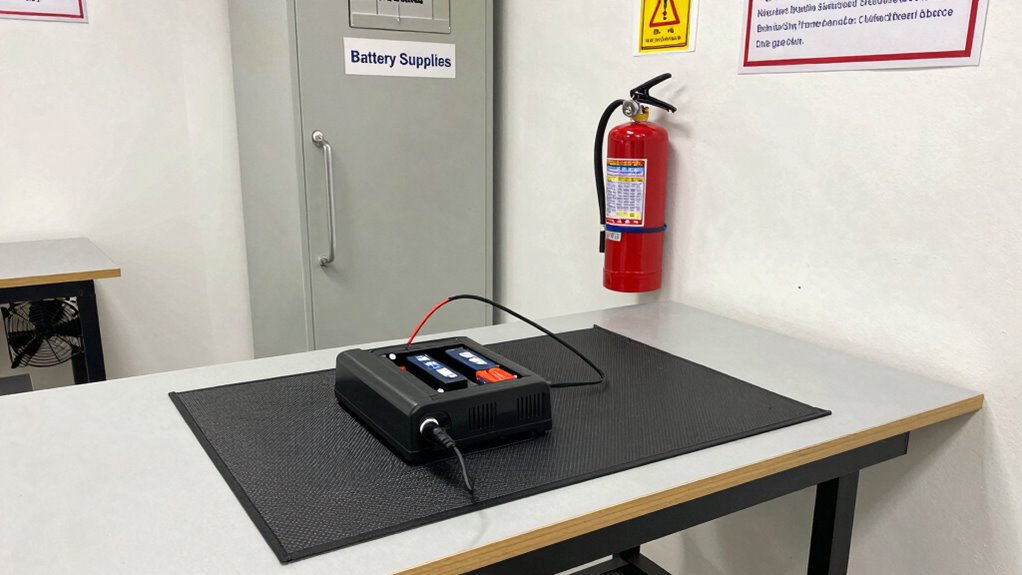

To set up a fire-safe battery charging area at home, choose a well-ventilated, clutter-free space away from flammable materials, and place it on a fire-resistant surface. Use purpose-built chargers and follow manufacturer instructions carefully. Keep fire extinguishers and smoke detectors nearby, regularly inspect batteries and chargers for damage, and never leave batteries unattended during charging. Proper organization and vigilance help prevent accidents—learn more tips to keep your home safe.
Key Takeaways
- Select a well-ventilated, fire-resistant, clutter-free area away from flammable materials for charging batteries.
- Use purpose-built chargers and follow manufacturer instructions, inspecting equipment regularly for damage.
- Keep a fire extinguisher and smoke detectors nearby, and ensure household members are trained in safety procedures.
- Monitor batteries and chargers during charging, disconnect once complete, and replace any damaged batteries immediately.
- Educate household members on safe handling, proper charging practices, and maintaining an organized, vigilant charging environment.

Creating a dedicated, fire-safe battery charging area at home is essential to prevent accidents and protect your property. When you set up a space specifically for charging batteries, you considerably reduce the risk of fire caused by overheating, short circuits, or faulty equipment. Properly managing battery safety is crucial, especially as batteries become more common in devices, tools, and electric vehicles. A well-designed charging zone keeps potential hazards contained, giving you peace of mind while ensuring your home remains safe.
Start by choosing a location that’s well-ventilated and away from flammable materials, such as curtains, paper, or storage boxes. Adequate airflow helps dissipate heat generated during charging, reducing the chances of thermal runaway. Consider installing a fire-resistant surface, like a ceramic tile or metal tray, where you place your batteries. This prevents heat from transferring to other surfaces and minimizes damage if a battery were to fail or catch fire. Keep the area clear of clutter to avoid accidental contact or damage to charging cords and batteries.
Next, invest in quality, purpose-built charging equipment designed for the specific type of batteries you use. Always follow the manufacturer’s instructions for safe operation, and regularly inspect chargers for signs of wear or damage. Using incompatible or damaged chargers increases the risk of battery safety issues and potential fires. Never leave charging batteries unattended for extended periods, especially overnight or when you’re away. Staying vigilant helps catch problems early before they escalate into dangerous situations. Regularly checking your setup for safety compliance can further prevent hazards.
In addition to equipment, it’s essential to have fire prevention tools nearby. Keep a fire extinguisher rated for electrical fires within easy reach of your charging area. Make sure everyone in your household knows how to use it properly. Smoke detectors installed nearby provide an early warning if something goes wrong. Establish a routine to check batteries and chargers regularly for swelling, corrosion, or other signs of deterioration. Prompt action at the first sign of trouble can prevent a small issue from turning into a full-blown fire.
Finally, educate everyone in your household about safe battery handling and charging practices. Emphasize the importance of avoiding overcharging, not using damaged batteries, and disconnecting chargers once charging is complete. Additionally, being aware of proper battery design and safety features helps prevent accidents. By combining these safety measures—proper location, quality equipment, fire prevention tools, and ongoing vigilance—you create a safer environment for charging batteries. This proactive approach not only protects your property but also guarantees that your home remains a secure space for everyone.
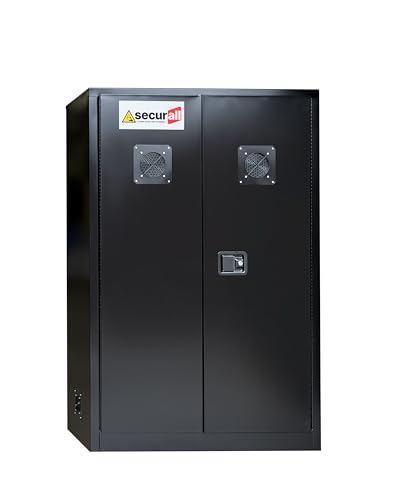
Securall Li145 – Lithium-Ion Battery Charging Cabinet, Self-Latch Standard 2-Door, 4 Shelves *Made to Order*
- Made to Order: 30-day production time
- Integrated Ventilation: Built-in exhaust vents and fans
- Fire-Resistant Construction: UL-listed fire-resistant materials
As an affiliate, we earn on qualifying purchases.
As an affiliate, we earn on qualifying purchases.
Frequently Asked Questions
What Types of Batteries Are Safest to Charge at Home?
You should prioritize charging safe battery types like lithium iron phosphate (LiFePO4) batteries, known for their stability and low risk of thermal runaway. Avoid charging older or damaged batteries, as they pose higher safety risks. Always follow proper charging safety protocols, use recommended chargers, and keep batteries in fire-resistant containers. By selecting the right battery types and adhering to safety measures, you minimize the risk of fire hazards at home.
How Often Should I Inspect My Battery Charging Area?
You should inspect your battery charging area weekly to guarantee safe battery storage and fire prevention. Regular checks help you spot signs of damage, overheating, or corrosion early. Keep an eye on cables, connections, and the overall environment. By maintaining a routine, you reduce fire risks and keep your charging station safe. Consistent inspection is key to preventing accidents and ensuring your batteries remain in good condition.
Are There Specific Fire Extinguishers Recommended for Battery Fires?
Like a knight’s trusty sword, a Class D fire extinguisher is recommended for battery fires, especially lithium-ion ones. These extinguishers contain dry powder that smothers metal fires effectively. Regularly check your fire safety equipment, and always keep it near your battery disposal area. Avoid using water or standard extinguishers, as they can worsen battery fires. Proper fire safety gear guarantees you’re prepared for any unexpected blaze.
Can I Charge Batteries Overnight Safely?
Charging batteries overnight isn’t recommended for safety reasons. You should always prioritize proper battery storage and guarantee your charging station safety. If you must leave batteries charging unattended, use a fire-safe charging area, monitor the process, and choose quality chargers designed for your battery type. Never ignore signs of overheating or swelling, and always have a suitable fire extinguisher nearby. Staying vigilant helps prevent potential fires or hazards.
What Are Signs of Potential Battery Fire Hazards?
Watch for signs of trouble like swelling, overheating, or strange smells—these are red flags signaling potential battery fire hazards. When dealing with battery storage, always keep an eye on batteries during charging, and follow fire safety tips diligently. A battery that gets unusually hot or leaks can ignite unexpectedly, so staying alert helps prevent disasters. Think of it as giving your batteries a careful dance partner’s respect to avoid a fiery misstep.

Kidde Basic 110 Fire Extinguisher for Home, 1-A:10-B:C, FA110G, 1 Pack
- Reliable Fire Protection: Protects against common household fires
- All-Metal Construction: Durable, long-lasting build
- Easy Pull Safety Pin: Simple to activate in emergencies
As an affiliate, we earn on qualifying purchases.
As an affiliate, we earn on qualifying purchases.
Conclusion
By taking these simple steps, you’ve created a safer space for charging your batteries. But remember, the danger isn’t gone—it’s just managed. Keep an eye on your setup, stay vigilant for signs of trouble, and never leave charging batteries unattended. One small oversight could turn safety into disaster. Are you prepared to keep your home and loved ones protected? The key is your constant awareness—because when it comes to fire safety, a moment’s neglect can change everything.

First Alert Battery Smoke Alarm
- Advanced sensing technology: Reduces false alarms, detects fires early
- Battery-operated design: Easy to install and maintain
- Front access battery compartment: Simplifies battery replacement
As an affiliate, we earn on qualifying purchases.
As an affiliate, we earn on qualifying purchases.

NOONE 10A/15A Smart Battery Charger – 6V/12V Fully Automatic Maintainer
- Multi-Mode Smart Charging: 5 modes for all seasons and batteries
- Certified Safety & Protection: ETL certified with 9 safety features
- Overheat Prevention: Built-in sensor manages heat and prevents shutdown
As an affiliate, we earn on qualifying purchases.
As an affiliate, we earn on qualifying purchases.