To store extra batteries safely and avoid clutter, use dedicated, non-conductive containers with individual compartments for different types. Keep them in a cool, dry, and well-ventilated space away from heat or moisture. Avoid tossing batteries loose or near metal objects and regularly check for leaks or damage. Label your containers for easy access and stay organized. If you want to learn more tips for safe storage, keep exploring!
Key Takeaways
- Use labeled, dedicated storage containers with individual compartments for different battery types.
- Store batteries in a cool, dry, fireproof area away from heat sources and metal objects.
- Keep damaged or leaking batteries separate in insulated, puncture-proof containers.
- Regularly inspect batteries for signs of swelling, corrosion, or leaks, and dispose of damaged ones properly.
- Organize storage space to minimize clutter, ensuring easy access and safety during handling.
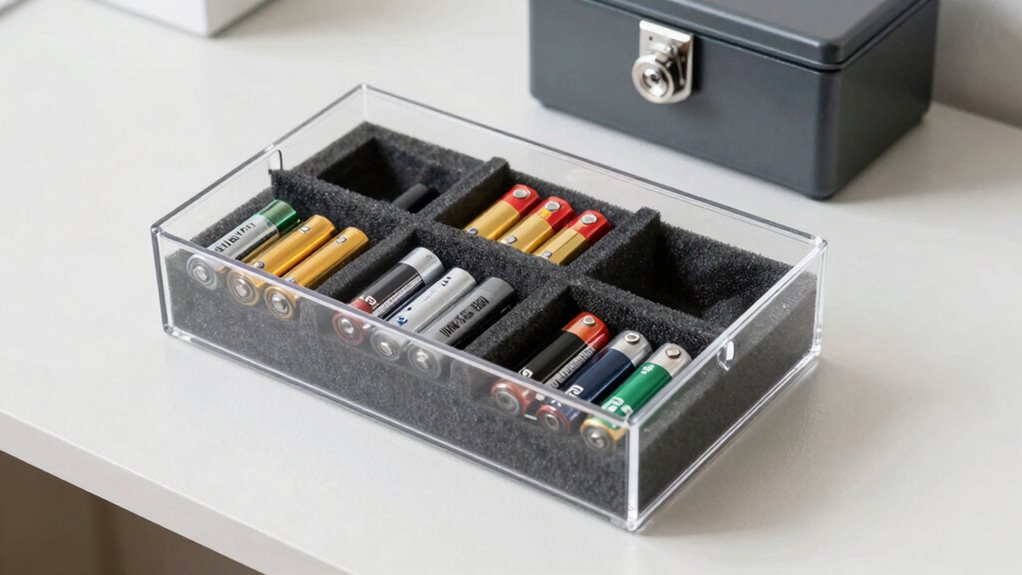
Have you ever wondered the best way to store extra batteries to keep them safe and functional? Proper storage isn’t just about keeping things tidy; it’s about ensuring safety and extending the lifespan of your batteries. When it comes to storing batteries, safety should be your top priority. Mishandling or improper storage can lead to leaks, corrosion, or even dangerous fires. To prevent this, you need to focus on using the right storage containers designed specifically for batteries. These containers are usually insulated and made to prevent accidental contact between terminals, reducing the risk of short circuits.
Choosing the right storage containers is vital. Avoid tossing batteries into drawers, boxes, or random containers where they can bump into each other or get damaged. Instead, opt for dedicated battery cases or compartments that keep each battery separated. These containers should be made of non-conductive materials like plastic and have individual slots or compartments to prevent terminals from touching. When selecting storage containers, also consider ones that are clearly labeled for different types of batteries—alkaline, lithium, rechargeable—so you don’t mix incompatible types, which can be dangerous. Proper storage conditions, like a cool, dry environment, are equally important to prevent deterioration.
Additionally, you should always store batteries in a cool, dry place. Excessive heat or moisture can accelerate deterioration or cause leaks. Keep your batteries away from metal objects, like paperclips or jewelry, which could accidentally bridge terminals and cause a short circuit. For added safety, consider storing batteries in a fireproof container, especially if you have a large collection or rechargeable batteries that can sometimes malfunction. This extra step will give you peace of mind knowing you’ve minimized any potential hazards. Regularly inspecting your stored batteries is essential to catch any early signs of damage, such as swelling or corrosion, which could compromise safety. It’s also helpful to familiarize yourself with battery safety tips to stay informed about best practices.
Another key point for battery safety is to check your stored batteries periodically. Look for signs of corrosion, leaks, or swelling, and dispose of any damaged batteries properly. Never store damaged or leaking batteries with your healthy ones, as they can corrode and compromise the safety of your entire collection. When handling batteries for storage, always wear gloves if they show signs of leaks, and wash your hands afterward to avoid contact with harmful chemicals. Proper storage practices, including the use of insulated containers and careful handling, can greatly reduce risks associated with batteries. Additionally, understanding the chemical composition of different batteries can help inform safer storage and disposal methods. Moreover, choosing storage locations with proper ventilation can help dissipate any potentially harmful fumes from batteries that might leak. Additionally, storing batteries in a temperature-controlled environment can significantly extend their lifespan and safety.

Ontel Battery Daddy Storage & Organizer Case w/Tester, Stores & Protects Up to 180 Batteries, Double-Sided, Clear Locking Lid, Secure Latches & Portable Carrying Handle – Red (Batteries Not Included)
- Double-Sided Storage: Holds up to 180 batteries efficiently
- Clear Viewing Cover: Easily see contents at a glance
- Compact and Portable: Fits in drawers and on the go
As an affiliate, we earn on qualifying purchases.
As an affiliate, we earn on qualifying purchases.
Frequently Asked Questions
Can Batteries Be Stored Together if They Are of Different Types?
You shouldn’t store batteries of different types together because of battery compatibility and storage safety concerns. Mixing alkaline, lithium, or rechargeable batteries can cause leaks or short circuits, risking damage or injury. To keep safe and organized, store each type separately in designated compartments, and guarantee terminals are covered with tape or stored in individual containers. This approach prevents accidental contact and maintains battery integrity over time.
Is It Safe to Store Batteries in a Refrigerator or Freezer?
Like a knight in shining armor, you want to protect your batteries. Storing batteries in a refrigerator or freezer isn’t recommended because of potential condensation that can cause corrosion or leaks. Refrigerator safety and freezer storage may seem convenient, but they increase risks of damage or short circuits. Instead, store batteries in a cool, dry place away from metal objects, and keep terminals covered to guarantee safety and longevity.
How Should I Label Stored Batteries for Easy Identification?
You should use clear battery labeling to identify stored batteries easily. Write the type, size, and date of storage directly on the packaging with a permanent marker. Incorporate storage organization by grouping batteries of the same type and labeling each container accordingly. This way, you’ll quickly find what you need and prevent mix-ups, ensuring safety and efficiency in your storage system. Proper labeling keeps your batteries organized and easy to access.
What Environmental Factors Can Damage Stored Batteries?
Environmental factors like high humidity and extreme temperatures can damage your stored batteries. Humidity control prevents corrosion and leakage, while temperature regulation keeps batteries from overheating or freezing, which can reduce their lifespan. Avoid storing batteries in places with fluctuating temperatures or damp environments. By maintaining a stable, cool, and dry setting, you guarantee your batteries stay in good condition, ready for use when you need them.
How Often Should I Check the Condition of Stored Batteries?
You should check your stored batteries at least once every three to six months. During these checks, look for signs of battery corrosion, which can indicate leaks or deterioration. Also, inspect the storage temperature, guaranteeing it remains within the recommended range, typically cool and dry. Regular checks help prevent potential hazards, extend battery life, and ensure they’re ready for use when needed.

VLITEX Lithium Battery Storage Box XL (Extra Large) | Engineered in Germany | Fireproof E-Fiberglass & Silicone Fabric | Certified Lipo Safe Bag Container
- Battery Safeguard: Protects lithium batteries during use and transit
- German Engineering: Designed and developed in Germany for over 20 years
- Fireproof Material: Made from multi-layered E-glass fiber and silicone
As an affiliate, we earn on qualifying purchases.
As an affiliate, we earn on qualifying purchases.
Conclusion
Storing extra batteries properly keeps your space safe and clutter-free, like a well-organized toolbox ready for action. Remember to keep them in a cool, dry place away from metal objects and flammable materials. Think of your batteries as tiny powerhouses—you want them to stay safe and ready when you need them. With these simple tips, you’ll avoid the chaos and keep your gadgets humming smoothly, like a well-oiled machine.
Ontel Battery Daddy Storage & Organizer Case w/Tester, Stores & Protects Up to 180 Batteries, Double-Sided, Clear Locking Lid, Secure Latches & Portable Carrying Handle – Red (Batteries Not Included)
- Double-Sided Storage: Holds up to 180 batteries efficiently
- Clear Viewing Cover: Easily see contents at a glance
- Compact and Portable: Fits in drawers and on the go
As an affiliate, we earn on qualifying purchases.
As an affiliate, we earn on qualifying purchases.
Ontel Battery Daddy Storage & Organizer Case w/Tester, Stores & Protects Up to 180 Batteries, Double-Sided, Clear Locking Lid, Secure Latches & Portable Carrying Handle – Red (Batteries Not Included)
- Double-Sided Storage: Holds up to 180 batteries efficiently
- Clear Viewing Cover: Easily see contents at a glance
- Compact and Portable: Fits in drawers and on the go
As an affiliate, we earn on qualifying purchases.
As an affiliate, we earn on qualifying purchases.