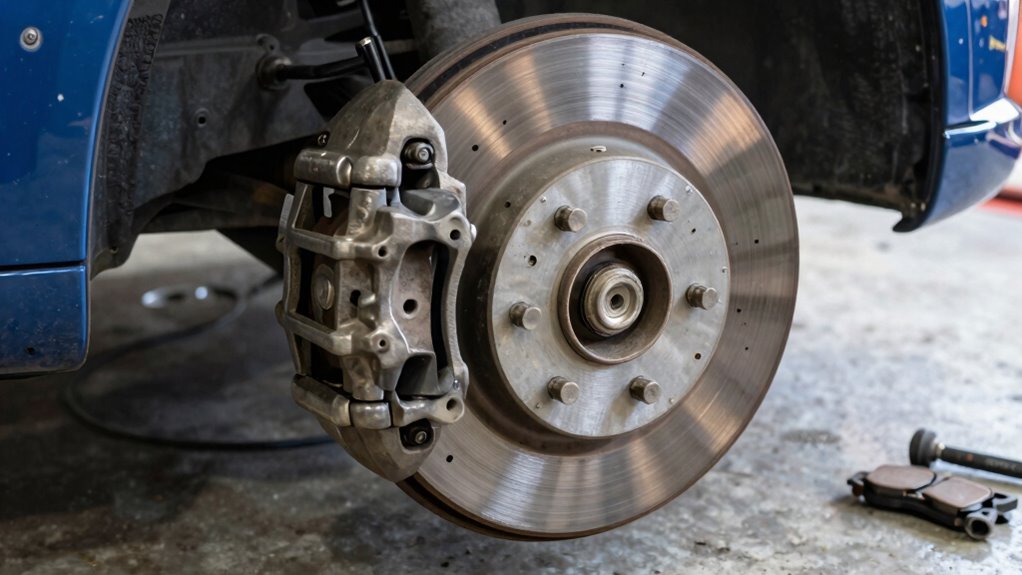

Brake rub after wheel removal often happens because components like the brake pads, rotor, or caliper get misaligned or aren’t properly reinstalled. When the caliper shifts or the rotor isn’t seated correctly, it causes uneven contact, which leads to rubbing and noise. Dirt or debris trapped during reinstallation can also contribute. To avoid persistent issues, you need to make certain everything is aligned and clean. Keep exploring to understand more about preventing brake problems.
Key Takeaways
- Misaligned brake pads after reinstallation cause uneven contact, leading to brake rub.
- Warped or improperly seated rotors can create rubbing issues post-wheel removal.
- Calipers may shift or stick, resulting in unintended pressure against the rotor.
- Debris or dirt trapped during reassembly can cause uneven rotor and pad contact.
- Incorrect torque or installation procedures can lead to caliper misalignment and brake rub.
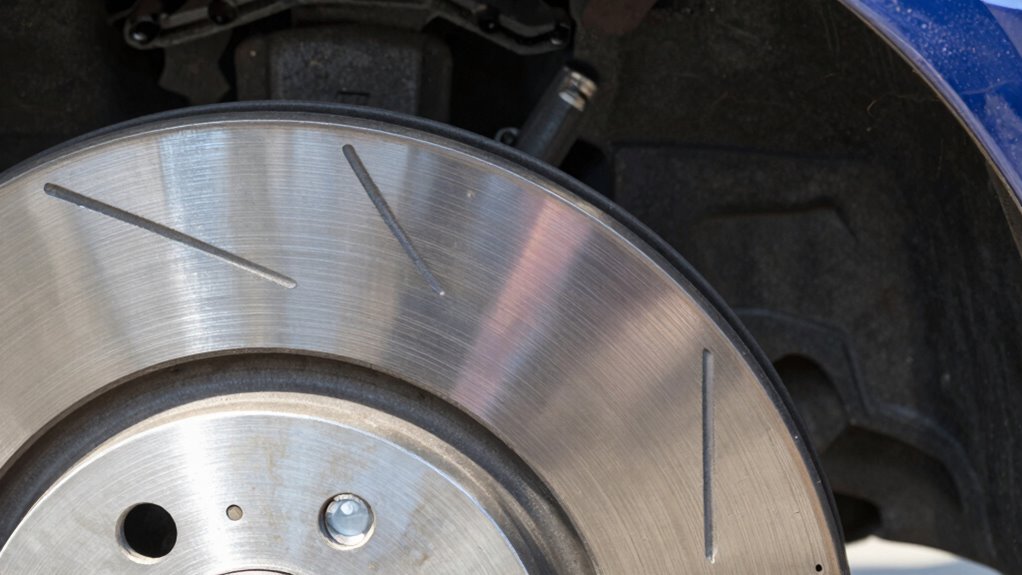
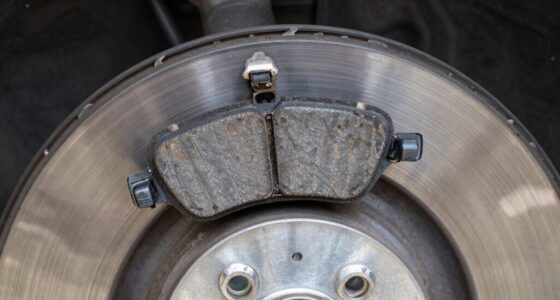
If you’ve recently removed your wheel and now hear a brake rub, you’re not alone. This issue is common after wheel removal, and understanding what causes it can help you fix the problem quickly. The first thing to check is brake pad alignment. When you reinstall the wheel, the brake pads need to sit properly against the rotor. If they’re misaligned, they may rub against the rotor unevenly or constantly, causing that persistent squeal or grinding noise. Sometimes, during reinstallation, the brake caliper shifts slightly, throwing off the alignment. Ensuring the brake pads are correctly aligned with the rotor before tightening everything down can prevent brake pad misalignment from causing the rub.
Another common culprit is rotor warping. When you remove and reinstall a wheel, the rotor might warp slightly, especially if it’s already worn or exposed to heat or stress. Rotor warping causes uneven contact between the brake pad and the rotor surface, which can lead to a continuous brake rub. When the rotor is warped, it distorts the contact area, and even a small imperfection can make the brake system squeal or rub as the rotor spins. This is often more noticeable after wheel removal because the rotor may shift marginally or sit unevenly against the hub. Additionally, rotor warping can sometimes be caused by excessive heat during braking or improper installation, so inspecting the rotor’s condition is essential. Proper installation procedures can also help prevent warping and misalignment issues. A thorough inspection of the rotor’s surface can reveal cracks, grooves, or other damage that contribute to uneven contact. Regular maintenance and correct torque specifications during installation can further reduce the risk of warping. Ensuring that you follow proper installation techniques can also help maintain the integrity of your braking components.
Sometimes, the brake caliper itself can be the problem. If the caliper isn’t aligned properly or is sticking, it might press against the rotor even when your foot isn’t on the brake pedal. When you remove the wheel, you might inadvertently disturb the caliper’s position, causing it to rub against the rotor. Inspecting the caliper for proper seating and ensuring the slide pins are free-moving can help reduce this issue.
Also, consider the possibility of debris or dirt caught between the rotor and brake pads. After removing the wheel, dirt or small stones can get lodged in the caliper or between the pads and rotor. When you reinstall the wheel, these particles can cause uneven contact, resulting in brake rub. Cleaning the rotor and pads thoroughly before reinstallation can prevent this.
In essence, brake pad alignment, rotor warping, caliper positioning, and debris are the main reasons why you might hear a brake rub after wheel removal. Carefully inspecting each component, ensuring proper installation, and cleaning the parts can resolve the issue. If problems persist, it’s wise to have a professional look at your braking system to avoid further damage or safety risks. Proper braking system maintenance can help prevent such issues from recurring in the future.
brake caliper alignment tool
As an affiliate, we earn on qualifying purchases.
As an affiliate, we earn on qualifying purchases.
Frequently Asked Questions
Can Brake Rub Cause Long-Term Damage to My Vehicle?
Yes, brake rub can cause long-term damage to your vehicle. Continuous rubbing wears down your brake pads faster and can lead to uneven brake pad thickness. It may also impact your wheel alignment, causing uneven tire wear and steering issues. Ignoring brake rub can result in costly repairs over time. Regularly check your brake system and confirm proper wheel alignment to prevent long-term damage and maintain your vehicle’s safety and performance.
How Can I Prevent Brake Rub After Reinstalling Wheels?
To prevent brake rub after reinstalling wheels, think of your car as a dancer needing perfect synchronization. Start with a wheel alignment to guarantee everything lines up correctly. Then, carefully check and adjust the brake calipers, like tuning a musical instrument, so they don’t press unevenly against the rotor. Regular inspections and proper reinstallation help keep your vehicle gliding smoothly, avoiding unwanted friction and future damage.
Does Brake Rub Affect Fuel Efficiency?
Brake rub can negatively affect your vehicle’s fuel efficiency because it causes increased resistance, forcing your engine to work harder. When brakes constantly drag, it reduces brake efficiency and leads to higher fuel consumption. If you notice brake rub after wheel removal, addressing it promptly helps maintain peak brake performance and keeps your fuel costs in check. Ensuring proper wheel installation and brake adjustments can prevent unnecessary drag and save you fuel.
Is Brake Rub More Common on Specific Vehicle Models?
Like a familiar tune, brake rub can be more common on specific vehicle models, especially those with complex brake systems. You might notice it more on older or high-performance cars. Proper wheel alignment and quality brake pads help prevent this. Some models, due to design quirks, are more prone to brake pad contact with the rotor after wheel removal. Regular maintenance guarantees smooth rides and reduces the chance of brake rub.
Can Brake Rub Be Fixed Without Professional Help?
Yes, you can fix brake rub without professional help through DIY adjustments. Start by checking the brake pad alignment and ensuring the pads sit correctly in the caliper. Use a brake caliper tool if needed, and gently realign or adjust the pads. Make sure the wheel is properly installed afterward. If the issue persists, it’s best to consult a mechanic, but many minor adjustments are manageable for DIY enthusiasts.
rotor warping repair kit
As an affiliate, we earn on qualifying purchases.
As an affiliate, we earn on qualifying purchases.
Conclusion
In the chaos of reassembling your car, brake rub after wheel removal might seem like a tiny hiccup, but it’s actually a common glitch that can cause serious damage if ignored. Think of it as a tiny pebble in your shoe—annoying, but easily fixed if you pay attention. By understanding the causes and taking a moment to check your work, you can prevent this minor issue from turning into a catastrophic breakdown. Stay vigilant, and your wheels will thank you!
brake pad reinstallation kit
As an affiliate, we earn on qualifying purchases.
As an affiliate, we earn on qualifying purchases.
wheel hub and rotor cleaning brush
As an affiliate, we earn on qualifying purchases.
As an affiliate, we earn on qualifying purchases.