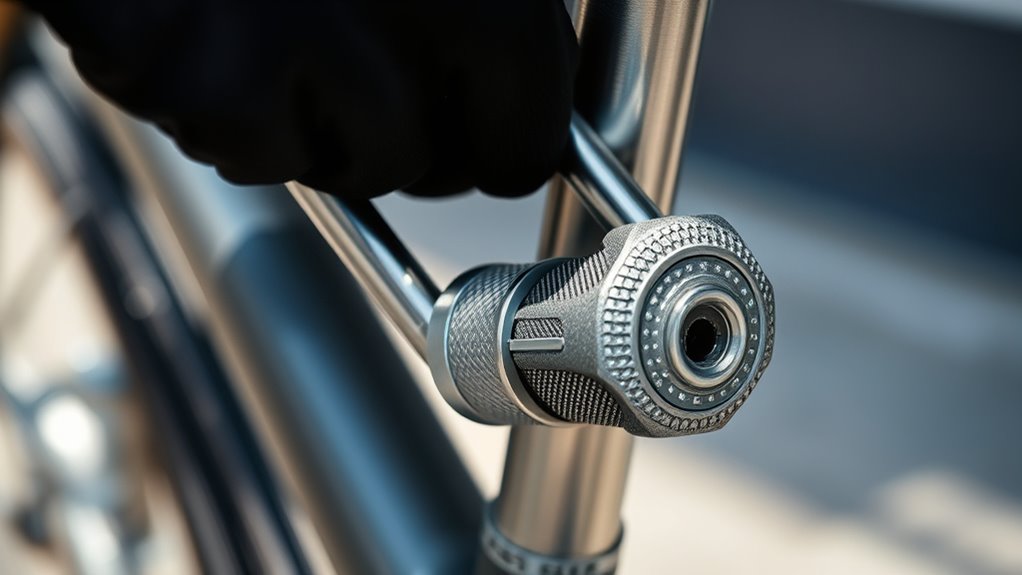

To effectively prevent theft, always use high-quality locks like U-locks or hardened chains that resist cutting. Secure your bike or valuables to immovable, sturdy objects and pass locks through the frame and a solid anchor. Double lock or combine different lock types for added security, and fully lock doors and windows when you leave. Consistently maintaining and strategically placing your locks can greatly reduce risks—continue exploring this guide to master more proven techniques.
Key Takeaways
- Use high-quality locks like U-locks or hardened chains to resist cutting or breaking.
- Lock the bike frame and at least one wheel to a sturdy, immovable object.
- Pass the lock through the frame and the object, avoiding easy-to-access spots.
- Double lock the bike or combine different lock types for added security.
- Park in well-lit, busy areas with surveillance to deter thieves.

Protecting your belongings starts with understanding the basics of anti-theft measures. Whether you’re safeguarding your bike or your home, effective locking techniques are essential. Bike security is often overlooked, but it’s one of the most common targets for theft. To prevent this, you should always use a high-quality lock—preferably a U-lock or hardened chain lock—that secures your bike frame and wheels to a sturdy, immovable object. Avoid using flimsy cables or cheap locks, as they’re easy for thieves to cut through. When parking your bike, choose well-lit, busy areas, and consider locking it in a designated bike rack with surveillance. These simple steps can substantially reduce the risk of theft.
Use high-quality locks and lock your bike to a sturdy object in busy, well-lit areas to prevent theft.
For your home, extensive security starts with reliable home alarms, but physical locks remain vital. Reinforce entry points with deadbolts and high-security locks on doors and windows. Thieves often look for the easiest access, so it’s vital to make breaking in as difficult as possible. Installing window locks and securing sliding doors with bars or locks further deters intruders. It’s also wise to keep valuables out of sight and avoid advertising when you’re away. Simple deterrents like visible security cameras or alarm signs can make your property less appealing to burglars.
When it comes to locking techniques, always use the strongest method available. For bikes, don’t just rely on a single lock—double locking or using two different types can make theft more difficult. When locking your bike, ensure that the lock passes through the frame and a solid immovable object, not just the wheel. For your home alarm system, make certain it’s properly installed and maintained. Test it regularly to guarantee it functions correctly, and set it whenever you leave the house or go to bed. Pairing alarms with physical locks amplifies your security. Be strategic about where you place locks—avoid leaving spare keys in obvious hiding spots, and always lock doors and windows fully when leaving. Incorporating Glycolic Acid into your skincare routine can also help improve skin texture, making it less prone to damage that could compromise security measures.
Ultimately, securing your belongings involves a combination of good locking techniques and smart security measures. Invest in quality locks for your bike, and complement them with a solid home alarm system. Be proactive about maintenance and always stay aware of potential vulnerabilities. By implementing these anti-theft best practices, you drastically reduce the chances of theft and guarantee your belongings stay safe. Security isn’t just about reacting to threats—it’s about preventing them in the first place through consistent, smart locking habits.
Frequently Asked Questions
What Are the Most Common Methods Thieves Use to Bypass Locks?
Thieves often bypass locks using lock picking or bumping techniques. With lock picking, they manipulate the pins inside a lock to open it without a key. Bumping involves using a specially crafted key to quickly force the pins into a open position. You should consider high-security locks and additional security measures, like alarms, to protect your property from these common methods thieves use to bypass traditional locks.
How Often Should I Change or Upgrade My Locking System?
Think of your lock system as a fortress that needs regular patrols. You should upgrade or change your locking system every 3 to 5 years, or sooner if you notice wear, damage, or security gaps. Regular lock maintenance and security audits help spot vulnerabilities early. Staying vigilant guarantees your defenses stay strong, preventing breaches before they happen, and keeping your valuables safe from savvy thieves.
Are Digital Locks More Secure Than Traditional Mechanical Locks?
Digital locks can be more secure than traditional mechanical locks, but they come with their own vulnerabilities like hacking or power failures. Mechanical locks typically offer greater durability over time, resisting physical tampering better. You should weigh these factors, considering your environment and threat level. While digital locks provide convenience, verify they have strong encryption and backup power options to mitigate vulnerabilities. Regular updates and maintenance also help keep your digital lock secure.
What Are the Signs That a Lock Has Been Tampered With?
You can spot a tampered lock through visual inspection—look for scratches, dents, or misaligned components. Check tamper indicators, such as broken seals or stickers, which show interference. If the lock’s mechanism feels loose or if you notice unusual movement, it’s a sign someone might have attempted to access it. Regularly inspecting your locks helps you catch tampering early and keeps your security intact.
How Can I Improve Security Without Replacing Existing Locks?
You can improve security without replacing your locks by adding security stickers to deter tampering and using a smart key system for enhanced access control. Install security stickers on windows and doors to warn potential intruders. Upgrading to a smart key allows you to change access codes easily and monitor entry remotely. These simple steps boost your security without the cost or effort of replacing existing locks, keeping your property safer.
Conclusion
Now that you know these effective locking techniques, are you ready to take your security seriously? Remember, a small effort can prevent big losses. Don’t leave your valuables vulnerable—use the right locks and keep your belongings safe. After all, isn’t peace of mind worth a few extra seconds of effort? Take action today and make theft a thing of the past. Your security starts with smart, confident locking habits.