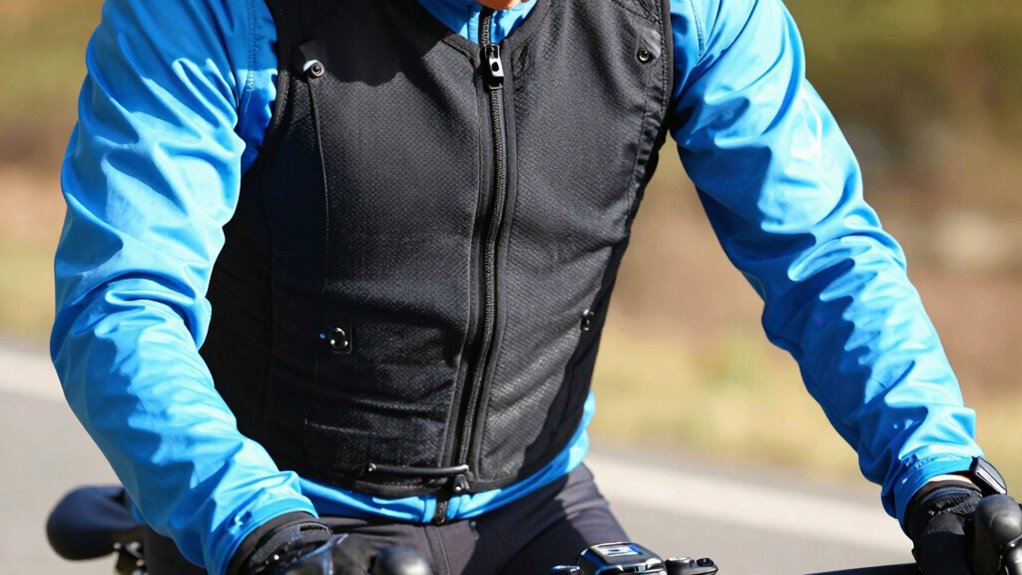

Airbag vests for cyclists mainly protect your torso, collarbones, ribs, and upper back during falls or collisions, reducing injury severity. However, they don’t replace helmets or prevent all head injuries, especially if you fall forward and hit your head directly. Sensors trigger rapid inflation to cushion impacts, but they rely on proper activation. To understand how these vests fit into your safety gear and their limitations, keep exploring what you need to stay safe on busy streets.
Key Takeaways
- Airbag vests protect the torso, collarbones, ribs, and upper back but do not prevent head injuries.
- They deploy quickly upon sensing a fall or collision to absorb impact forces during accidents.
- Airbag vests are a safety supplement, not a replacement for helmets, especially for protecting the head.
- They are most effective in urban cycling where falls and crashes are more common.
- Their effectiveness depends on proper sensor activation and integration with other safety gear like helmets.

Cyclists face considerable risks on the road, and traditional helmets don’t always provide enough protection in a crash. While helmet safety has improved over the years, it’s clear that a helmet alone can’t prevent all injuries. That’s where innovative urban cycling gear, like airbag vests, comes into play. These vests are designed to offer an extra layer of protection by deploying automatically during a fall or collision, cushioning your head, neck, and torso. They’re gaining popularity among urban cyclists who commute daily through busy streets, where the risk of accidents is higher.
Airbag vests provide extra protection for urban cyclists beyond helmets.
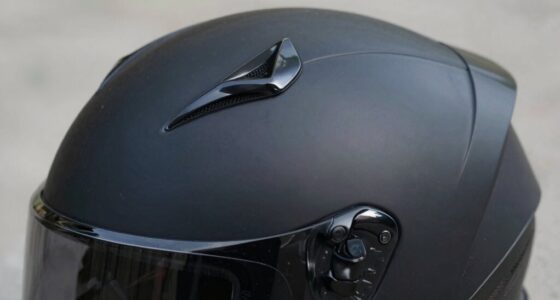
Wearing an airbag vest doesn’t mean you should abandon a helmet—far from it. Instead, it complements helmet safety by covering areas that helmets can’t protect, such as your collarbones, ribs, and upper back. When properly integrated into your urban cycling gear, an airbag vest can substantially reduce the severity of injuries if you’re involved in a crash. The vest inflates rapidly, usually within milliseconds, providing a protective shield that absorbs impact forces you’d otherwise feel directly. This quick deployment can make the difference between a minor fall and a serious injury.
Additionally, advancements in safety technology have improved the reliability and responsiveness of airbag vests, making them a more viable option for everyday cyclists. However, it’s important to understand what airbag vests don’t protect against. They aren’t a substitute for helmet safety in every situation. For example, if you fall forward and hit your head directly on the pavement, a helmet might still be your best defense. The vest’s primary focus is on protecting your torso and neck, so it’s essential to wear it as part of a broad safety strategy—along with your helmet, reflective clothing, and proper urban cycling gear. Additionally, airbag vests aren’t foolproof; they depend on sensors to detect a crash and deploy correctly, which means there’s always a small chance they might not activate in every accident.
Incorporating an airbag vest into your urban cycling gear offers a proactive step toward safer riding. It enhances your protection without sacrificing mobility or comfort, allowing you to navigate city streets with greater confidence. Remember, no single piece of gear guarantees safety, but combining helmet safety with innovative options like airbag vests maximizes your chances of avoiding serious injuries. As cycling continues to grow in popularity, especially in busy urban areas, investing in this kind of advanced safety equipment makes a lot of sense for any rider concerned about their well-being.
Top picks for "airbag vest cyclist"
As an affiliate, we earn on qualifying purchases.
Frequently Asked Questions
How Long Does an Airbag Vest Last Before Needing Replacement?
Your airbag vest typically lasts 3 to 5 years before needing replacement. The battery life usually spans around 1 to 2 years, depending on usage, so you’ll want to monitor it regularly. The expiration period for the vest itself varies by manufacturer, but most recommend replacing it within 3 to 5 years to guarantee safety. Always check your vest’s specific guidelines for the most accurate replacement timeline.
Are Airbag Vests Compatible With All Bicycle Types?
You can confidently wear an airbag vest with most bicycle types, thanks to its versatile design. Picture yourself riding smoothly, knowing the vest adapts easily to fit your bike frame compatibility and personal size. Its adjustable straps ensure a snug fit, whether you’re on a compact mountain bike or a sleek road bike. So, yes, these vests are compatible with nearly all bicycle types, giving you protection wherever you ride.
Can Airbag Vests Be Used for Mountain Biking?
Yes, you can use airbag vests for mountain biking. Their airbag technology is designed to protect you during falls and crashes common in rugged terrains. Just make certain the vest fits well and is compatible with your biking gear. Keep in mind, some vests may be more suited for mountain biking than others, so check the product specifications for maximum safety and comfort during your adventures.
What Maintenance Is Required for Airbag Vests?
Your airbag vest needs regular maintenance to stay reliable—think of it as your safety’s backbone. Check the battery life before each ride, guaranteeing it’s fully charged, and replace batteries as needed. Store the vest in a cool, dry place, preferably in a protective bag or case, to prevent damage. Keep the sensor and inflation system clean and dry, and follow manufacturer’s storage tips to prolong its lifespan and ensure peak performance.
Are There Any Legal Regulations for Wearing Airbag Vests?
You should know that legal restrictions on wearing airbag vests vary by location, so check your local laws to stay compliant. While most regions don’t explicitly ban these vests, liability concerns might arise if an accident occurs and safety gear is involved. Wearing one can demonstrate responsibility, but always verify regulations to avoid fines or legal issues. Staying informed helps make sure you’re protected and within legal boundaries while cycling.
Conclusion
While airbag vests offer essential protection against certain injuries, they can’t prevent all accidents or injuries. Think of them as a valuable shield in your safety arsenal, yet not a foolproof guarantee against harm. Just as a helmet guards your head but can’t stop every fall, these vests complement your gear, not replace it. Embrace their benefits, but stay vigilant—because in cycling, awareness often makes the difference between safety and injury.