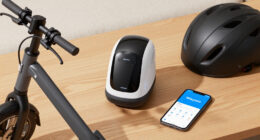
Radar rear lights use sensors that emit radio waves to detect approaching vehicles behind you, alerting you to potential hazards. However, they may miss small objects like bicycles or motorcycles, stationary vehicles, or obstacles outside their detection zone. Environmental factors like rain or fog can reduce their effectiveness, and false alarms may occur. Understanding these limits can help you stay safer; if you want to discover more, there’s plenty to learn.
Key Takeaways
- Radar rear lights detect approaching vehicles within a certain range by bouncing radio waves off objects behind the vehicle.
- They may miss small, low-profile, or stationary objects outside their detection zone or behind other obstacles.
- Environmental factors like rain, fog, or reflections from large surfaces can cause false alarms or reduce detection accuracy.
- The sensors primarily identify moving vehicles and large objects but can’t detect everything, especially in blind spots.
- Despite enhancing safety, radar rear lights have limitations and should be complemented by manual awareness and mirrors.
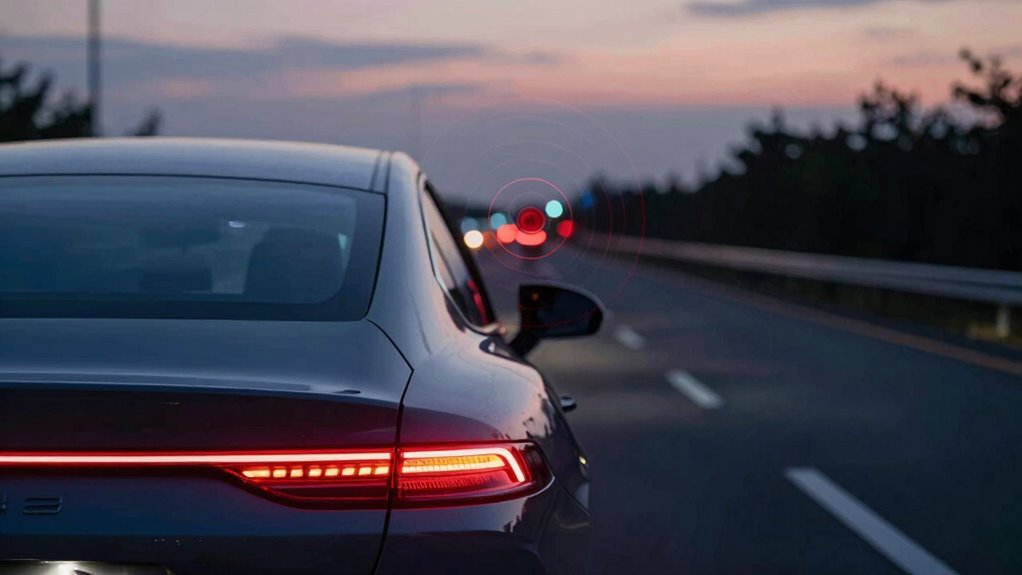
Have you ever wondered how radar rear lights work and why they’re becoming an essential safety feature? These lights use radar sensors to detect vehicles approaching from behind, alerting you to potential hazards and helping prevent rear-end collisions. But understanding their capabilities requires recognizing some sensor limitations and the risk of false alarms. Radar sensors emit radio waves that bounce off objects, creating a picture of what’s behind you. When a vehicle enters this detection zone, the system triggers the rear lights to alert you. However, these sensors aren’t perfect—they have their blind spots and can sometimes miss certain objects or situations. For instance, radar might struggle to detect very small or low-profile vehicles, like motorcycles or bicycles, especially if they’re at a distance or partially obscured. That’s because the radar’s range and sensitivity are calibrated for typical vehicle sizes, which means some smaller or unusual objects can slip past unnoticed. Navigation and mapping capabilities can also influence how well these sensors perform in various environments. Sensor limitations also mean radar rear lights can sometimes be less reliable in complex environments. Heavy rain, snow, or fog can interfere with the radio waves, reducing the system’s effectiveness. Additionally, reflections from large metal surfaces or road signs may cause the sensors to interpret false signals. This leads to false alarms, where the rear lights activate even when there’s no real threat ahead. False alarms can be distracting or even frustrating, especially if they occur frequently or at inappropriate times. They might cause you to second-guess the warning, potentially eroding your trust in the system. That’s why manufacturers continually refine radar algorithms to filter out these false signals, but they can’t eliminate them entirely.
Another aspect to contemplate is that radar rear lights primarily detect moving objects within a specific range, usually up to a few hundred meters. They might miss stationary vehicles or objects that are outside their detection zone. Also, if a vehicle suddenly cuts in from a blind spot or is hidden behind obstacles, the radar won’t detect it until it enters the sensor’s range. This limitation underscores the importance of still using mirrors and paying attention to your surroundings, even with advanced safety features. Radar rear lights are a valuable addition to your vehicle’s safety system, but they’re not infallible. Understanding their sensor limitations and the potential for false alarms helps you use them more effectively and stay alert to other hazards on the road.

Garmin Varia RTL515, Cycling Rearview Radar with Tail Light, Visual and Audible Alerts for Vehicles Up to 153 Yards Away – 010-02376-00
- Rearview radar range: Detects vehicles up to 153 yards away
- Device compatibility: Pairs with Edge, smartphones, Garmin wearables
- Varia app alerts: Provides visual, tone, and vibration alerts
As an affiliate, we earn on qualifying purchases.
As an affiliate, we earn on qualifying purchases.
Frequently Asked Questions
How Do Radar Rear Lights Differ From Traditional Brake Lights?
Radar rear lights differ from traditional brake lights by using sensors to detect nearby vehicles’ speed and distance, enhancing safety. They provide better lighting visibility when braking, alerting drivers more effectively. You benefit from improved sensor accuracy, which guarantees signals are timely and precise. Unlike standard brake lights, radar rear lights actively respond to traffic conditions, making your braking signals more noticeable and reducing the chances of rear-end collisions.
Can Radar Rear Lights Detect Pedestrians or Only Vehicles?
Radar rear lights primarily detect vehicles, but some advanced models can also spot pedestrians through enhanced pedestrian detection capabilities. However, sensor limitations still exist, meaning they might sometimes miss smaller or stationary pedestrians. You should stay alert, as radar rear lights aren’t foolproof. While they aim to assist, they don’t replace careful driving. Recognize their reach, but rely on your eyes and judgment for full safety.
Are Radar Rear Lights Effective in All Weather Conditions?
Radar rear lights are generally effective in most weather conditions, but light sensitivity can impact their performance. Heavy rain, fog, or snow can reduce radar accuracy, making detection less reliable. You should be aware that adverse weather may cause delays or false alerts. While they’re designed to operate in diverse conditions, it’s wise to stay cautious and not rely solely on radar rear lights during poor weather, as visibility and sensor performance can be compromised.
What Is the Typical Range of Radar Rear Lights?
Of course, the typical range of radar rear lights is often underestimated—usually around 50 to 200 meters, depending on sensor accuracy and system limitations. You might think they see everything, but in reality, obstacles and weather can shorten that distance. So, while they’re handy, don’t rely solely on radar rear lights; they’re a helpful aid, not a foolproof solution. Always stay alert!
Do Radar Rear Lights Require Special Maintenance or Calibration?
Yes, radar rear lights need regular maintenance and calibration. You should follow the manufacturer’s maintenance procedures, which often include sensor calibration checks to verify they function correctly. Keep the sensors clean and free of dirt or debris, and schedule professional calibration when needed. Proper maintenance helps maintain safety and ensures your radar rear lights accurately detect other vehicles, minimizing blind spots and improving overall driving safety.

Cobra RAD 480i Laser Radar Detector, Long Range Detection, Bluetooth, Black
- Front and Rear Detection: Detects signals from both vehicle ends
- Shared Alerts: Get live alerts via Drive Smarter community
- Bluetooth Compatibility: Supports Apple CarPlay and Android Auto
As an affiliate, we earn on qualifying purchases.
As an affiliate, we earn on qualifying purchases.
Conclusion
Think of radar rear lights as your car’s vigilant lighthouse, constantly scanning the horizon for nearby ships—other vehicles—guiding you safely through foggy nights. While they’re excellent at spotting what’s immediately around you, they might miss distant ships or unseen icebergs lurking beneath the surface. By understanding their capabilities and limits, you can navigate with confidence, knowing these lights are your watchful guardians—bright beacons that help you steer clear of trouble, even when the road ahead isn’t perfectly clear.

COOSPO TR70 Bike Radar Tail Light, Alerts for Vehicle in 140M, Auto Brake Highlight, 7 Lighting Modes, 40H Long Battery Life, Support APP/Garmin Cycling Computers Display for Road & MTB Cycling Safety
- Auto-Flashing and Brake Alerts: Automatic vehicle approach warnings
- Wide Visibility Range: 220° ultra-wide alert coverage
- Multiple Lighting Modes: 7 customizable lighting options
As an affiliate, we earn on qualifying purchases.
As an affiliate, we earn on qualifying purchases.
Cobra RAD 480i Laser Radar Detector, Long Range Detection, Bluetooth, Black
- Front and Rear Detection: Detects signals from both vehicle ends
- Shared Alerts: Get live alerts via Drive Smarter community
- Bluetooth Compatibility: Supports Apple CarPlay and Android Auto
As an affiliate, we earn on qualifying purchases.
As an affiliate, we earn on qualifying purchases.