Choosing between backpacks and panniers affects your back safety and bike stability. Backpacks can cause discomfort and strain if loaded heavily or poorly fitted, potentially leading to back pain. Panniers, placed close to the bike frame, offer better load balance and reduce strain on your back. Proper weight distribution and ergonomic designs are key for both options. If you want to understand how to optimize your load and ride safely, keep exploring these options further.
Key Takeaways
- Panniers distribute weight low and close to the bike frame, enhancing back safety and overall stability.
- Backpacks can cause back strain or discomfort if overloaded or improperly fitted, risking injury.
- Proper load balance in panniers prevents steering issues and maintains rider control.
- Ergonomic backpacks with padded straps support proper posture, reducing back fatigue during rides.
- The choice depends on load weight and access needs; heavier loads are safer in panniers for back health.
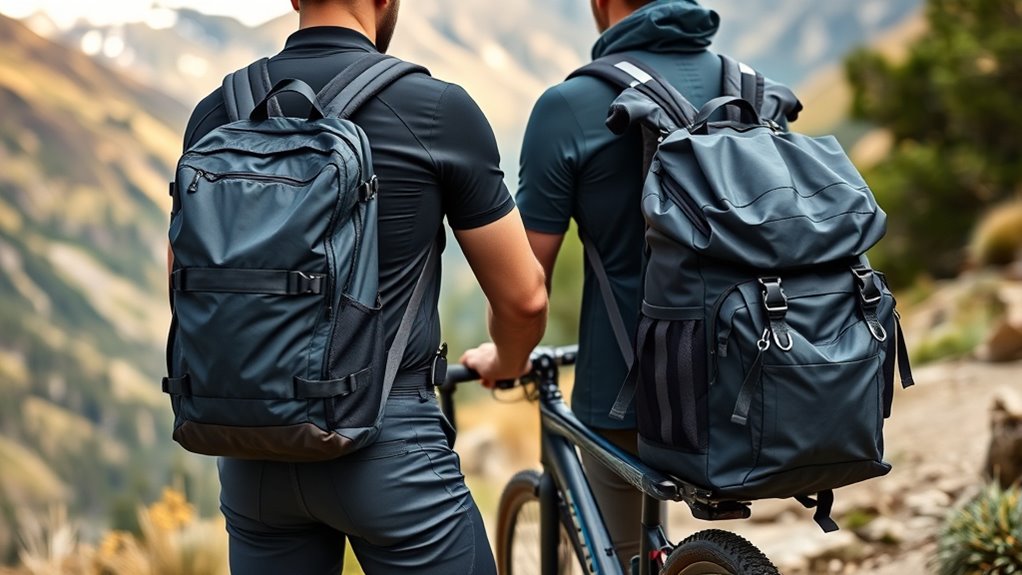
When choosing how to carry your gear on a bike, you’ll find backpacks and panniers are the two main options, each offering distinct advantages. Your decision impacts not just convenience but also your back safety and load balance. Backpacks, worn on your shoulders, require careful attention to weight distribution. If the load isn’t balanced properly, it can strain your neck, shoulders, and back, leading to discomfort or injury over time. To minimize this, look for a backpack with an ergonomic design that distributes weight evenly across your shoulders and hips. Panniers, on the other hand, attach to your bike’s rear or front racks, shifting the load away from your body. This setup naturally promotes better weight distribution since the weight rests directly on the bike, reducing strain on your back and shoulders.
An ergonomic design in backpacks isn’t just about comfort; it’s a safety feature. A well-designed pack aligns with your spine and hips, helping to maintain proper posture during your ride. It often features padded straps, adjustable sternum, and waist belts, which stabilize the load and prevent unnecessary movement that could throw off your balance. When your pack fits properly, you’re less likely to experience fatigue or back pain, and your riding stability improves. Conversely, if the backpack is poorly designed or overloaded, it can cause you to lean forward or sideways, compromising your control and increasing the risk of falls.
An ergonomic backpack enhances safety by supporting proper posture and reducing fatigue during your ride.
Panniers, however, excel in load stability. Because they hang low and close to the bike’s frame, they don’t sway or shift as much, even on bumpy roads. This steady load helps you maintain better control and reduces fatigue caused by uneven weight shifts. Plus, since panniers are mounted directly onto the bike, you don’t have to carry the weight yourself, which is beneficial if you’re carrying heavier loads. That said, you should still consider how the load is distributed within the pannier; uneven packing can lead to unbalanced steering or strain on one side of the bike. Using airless paint sprayers as an analogy, proper weight management and load distribution are essential for optimal performance and safety. Ultimately, your choice depends on your riding style and load needs. If you prefer quick access or light loads, a backpack with ergonomic features might be best. For heavier or more balanced loads, panniers provide better weight distribution and back safety. Whichever you choose, prioritize ergonomic design and proper weight distribution to keep your ride safe, comfortable, and balanced.

AONIU M4 Electric Scooter for Adults with seat 25-30 mph Fast Speed Heavy Duty 300+ lbs 10 inch Off Road Foldable e Scooter Mobility e Scooters for Girls Men Teens 31-37 Miles Long Range Bike
👍WHY CHOOSE US ?👍800W Peak Powerful Motor👍31 Miles Max Range👍330+ Lbs Load👍ALL Terrain Riding👍Safer Bright Light👍7 Shock Absorption...
As an affiliate, we earn on qualifying purchases.
Frequently Asked Questions
How Do Different Load Distributions Affect Spinal Health?
When your load shifts unevenly, it can disrupt your spinal alignment, leading to discomfort or injury. Carrying weight high or unbalanced puts extra strain on your back muscles, increasing the risk of poor posture and spinal issues. To protect your back, make sure your load is evenly distributed and stays stable, helping maintain proper spinal health and reducing the risk of long-term damage.
Are There Specific Backpack Types Better for Back Safety?
You should choose backpacks with ergonomic design and adjustable straps for better back safety. These features help distribute weight evenly and contour to your body’s shape, reducing strain. Look for padded shoulder straps and a supportive back panel to enhance comfort. Avoid overly bulky or poorly fitted packs, as they can cause imbalance and discomfort. Prioritizing ergonomic design and adjustability guarantees a healthier, more comfortable carrying experience.
How Can Panniers Prevent Uneven Weight Distribution?
Panniers help prevent uneven weight distribution by allowing you to balance your load on both sides of your bike, reducing weight shifting and strain. You can easily adjust the load in each pannier to guarantee even weight distribution, which enhances stability and back safety. Regular load adjustment keeps the weight centered and balanced, preventing discomfort and potential injury during your ride.
What Are Signs of Back Strain From Carrying Loads?
You might notice back strain signs like persistent muscle fatigue, aching, or soreness after carrying a load. Poor posture correction can lead to discomfort and tension in your back muscles. If you experience sharp pain or tingling, it’s a sign to rest and adjust your load. Regularly stretching and ensuring proper load balance help prevent these issues. Pay attention to these signs to protect your back and avoid long-term injury.
Do Age or Fitness Level Influence the Choice Between Backpacks and Panniers?
Age considerations and fitness impact play a big role in choosing between backpacks and panniers. If you’re older or have lower fitness levels, panniers are often better because they distribute weight more evenly and reduce strain. Conversely, if you’re young and active, a backpack might suit you, but always make certain proper load balance to prevent back issues. Listen to your body and adjust your gear accordingly for safer, more comfortable carrying.

Electric Scooter for Adults, 500W Powerful Motor, 23 Miles Long Range, Dual Shock Suspensions, 19 Max Speed, 10" Foldable E Scooter with Solid Tires, APP Control, Double Braking
🛴【Powerful Motor】This electric scooter is equipped with 500W brushless motors which can reach a max speeds of around...
As an affiliate, we earn on qualifying purchases.
Conclusion
Ultimately, choosing between a backpack and panniers is like finding the perfect shoe—comfort and balance are key. Weigh your safety and load distribution carefully, because an uneven load can turn your ride into a shaky ride. Think of panniers as your steady anchor on the road, while backpacks keep things close. Pick what suits your journey best, and ride confidently, knowing your gear is working with you—like a trusted sidekick on every adventure.

JUNLING RD2 Electric Scooter for Adults, 5000W Dual Motor, 50 Mph Top Speed, 55 Miles Max Range, 60V/25AH Battery, Dual Suspension Hydraulic Braking System, 10.5" Off-Road e-Scooter with LED Light
🛴【New Upgraded Powerful Motor】5000W high-speed dual motors provide strong power for Ruitoo electric scooter. Under certain conditions, the...
As an affiliate, we earn on qualifying purchases.

Electric Scooter Adults, 1600W Motor, E-Scooters Up to 31Miles Range,11" Off-Road/All Terrain Tire Scooter with Dual Suspension & Side Light
【Powerful & Smooth Riding Experience】Conquer city streets and steep inclines (20°-30° grades) effortlessly with our 1200W brushless rear...
As an affiliate, we earn on qualifying purchases.