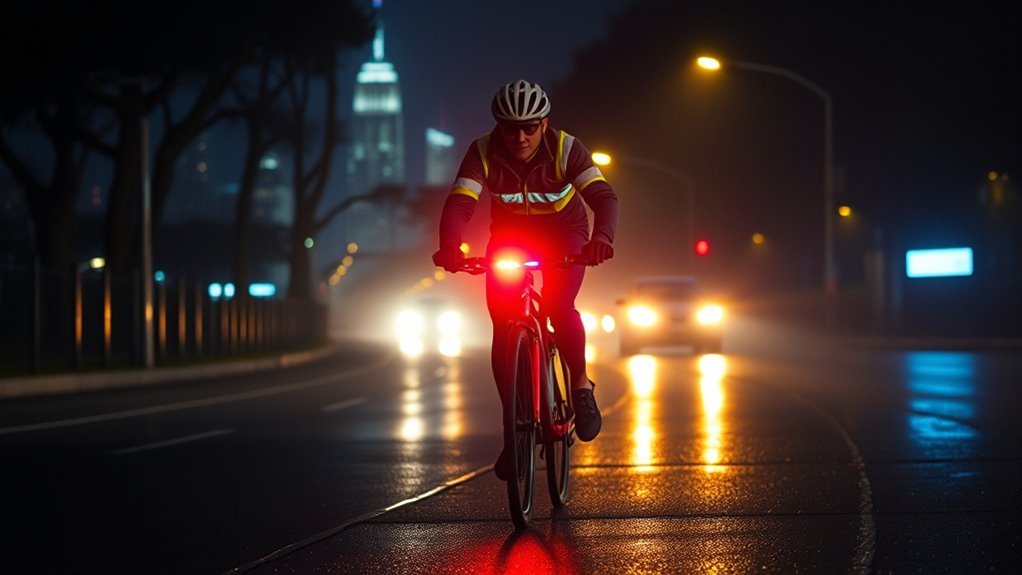

To stay visible during night riding, layer your lights and reflectors from multiple angles. Use bright, front and rear lights on your bike, complemented by wearable LED lights or reflective gear on your clothing and helmet. Attach additional reflectors and blinking safety lights to your bike, backpack, or clothing to create a multi-layered visibility system. Combining these strategies guarantees you’re seen from all directions, making your rides safer and more enjoyable—keep exploring to learn more tips for night riding safety.
Key Takeaways
- Use multiple light sources, including front, rear, and wearable LED lights, to create layered visibility.
- Attach reflectors at various angles on clothing, bike frame, and helmet for comprehensive reflection.
- Incorporate blinking or flashing tail lights to increase detection from a distance.
- Wear reflective accessories like vests, strips, and decals to enhance conspicuity from all directions.
- Regularly check and maintain all lights and reflectors to ensure optimal functioning during night rides.

Riding at night can be exhilarating, but it requires extra caution and preparation to stay safe. One of the most important factors is guaranteeing your bike visibility. When the sun dips below the horizon, you’re less likely to be seen by other drivers, which increases the risk of accidents. To combat this, you should invest in high-quality safety gear that enhances your visibility. Bright, reflective clothing and accessories can make a significant difference. Consider wearing a jacket or vest with reflective strips, or add reflective tape to your helmet and bike frame. These reflectors bounce back headlights from vehicles, making you more noticeable from a distance. Additionally, your bike should be equipped with proper lighting—front and rear lights that are bright enough to illuminate the road and alert others to your presence. Always check your lights before heading out to guarantee they’re functioning properly and have fresh batteries.
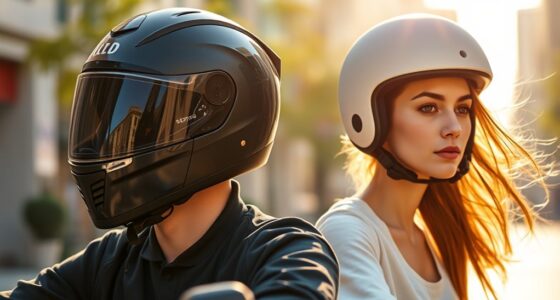
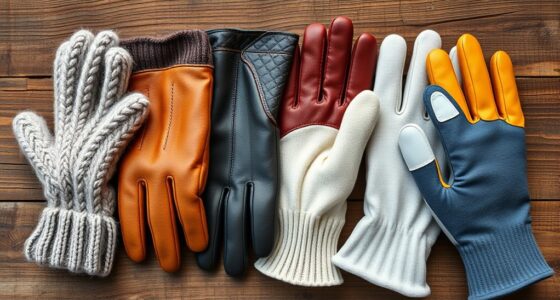
Beyond visibility, safety gear plays a vital role in protecting you during night rides. A sturdy helmet is non-negotiable, as it shields your head from potential falls or collisions. Look for a helmet with built-in reflective elements or attach reflective decals to boost visibility. Gloves not only keep your hands warm but also improve your grip and control, especially in low-light conditions where your reaction time might need to be quicker. Wearing padded shorts or tights can increase comfort during long rides, but also consider padded gloves and knee pads if you’re riding in unfamiliar or rough terrain. Don’t forget to wear shoes that provide good grip and support, reducing the risk of slipping off pedals in tricky situations.
Another aspect of safety gear is the use of additional accessories that can enhance your visibility and safety. A blinking tail light or a flashing safety light attached to your backpack or bike frame can draw attention from a wider angle. Some riders also opt for wearable LED lights that can be attached to clothing, making them more conspicuous. The importance of proper lighting cannot be overstated, as it directly impacts how well you can see and be seen in low-light conditions. The goal is to create multiple layers of light and reflectors so that no matter the angle, you’re easy to spot. Remember, your safety gear isn’t just about being seen; it’s about protecting yourself in case an accident occurs. Combining good bike visibility practices with the right safety gear guarantees you’re prepared for night riding, allowing you to enjoy the quiet, scenic routes safely and confidently.
Frequently Asked Questions
What Are the Best Reflective Materials for Night Riding?
You should choose reflective materials like glow-in-the-dark decals and reflective tapes for night riding. Glow-in-the-dark options charge during the day and glow brightly at night, increasing your visibility. Reflective tapes are versatile and highly effective, sticking to your bike, helmet, or clothing. Combining these materials guarantees you’re seen from a distance, keeping you safe on dark roads. Always prioritize high-visibility gear for the best nighttime safety.
How Should I Position Lights for Maximum Visibility?
You should position your lights at appropriate mounting angles to maximize visibility. Keep your front light aimed slightly downward to illuminate the road without blinding others, and make certain the beam pattern is wide enough to cover your path. For the rear, mount the taillight high and secure it firmly, so it stays visible from a distance. Adjust angles periodically to adapt to different riding conditions and ensure you’re seen clearly.
Are There Specific Colors That Enhance Safety at Night?
Like a lighthouse guiding ships, bright, highly visible colors enhance safety at night. Opt for colors with strong contrast—think neon yellows, oranges, and greens—that stand out against dark backgrounds. These hues improve clothing visibility and help drivers spot you from a distance. Avoid dull or dark shades that blend into the night. By choosing vivid colors, you create a beacon of safety, making your presence unmistakable to others on the road.
How Often Should I Replace or Upgrade My Lights and Reflectors?
You should replace or upgrade your lights and reflectors every six to twelve months, especially if you notice reduced brightness or battery life. Check for signs of wear or damage regularly, and consider weather resistance features to guarantee durability in rain or snow. Upgrading ensures you maintain peak visibility, and fresh batteries or new lights keep your night riding safe and effective. Stay proactive to avoid losing visibility during rides.
Can Reflective Gear Cause Distractions or Impair Vision?
Reflective gear can sometimes cause distractions or impair your vision if it’s poorly designed or worn improperly. Think of it like a bright neon sign—while it boosts visibility, it can also cause glare if directly in your line of sight. To guarantee glare reduction and peak visibility enhancement, choose reflective gear that’s strategically placed and made from high-quality materials. Keep your gear clean and well-maintained to avoid unnecessary distractions.
Conclusion
Remember, staying visible is your best defense when night riding. Layering lights and reflectors not only boosts your safety but also makes you more noticeable to others. Did you know that cyclists are 2.5 times more likely to be involved in an accident after dark? So, gear up properly and stay alert. By combining proper lighting and reflective gear, you’ll enjoy a safer, more confident ride through the night. Stay bright and ride safe!