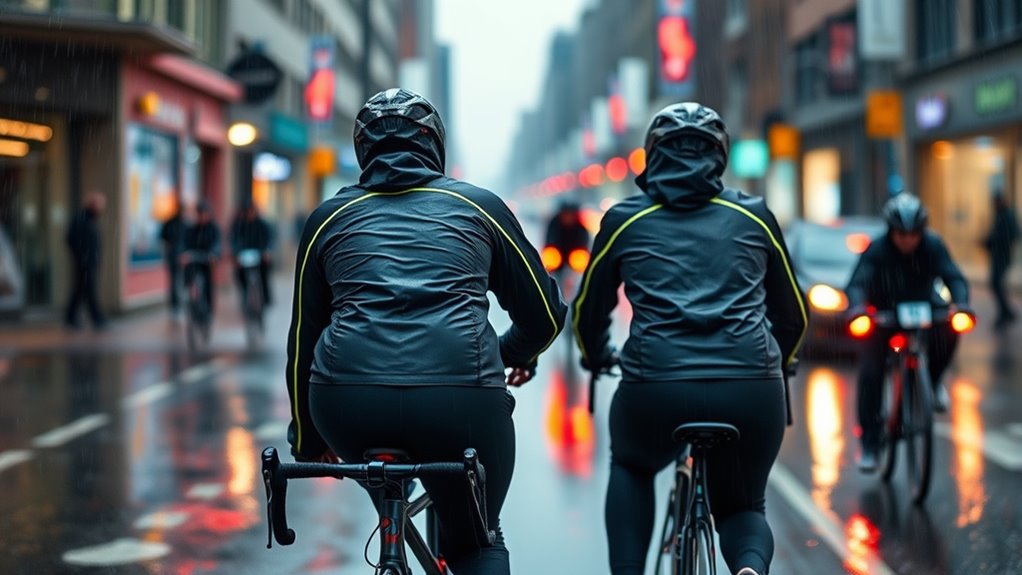
To stay dry and comfortable while biking in rain, choose waterproof jackets and pants with sealed seams and waterproof membranes that repel water effectively. Look for breathable fabrics that prevent clamminess, with features like vents, mesh linings, and moisture-wicking materials. An ergonomic fit with adjustable cuffs, hems, and collars keeps water out without restricting movement. Packable, lightweight designs make it easy to carry when weather improves. Keep exploring to discover how to select gear that’s both durable and tailored for cycling.
Key Takeaways
- Look for waterproof jackets and pants with sealed seams and durable waterproof membranes to prevent water entry.
- Choose gear with ventilation features like vents or mesh linings to maintain breathability and comfort during rides.
- Ensure a proper fit with adjustable cuffs, hems, and ergonomic designs to avoid restricting movement or letting water in.
- Opt for lightweight, packable rain gear that can be easily stored when conditions improve.
- Select high-quality, breathable waterproof fabrics that balance protection, durability, and mobility for cycling in rain.
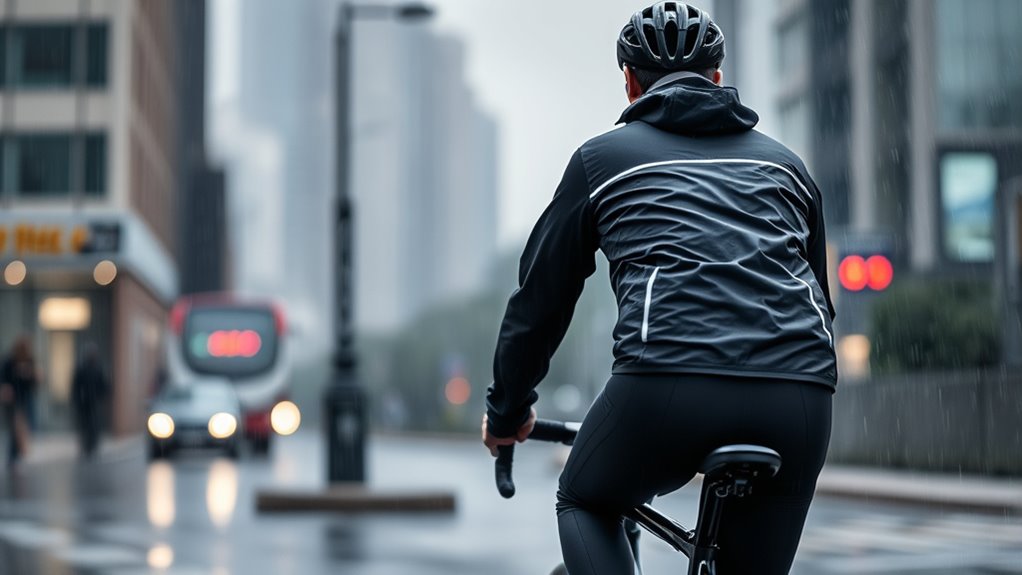
Riding a bike in the rain can be challenging, but the right rain jackets and pants make all the difference. When choosing gear, focus on waterproof material that keeps you dry without sacrificing comfort. Modern fabrics are designed to be highly effective at repelling water, ensuring that rain doesn’t seep through and leave you soaked. Look for jackets and pants with sealed seams and durable waterproof membranes—these features prevent water from penetrating at the stitching points and weak spots. The material should be lightweight enough for ease of movement, yet sturdy enough to withstand the elements.
Choose waterproof, lightweight gear with sealed seams and durable membranes for dry, comfortable cycling in any weather.
Breathability features are equally important. A waterproof jacket that traps sweat can leave you feeling clammy and uncomfortable, even if it keeps rain out. The best bike rain gear incorporates advanced breathability technologies—like vents, mesh linings, or moisture-wicking fabrics—that help regulate your body temperature. These features allow excess heat and perspiration to escape, preventing you from overheating during intense rides or longer commutes. When shopping, check for jackets with adjustable ventilation options, so you can customize airflow based on your activity level and weather conditions.
In addition to waterproof and breathability qualities, consider the fit and design of your rain gear. A well-fitting jacket should not restrict your movement or interfere with your riding position. Look for adjustable cuffs, hems, or collars to seal out drafts and rain, and ensure that the jacket’s length covers your hips to prevent water from sneaking in during splashes or wind-driven rain. For pants, an ergonomic cut that fits snugly without constriction helps maintain mobility while preventing water from entering at the waist or ankles. Some pants feature elastic or adjustable straps at the waist and ankles to enhance their seal and fit.
Ventilation openings or zippered vents are a bonus, letting you fine-tune airflow during climbs or warmer conditions. Lightweight, packable designs are also handy if you need to stow your rain gear when the weather clears. Remember, the goal is to stay dry and comfortable without sacrificing mobility or overheating. Combining waterproof material with smart breathability features creates gear that performs well in wet conditions and keeps you comfortable mile after mile. Additionally, choosing gear with high-quality waterproof membranes enhances durability and long-term performance. When you’re prepared with the right rain jackets and pants, riding in the rain becomes more manageable and even enjoyable, allowing you to focus on the road and your ride rather than the weather.
Frequently Asked Questions
How Do I Choose the Right Size for Biking Rain Gear?
To select the appropriate size for biking rain gear, focus on attaining a proper fit that allows movement without excess bulk. Use sizing tips like measuring your chest, waist, and hips, then compare these to the manufacturer’s size chart. Keep in mind, your gear should be slightly loose for layering and comfort. Always try on gear if possible, or check return policies if shopping online, to guarantee it fits well for maximum performance.
Are Waterproof Materials Breathable Enough for Long Rides?
Yes, waterproof materials are generally breathable enough for long rides, but ventilation challenges can still occur, especially in high heat or intense effort. Breathable fabrics aim to balance waterproof vs breathable qualities, allowing moisture to escape while keeping water out. Look for jackets with underarm vents or adjustable features to improve airflow. This way, you stay dry from rain and sweat, enhancing comfort during extended cycling sessions.
Can Rain Jackets Be Layered With Other Cycling Clothing?
Yes, you can layer rain jackets with other cycling clothing. Use layering techniques like adding a moisture-wicking base layer, then a lightweight, breathable mid-layer, and finally your waterproof jacket. Opt for waterproof fabric types like Gore-Tex or eVent, which provide protection without sacrificing breathability. This setup keeps you dry and comfortable during long rides, allowing you to adapt to changing weather conditions effectively.
How Do I Prevent My Rain Gear From Chafing During Cycling?
You can keep chafing at bay by paying close attention to fabric fastenings and seam sealing. Make sure your rain gear fits properly—neither too tight nor too loose—to avoid unnecessary rubbing. Apply a lubricant or anti-chafe balm on areas prone to irritation. Also, choose moisture-wicking base layers to reduce friction. When you get the fit right, you’ll find your ride smoother, and chafing becomes a thing of the past.
What Maintenance Is Required to Keep Rain Gear Effective?
To keep your rain gear effective, you need to regularly clean it with gear cleaning products to remove dirt and oils that can compromise waterproofing. After cleaning, check for any seam leaks and reseal seams with seam sealing tape to maintain waterproof integrity. Store your gear properly in a cool, dry place, and avoid using harsh detergents or fabric softeners, which can weaken waterproof coatings and reduce performance.
Conclusion
With the right rain jacket and pants, you’ll glide through storms like a boat through choppy waters—steady and confident. Don’t let rain dampen your ride; instead, gear up and embrace the adventure. When your gear keeps you dry and comfortable, every drizzle becomes just a part of the journey. Stay prepared, stay dry, and ride on—your perfect rain gear is the shield that turns storms into mere ripples on your path.