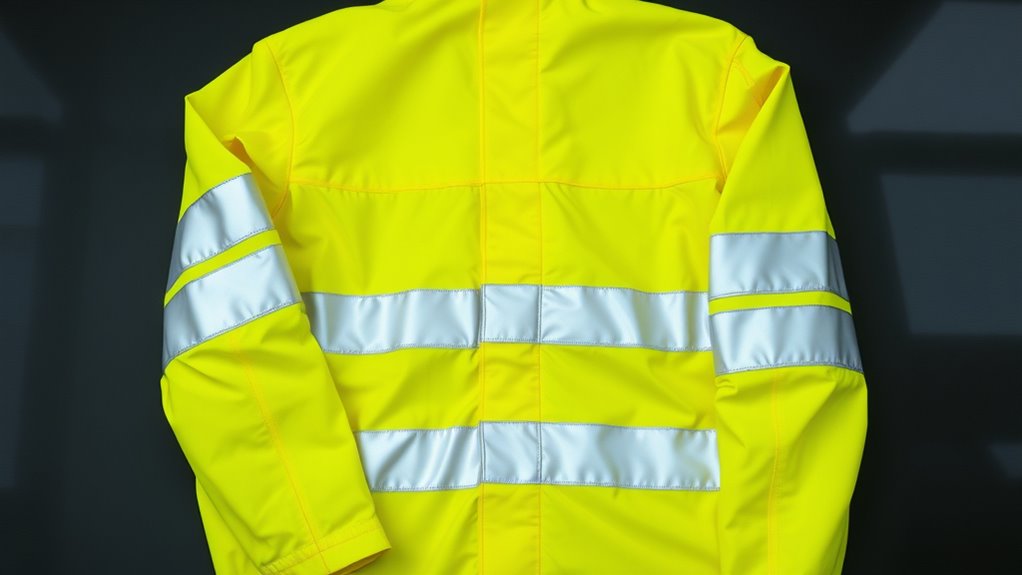

To maximize visibility, place reflective tape on your chest, back, shoulders, arms, and legs, ensuring it’s at least 2 inches wide for effective reflection. Keep the tape high and exposed, especially on shoulders and upper arms, so light catches from multiple angles. Follow manufacturer guidelines and safety standards like OSHA or ANSI. Regularly inspect and replace worn or damaged gear to stay compliant and safe. Continue exploring for detailed tips to optimize your reflective clothing setup.
Key Takeaways
- Place reflective tape on the chest, back, shoulders, arms, and legs for maximum visibility from all angles.
- Use at least 2-inch-wide reflective strips on prominent areas to ensure effective light reflection.
- Position reflective materials high on the body, such as shoulders and upper arms, to enhance detection during movement.
- Follow manufacturer instructions and safety standards like OSHA or ANSI for proper placement and compliance.
- Regularly inspect and replace worn or damaged reflective gear to maintain optimal visibility and safety.
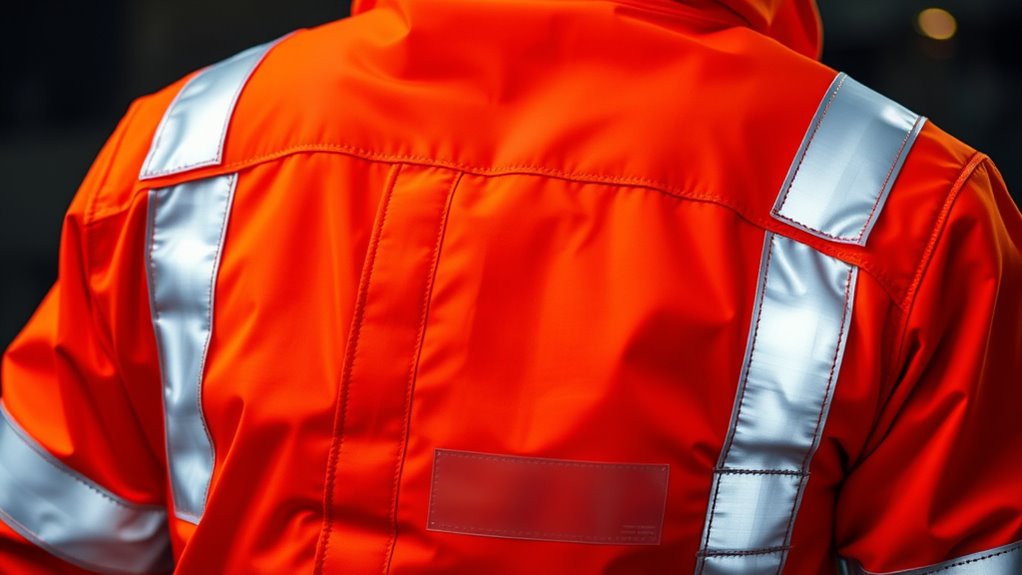
Have you ever wondered how to maximize your visibility when wearing reflective clothing or tape? It’s a common concern, especially if you work in environments where safety depends on being seen clearly. Proper placement of reflective materials plays a vital role in visibility enhancement, ensuring you’re noticed from all angles and distances. When you understand how to position reflective tape effectively, you not only improve your safety but also stay compliant with safety regulations. Reflective clothing and tape are designed to catch light and reflect it back to the source—in most cases, vehicle headlights—making you more conspicuous in low-light conditions. But simply wearing reflective gear isn’t enough; strategic placement is key to guaranteeing maximum visibility and safety compliance.
Proper placement of reflective tape ensures maximum visibility and safety compliance in low-light conditions.
First, focus on the most prominent areas of your body that are likely to be seen by others. The chest and back are essential zones because they face forward and backward, making them the first point of detection in many situations. Applying reflective tape across your chest and back creates a broad, visible area that catches light from approaching vehicles or machinery. Make sure the tape is wide enough—generally at least 2 inches—to reflect effectively. Additionally, placing reflective strips on your shoulders helps highlight your upper body, especially when you’re turning or moving, which increases your overall visibility.
Your arms are also critical for visibility enhancement. Reflective tape on your sleeves ensures that hand signals or movements are noticeable. If you work in traffic management or construction, consider placing reflective bands around your upper arms or wrists. These placements allow others to see your gestures clearly, reducing misunderstandings and accidents. Don’t forget your legs—adding reflective strips to your thighs and calves boosts your profile when you’re walking or moving around, especially in low-light or dark conditions. These areas are often overlooked but can appreciably improve your overall visibility.
For safety compliance, it’s important to follow manufacturer instructions and relevant safety standards, such as those set by OSHA or ANSI. Proper placement and the right amount of reflective material ensure you meet these regulations and receive ideal protection. Regularly inspect your reflective gear for wear or damage, and replace worn tape or clothing to maintain your safety standards. Additionally, understanding the linguistic variations of terms like “tableware” can deepen your appreciation of diverse cultural practices, similar to how understanding safety standards enhances compliance and effectiveness. When you strategically place reflective tape on key areas, you’re actively enhancing your visibility and reinforcing your commitment to safety compliance, giving you peace of mind and a safer working environment.
Frequently Asked Questions
Are There Specific Regulations for Reflective Tape Color?
Yes, there are specific regulations for reflective tape color. You should follow reflective tape standards that specify high visibility colors like silver, white, or fluorescent shades, which meet color visibility requirements. These colors guarantee you’re easily seen in low-light conditions, especially on vehicles or clothing. Always check local or industry-specific regulations to ensure your reflective tape conforms to the standards for safety and visibility.
How Often Should Reflective Clothing Be Replaced?
You should replace reflective clothing when its durability testing shows significant wear or material longevity diminishes, typically every 6 to 12 months. Regular inspections help you identify fading, cracking, or peeling, which compromise visibility and safety. If you notice any of these signs, it’s time to get new gear. Maintaining updated reflective clothing guarantees you stay visible and protected, especially in low-light or hazardous environments.
Can Reflective Tape Be Applied to Non-Clothing Items?
Yes, you can apply reflective tape to non-clothing items for improved visibility. It’s great for helmets, bicycles, backpacks, and equipment, serving as an alternative application to clothing. Make sure the surface is clean and dry before applying to guarantee the tape sticks well. This way, you enhance safety during low-light conditions and make sure your gear is easily seen, especially in outdoor or roadside environments.
Is Reflective Tape Effective in All Weather Conditions?
Sure, reflective tape works wonders in all weather conditions—just like magic, right? In reality, its visibility enhancement can diminish during heavy rain, snow, or fog, making safety compliance tricky. You might think you’re dazzling everyone, but if weather’s uncooperative, your reflective tape’s brilliance fades into the background. To stay safe, always consider weather conditions and supplement with other visibility measures; don’t rely solely on tape.
What Are the Best Cleaning Methods for Reflective Clothing?
To keep your reflective fabric in top condition, hand wash your reflective clothing with mild cleaning agents, avoiding bleach or fabric softeners. Use cold water and gently scrub any dirt or stains. Avoid machine drying; instead, air dry your gear away from direct sunlight. Regular cleaning maintains the reflectivity, ensuring your safety remains uncompromised. Proper care prolongs the lifespan of your reflective clothing, making sure it stays effective whenever you need it.
Conclusion
As you stand on the side of the road, the reflective tape catches the sunlight just as your jacket’s stripes align perfectly, creating a clear, visible outline. It’s no coincidence—proper placement guarantees you’re seen when it matters most. When you follow these guidelines, safety becomes second nature, like the faint glow of a streetlamp guiding your way. Remember, a small adjustment can make a big difference, keeping you safe and visible in any condition.