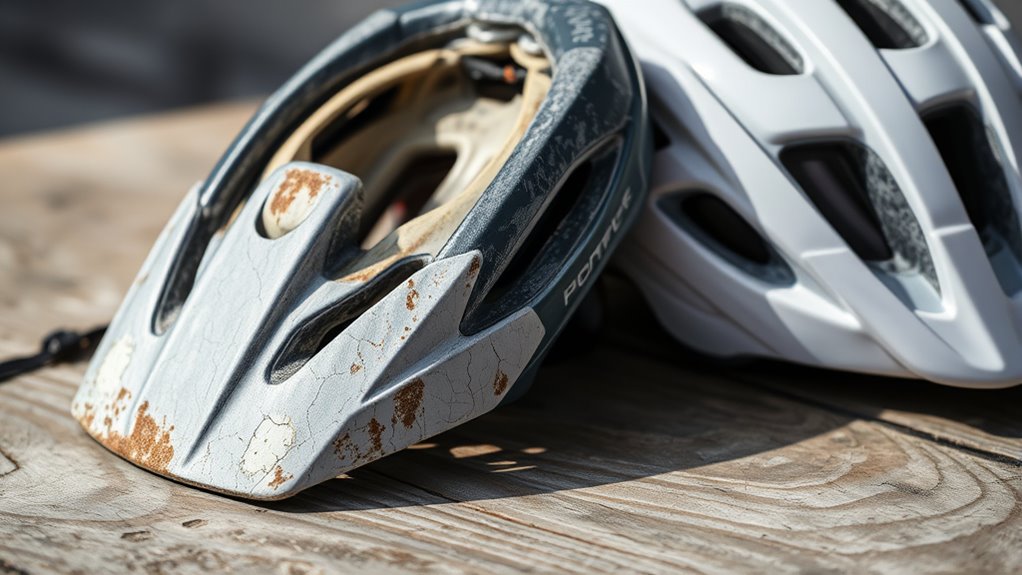

Wearing a helmet that’s over five years old can seriously reduce your protection during a crash because materials weaken over time, even if it looks fine. Cracks, dents, or wear aren’t always visible but still compromise safety. New helmets incorporate the latest safety features, standards, and better designs, keeping you safer and more comfortable. Upgrading regularly also boosts your confidence and motivation. Keep going, and you’ll discover how these upgrades make all the difference.
Key Takeaways
- Helmets degrade over time due to exposure to elements, compromising their impact absorption capabilities.
- New helmets incorporate the latest safety standards and technological advancements for optimal protection.
- Regular replacement ensures internal materials remain effective, reducing injury risk during accidents.
- Upgrading maintains a modern, stylish appearance, encouraging consistent use and boosting confidence.
- Visible damage isn’t always present; periodic updates ensure all components function properly for safety.
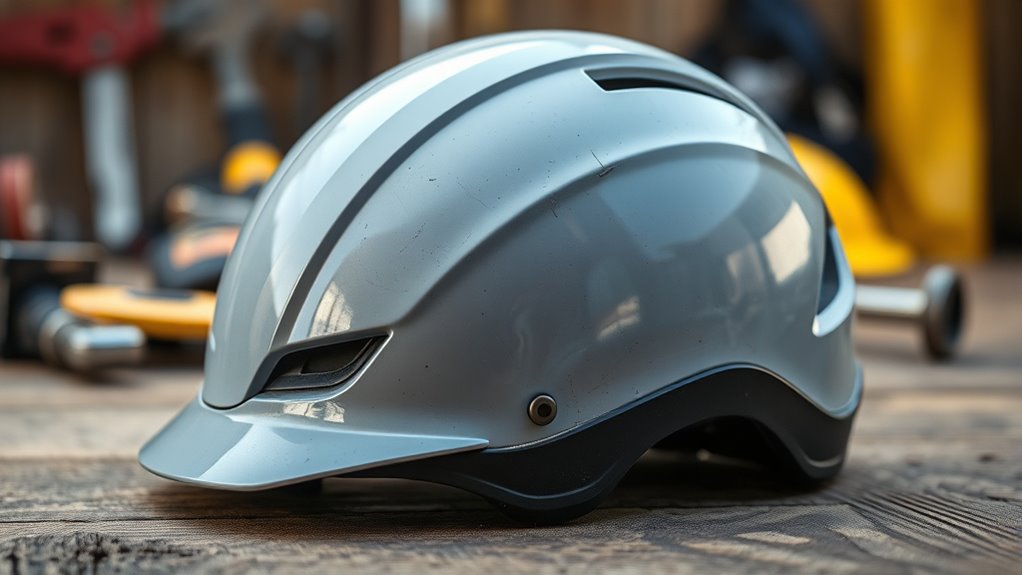
Your helmet is your first line of defense when cycling, skating, or engaging in any activity that risks head injury. Over time, even the most durable helmets can weaken, making it vital to upgrade them every five years. Helmet safety is paramount; the materials that absorb impact and protect your skull degrade with regular use and exposure to the elements. Cracks, dents, or signs of wear might not always be visible, but they can considerably compromise your helmet’s ability to shield you during a fall or collision. By replacing your helmet on a regular schedule, you guarantee that it maintains ideal protective performance, keeping your head safe should an accident occur.
Replace your helmet every five years to ensure maximum safety and protection during falls or collisions.
In addition to safety, helmet aesthetics play an important role in your motivation to update your gear. Wearing a helmet that looks outdated or damaged can diminish your confidence and enjoyment during your activities. New helmets often come with contemporary designs, improved ventilation, and a variety of colors and patterns that allow you to express your personal style. Upgrading every five years not only guarantees that you’re wearing a helmet that meets current safety standards but also helps you stay visually fresh and motivated to stay active. Feeling good about what you wear encourages consistent use, which is essential for safety and enjoyment.
Another reason to replace your helmet is that technology and safety standards evolve. Helmets manufactured today incorporate the latest innovations in impact absorption and aerodynamics, offering better protection and comfort than older models. Wearing an outdated helmet means missing out on these advancements. Regulations and safety recommendations are regularly updated, and newer helmets undergo rigorous testing to meet or exceed those standards. By upgrading every five years, you align with current safety guidelines, ensuring you benefit from the most effective protective features available.
Environmental factors also contribute to helmet deterioration. Sun exposure, sweat, and weather conditions can weaken helmet shells and liners over time. Even if you don’t notice visible damage, the internal foam might have lost its ability to absorb shocks effectively. Regular replacement confirms that every component of your helmet is functioning as intended, providing peace of mind during your activities.
Additionally, choosing a helmet with advanced safety features ensures you get the latest in protective technology, further justifying the need for regular updates. Ultimately, staying on top of helmet upgrades isn’t just about safety—it’s about maintaining confidence and style. Investing in a new helmet every five years ensures you’re protected with the latest safety features and look good while doing it. It’s a small step that makes a big difference in your safety, comfort, and overall experience during your favorite activities.

1 Set Cycle Helmet Pads, Padding Kit, Universal Foam Pads for Motorcycle Bike Cycling Helmet (Blue)
The helmet pad is made of a high-quality, non-toxic foam sponge that is very comfortable, breathable, non-sticky, corrosion-resistant,…
As an affiliate, we earn on qualifying purchases.
As an affiliate, we earn on qualifying purchases.
Frequently Asked Questions
Can a Helmet Still Be Effective After 5 Years?
Your helmet’s effectiveness diminishes over time due to wear, even if it still looks intact. After five years, the helmet may no longer meet current safety standards, and its materials could degrade. Helmet expiration dates are set to guarantee ideal protection. So, even if it appears fine, it’s best to replace your helmet after five years to guarantee it provides maximum safety and complies with updated safety standards.
How Do Environmental Factors Affect Helmet Lifespan?
Environmental factors like UV degradation and chemical exposure are like silent enemies that weaken your helmet over time. Sunlight and harsh chemicals break down the materials, reducing impact absorption and compromising safety. You might not see damage, but your helmet’s protective qualities diminish gradually. So, it’s essential to replace it regularly, ideally every five years, to guarantee it still offers peak protection against unexpected accidents.
Is There a Way to Check Helmet Integrity Visually?
You can perform a visual inspection to check your helmet’s integrity. Look closely for cracks, dents, or any signs of damage, as these indicate compromised protection. Conduct crack detection by examining the surface thoroughly, especially around the edges and straps. If you notice any issues, replace your helmet immediately. Regular visual checks help guarantee your helmet remains safe and effective, so don’t skip this simple yet essential step.
Do All Helmet Types Need Replacement at the Same Interval?
Not all helmet types require the same replacement schedule, as helmet material varies. For example, foam helmets like cycling or skateboarding helmets may need replacement after about five years, while some advanced materials could last longer if properly maintained. You should regularly check your helmet’s integrity and follow the manufacturer’s guidelines for replacement. Keep in mind, even if it looks fine, material degradation can compromise safety over time.
What Are the Risks of Using an Outdated Helmet?
Using an outdated helmet risks compromising your safety, as helmet manufacturing and safety standards evolve. Over time, materials weaken, and protective capabilities diminish, leaving you vulnerable. When you neglect these risks, you increase the chances of injury during a crash. Regularly replacing your helmet ensures you meet current safety standards and benefit from advancements in helmet technology, helping you stay protected and confident on every ride.

Schwinn Thrasher Helmet for Adults, Black, Size 58 – 62 cm, for Riders Ages 14+, Lightweight Microshell, Adjustable Dial and Straps, Interior Padding, 20 Air Vents, Removable Visor, Adult Bike Helmet
ADULT BIKE HELMET: Designed for fitness and recreational rides, this sporty bicycle helmet fits riders ages 14+ with…
As an affiliate, we earn on qualifying purchases.
As an affiliate, we earn on qualifying purchases.
Conclusion
Think of your helmet like a trusted friend—you rely on it to protect you, but over time, even the best friends can wear out. I once met a cyclist who ignored this advice and suffered a minor injury because his helmet was outdated. That day, I realized a helmet’s protective foam can degrade, much like a shield losing its strength. Upgrading every five years keeps your safety armor strong, so you’re always ready for the unexpected.
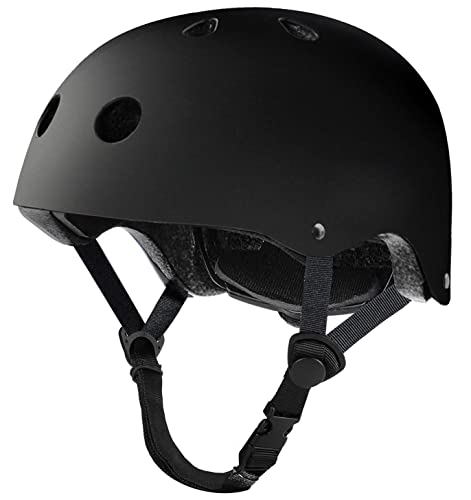
Tourdarson Skateboard Helmet Impact Resistance Ventilation for Youth & Adults (Black,Large)
HIGH-IMPACT —Built for both comfort and impact resistance with REINFORCED ABS SHELL & THICKENED SHOCK-ABSORBING EPS CORE.
As an affiliate, we earn on qualifying purchases.
As an affiliate, we earn on qualifying purchases.

LIODFGLER Bucket Hats with Bike Helmet Cycling Helmet for Unisex Adults Fashion Breathable Sunscreen Head Protection Bicycle Helmet Hats (Khaki)
● Fashionable Design: Our Bucket Hats with Bike Helmet for Adults is the perfect combination of style and…
As an affiliate, we earn on qualifying purchases.
As an affiliate, we earn on qualifying purchases.