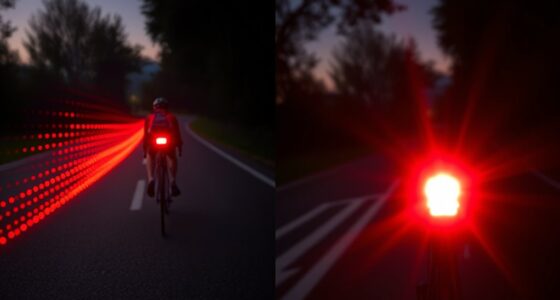

To improve visibility in rain and fog, you should position your fog lights lower on your vehicle to focus on the road surface and reduce glare reflections. Use adaptive headlights that adjust their beam patterns and intensity based on weather conditions, helping to cut through moisture and fog without blinding other drivers. Properly placed lighting minimizes glare and enhances your ability to see obstacles and road markings clearly. Keep exploring to find more tips on optimizing your visibility in tricky weather.

Get bike and ride gear delivered free — and shop member deals
- Fast, free delivery on millions of items
- Access to Prime Big Deal Days deals on October 6–7
- Prime Video, Amazon Music and more included
Key Takeaways
- Place fog lights low on the vehicle, near the bumper, to illuminate the road directly ahead without causing glare.
- Use adaptive headlights that automatically adjust beam pattern and intensity to match weather conditions.
- Tilt or shift headlight beams downward during rain or fog to minimize light reflection and glare.
- Combine properly positioned fog lights with adaptive headlights to enhance obstacle and lane edge visibility.
- Ensure fog lights produce a wide, flat beam that hits the road surface, reducing light scattering and improving clarity.

Have you ever wondered how rain and fog affect your ability to see clearly while driving or walking? When visibility drops, your eyes struggle against the glare and diffused light that scatter in wet or foggy conditions. That’s where the strategic placement of lights on your vehicle becomes essential. Modern vehicles often feature adaptive headlights, which automatically adjust their beam pattern and intensity based on driving conditions. These headlights help you see more clearly without blinding other drivers, especially in rain or fog. Adaptive headlights can tilt or shift their beams downward to prevent excessive glare, allowing you to spot obstacles and road signs more effectively. Their ability to adapt makes a noticeable difference in poor visibility, helping you maintain control and safety.
Another critical aspect is fog light placement. Fog lights are specifically designed to improve visibility when fog, heavy rain, or mist obscures your view. Proper fog light placement is important; they’re usually mounted lower on the vehicle, near the bumper, to illuminate the road directly in front of you rather than bouncing light into the fog or rain. This low placement minimizes glare and helps cut through the moisture in the air. When fog lights are positioned correctly, they create a wide, flat beam of light that hits the road surface and the immediate area ahead. This prevents the light from reflecting back into your eyes, which often happens with high-mounted headlights during foggy conditions. Using the right combination of adaptive headlights and correctly placed fog lights can greatly enhance your safety. When you switch on adaptive headlights, you benefit from their ability to tailor the beam to your driving environment, reducing glare and improving your reaction time. At the same time, activating fog lights when conditions worsen guarantees you have better visibility of the road edges and lane markings, helping you stay on course. Proper fog light placement ensures that the light doesn’t create additional glare, which can be distracting or blinding to other drivers. Additionally, incorporating organic lighting solutions can further optimize visibility in adverse weather conditions by utilizing more efficient and eco-friendly lighting technologies.
As an affiliate, we earn on qualifying purchases.
Frequently Asked Questions
How Do Different Vehicle Types Affect Visibility in Adverse Weather?
Different vehicle types impact your visibility in adverse weather through their design and your driver behavior. Larger vehicles like trucks and buses often block your view and create blind spots, making it harder to see hazards. Smaller cars might be more maneuverable, but their design can reflect and scatter light differently. Your behavior, such as adjusting speed and using proper lights, is vital to improving visibility regardless of vehicle type.
Are There Specific Colors of Lights Better for Fog and Rain?
Colors for fog and rain are like night and day for visibility. You’ll benefit most from yellow or amber lights, as their color contrast cuts through fog and rain better than white or blue. These warm hues reduce glare and improve clarity, helping you see and be seen. Choosing lights with these colors enhances safety, giving you a clearer view when weather conditions make visibility tricky.
Can Reflective Markings Improve Visibility in Fog and Heavy Rain?
Reflective materials can substantially improve your visibility in fog and heavy rain. They catch and reflect light from weather-responsive lighting systems, making your vehicle or gear more noticeable. Using reflective markings combined with strategically placed lights ensures you’re seen from a distance, even in poor visibility conditions. This combination helps cut through glare and enhances safety, giving you a better chance to be noticed by others on the road or trail.
How Do Weather Conditions Influence the Effectiveness of Light Placement?
Weather conditions are like tricky dance partners, influencing how well your lights work. Poor weather, such as rain or fog, reduces visibility and makes light placement critical. You should consider weather pattern considerations and adjust your light beam angles accordingly—lower angles can reduce glare and improve visibility. Properly positioned lights help cut through the haze, ensuring you’re seen and can see better, no matter the weather.
What Are the Latest Technological Advancements for Improving Visibility?
You should consider adaptive lighting systems equipped with smart sensors, which automatically adjust brightness based on weather and visibility conditions. These advancements enable your vehicle or environment to respond in real-time, cutting through rain, fog, or glare effectively. By leveraging adaptive lighting, you enhance safety and guarantee ideal visibility, giving you better control and confidence when driving or steering in challenging weather conditions.
adaptive headlights for vehicles
As an affiliate, we earn on qualifying purchases.
As an affiliate, we earn on qualifying purchases.
Conclusion
You might think that brighter lights always improve visibility in rain and fog, but that’s not always true. Some studies suggest that properly placed, low-beam headlights can cut through glare better than high beams, reducing reflection and increasing clarity. So, instead of relying solely on brightness, focus on strategic light placement. It’s worth testing this theory yourself—sometimes, less is more when it comes to safe visibility in challenging weather conditions.
As an affiliate, we earn on qualifying purchases.
As an affiliate, we earn on qualifying purchases.
Fall Picks
fall essentials
As an affiliate, we earn on qualifying purchases.