We believe the SVBONY SV605CC and the Astromania SGCMOS are among the top cooled CMOS astro cameras for deep sky imaging in 2025. The SV605CC offers high resolution and efficient cooling with a durable design, while the Astromania model provides excellent sensitivity and long-exposure capabilities. Both deliver reliable performance for enthusiasts and professionals alike. If you’re curious about which features make each stand out, exploring further will reveal the details behind these top picks.
Key Takeaways
- The SVBONY SV605CC offers a high-resolution IMX533 CMOS sensor with efficient TEC cooling for deep sky imaging.
- The Astromania SGCMOS features high sensitivity, durable construction, and integrated auto-guiding capabilities.
- Both cameras provide excellent cooling performance, reducing thermal noise for longer exposures and improved image clarity.
- Compatibility with popular astrophotography software like ASCOM and USB 3.0 ensures seamless integration and reliable operation.
- Their build quality, cooling efficiency, and sensor performance make them top choices for serious deep sky astrophotographers in 2025.
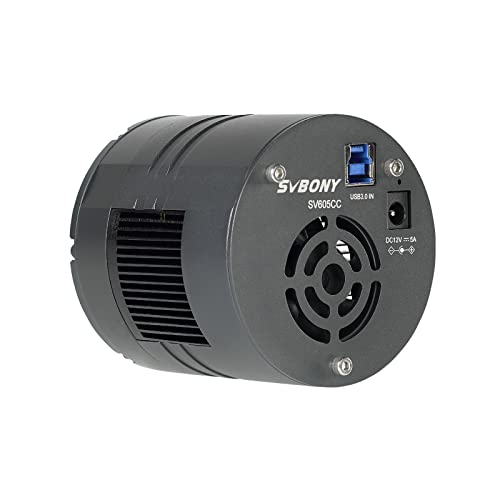
SVBONY SV605CC Cooled Astrophotography Camera, 9MP IMX533 CMOS Color Camera
- Suitable for Deep Space Photography: Ideal for deep sky, meteor monitoring, and lucky imaging
- High-Resolution 9MP Sensor: IMX533 1-inch chip with 3008x3008 pixels
- Enhanced Quantum Efficiency: 80% efficiency for improved imaging
As an affiliate, we earn on qualifying purchases.
SVBONY SV605CC Cooled Camera, 9MP CMOS Color Telescope Camera
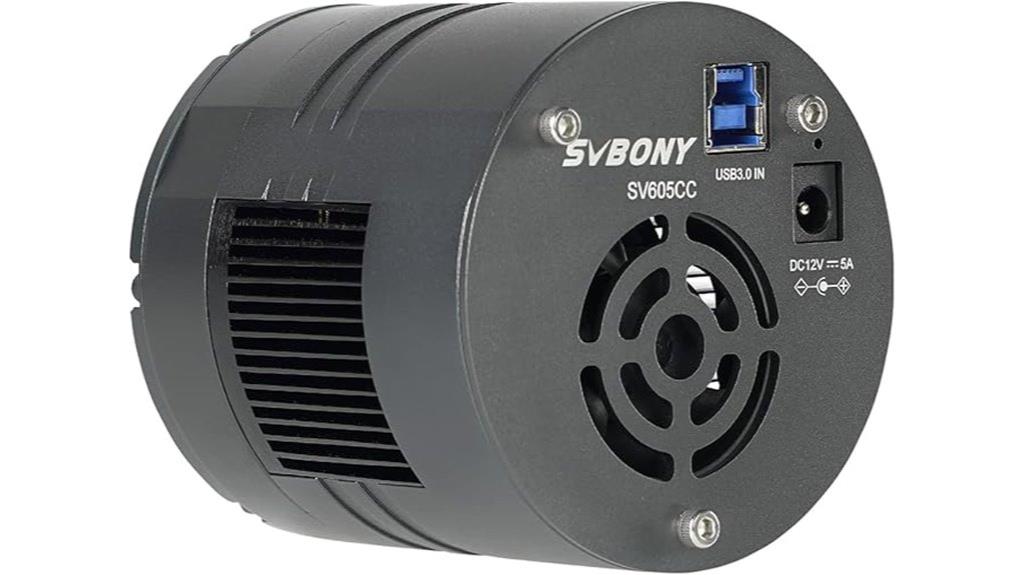
If you’re serious about deep sky astrophotography, the SVBONY SV605CC cooled camera is an excellent choice because it combines high-resolution imaging with effective thermal noise reduction. Its 9MP CMOS sensor with a 1-inch square IMX533 chip captures stunning detail, thanks to 3008×3008 resolution and 3.76μm pixels. The camera’s cooling system, with TEC refrigeration and double-layer semiconductor cooling, reduces temperatures by up to 30°C below ambient, minimizing thermal noise during long exposures. Compatible with Windows, Linux, Mac, and Raspberry Pi, it’s versatile for indoor and outdoor use. This makes the SV605CC a powerful tool for deep space, meteor, and lucky imaging.
Best For: astrophotographers and astronomy enthusiasts seeking high-resolution, cooled imaging for deep sky, meteor monitoring, and lucky imaging projects.
Pros:
- High 9MP resolution with IMX533 sensor for detailed deep sky imaging
- Effective cooling system reduces thermal noise during long exposures
- Wide compatibility with Windows, Linux, Mac, Chrome OS, and Raspberry Pi for versatile use
Cons:
- CMOS glow can still affect image quality without proper calibration
- Requires familiarity with astrophotography setups and software integration
- May be more expensive compared to non-cooled or lower-resolution cameras

Astromania SGCMOS Series Telescope CMOS Camera - Great Camera for auto-Guiding and Multiple Types of Astrophotography - Multicolour Imaging
- Sensor Type: High sensitivity CMOS sensor
- Frame Rate & Exposure: Fast frame rate and long exposure
- Housing Material: Aluminum CNC housing
As an affiliate, we earn on qualifying purchases.
Astromania SGCMOS Series Telescope CMOS Camera
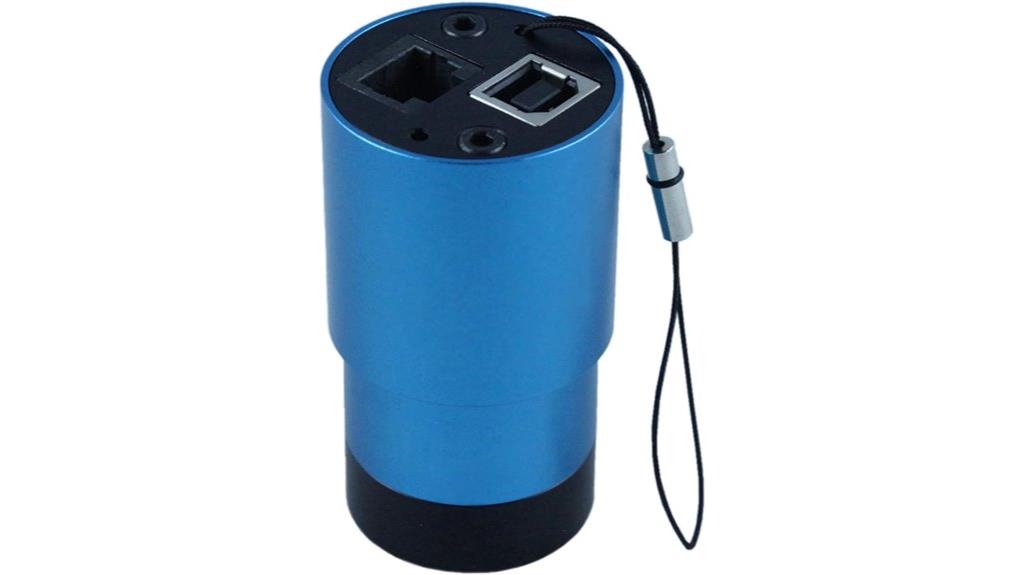
The Astromania SGCMOS Series Telescope CMOS Camera is an excellent choice for amateur astronomers seeking an affordable yet capable solution for astrophotography and auto-guiding. It features a high-sensitivity sensor with fast frame rates and long exposure support, making it suitable for capturing details of the Moon, planets, and auto-guiding. Its durable aluminum CNC housing includes a 1.25-inch interface and C-mount thread for versatile lens options. The camera offers built-in ST4 auto guider port, compatibility with popular software, and a thermal design to manage heat effectively. While some driver issues exist, with proper setup, it provides a solid, budget-friendly option for deep-sky imaging and guiding.
Best For: Amateur astronomers seeking an affordable, versatile camera for astrophotography and auto-guiding with decent long-exposure capabilities.
Pros:
- Supports multicolor imaging and long exposure astrophotography.
- Includes a built-in ST4 auto guider port for easy guiding system connection.
- Durable aluminum CNC housing with versatile C-mount and 1.25-inch interfaces.
Cons:
- Driver issues and compatibility problems with Windows 10/11 and Mac systems.
- Less sensitive than premium cameras, requiring longer exposure times for similar results.
- Some users experience stability issues, crashes, or difficulty focusing in certain setups.
Factors to Consider When Choosing Cooled CMOS Astro Cameras for Deep Sky Imaging
When selecting a cooled CMOS astro camera for deep sky imaging, we need to contemplate several key factors. These include sensor sensitivity and quantum efficiency, cooling capabilities, and how they influence image quality. Understanding these points helps us choose a camera that balances performance with our specific imaging needs.
Sensor Sensitivity and QE
Sensor sensitivity and quantum efficiency (QE) are critical factors to contemplate because they directly impact a cooled CMOS astro camera’s ability to capture faint, low-light objects in deep sky imaging. High QE allows the sensor to absorb more photons, producing brighter and more detailed images of distant nebulae and galaxies. Cameras with higher sensitivity detect low-light signals more effectively, reducing the need for extremely long exposures. Advances in sensor technology have pushed QE over 80%, substantially improving imaging efficiency. Additionally, higher QE sensors tend to produce images with less noise during extended exposures, enhancing overall clarity. The spectral response also influences how well the camera captures different wavelengths, affecting color accuracy. Choosing a camera with excellent sensitivity and QE ensures better detail, brighter captures, and more successful deep sky imaging sessions.
Cooling Efficiency Levels
Cooling efficiency is a vital factor because it determines how effectively a cooled CMOS astro camera can suppress thermal noise during long exposures. This efficiency is typically measured by how many degrees Celsius below ambient temperature the sensor can be maintained. Effective cooling reduces thermal noise, which is essential for capturing faint deep sky objects. TEC systems with double-layer semiconductor design generally achieve better cooling, often reaching 20°C to 40°C below ambient. Higher cooling efficiency allows for longer exposures without increasing noise, enhancing the detection of dim celestial targets. However, cooling performance can be influenced by external factors like ambient temperature, airflow, and camera construction. These elements affect the consistency and quality of imaging, making cooling efficiency a key consideration when selecting a cooled CMOS astro camera.
Image Noise Reduction
Choosing the right cooled CMOS astro camera involves carefully considering how effectively it reduces image noise during long exposures. Thermal noise can obscure faint details in deep sky images, so efficient noise reduction is vital. Technologies like TEC secondary refrigeration and double-layer semiconductor cooling help minimize residual heat, markedly lowering noise levels. This allows us to achieve higher signal-to-noise ratios, making faint objects more visible without extensive post-processing. Lower noise also means capturing more detailed and accurate images, improving overall image quality. However, balancing cooling efficiency with other factors like dynamic range and sensor stability remains important. Proper cooling management ensures noise reduction is maximized without compromising the camera’s performance or image quality. Ultimately, effective noise reduction enhances our ability to produce clearer, more detailed astrophotographs.
Compatibility With Software
Selecting a cooled CMOS astro camera isn’t just about image quality and noise reduction; guaranteeing it works smoothly with your existing software setup is equally important. We need to verify that the camera offers compatible drivers for your operating system, whether Windows, Mac, or Linux. Compatibility with popular astrophotography software like ASCOM or PHD2 ensures seamless integration and easier control. Check if the camera provides native or third-party SDKs and APIs, which can be crucial for custom software development or advanced features. Additionally, confirm that the connection interfaces—USB 2.0/3.0, C-mount, or 1.25-inch—match your hardware. Finally, guarantee driver stability and timely updates, especially for Windows 10 and 11, to prevent connection issues or crashes during imaging sessions.
Exposure and Frame Rates
When capturing deep sky objects, understanding the interplay between exposure times and frame rates is essential for ideal image quality. Longer exposures allow our cameras to collect more photons from faint objects, revealing greater detail and brightness. However, extended exposures can increase thermal noise if cooling isn’t effective, so quality cooling systems are crucial. Conversely, higher frame rates enable capturing more images per second, which is advantageous for lucky imaging or planetary shots but less so for deep sky work. Adjusting exposure and frame rate settings helps us balance signal collection with noise reduction, especially under varying sky conditions. Cameras with adjustable controls give us the flexibility to optimize image quality based on target brightness, atmospheric stability, and specific imaging goals.
Build Quality and Durability
The build quality and durability of cooled CMOS astro cameras are critical factors that directly influence their performance and longevity in deep sky imaging. High-quality models feature sturdy metal housings, like aluminum CNC, which withstand outdoor conditions and aid heat dissipation. Durability is further ensured by sealed, weather-resistant designs that protect internal components from dust, moisture, and temperature fluctuations. The cooling system, including TEC refrigeration and semiconductor modules, must be reliably integrated to maintain consistent performance during long imaging sessions. Additionally, secure, vibration-resistant mounting points, such as threaded C-mounts or 1.25-inch adapters, ensure stable attachment to telescopes. Long-term durability also depends on quality internal components and protective coatings that prevent corrosion, electrical faults, and mechanical wear over frequent use.
Power and Connectivity
Power and connectivity are essential considerations for cooled CMOS astro cameras, as stable power supplies and reliable data transfer directly impact imaging success. These cameras usually require consistent power, often supplied via USB or dedicated adapters, to guarantee smooth, long exposures without interruptions. Connectivity options, such as USB 2.0, USB 3.0, or Ethernet, markedly influence data transfer speed and compatibility with various control systems. High data transfer rates, especially with USB 3.0 or higher, are critical for capturing high-resolution images or streaming live videos. Some cameras support multiple protocols like ASCOM or proprietary software, easing integration with guiding and imaging tools. Reliable power management and solid connections are pivotal to prevent data loss, reduce noise, and achieve clear, detailed deep-sky images.
Cost and Value
Choosing a cooled CMOS astro camera involves balancing cost against the features and performance it offers. Prices range from under $500 to several thousand dollars, affecting overall value. Higher-priced models typically provide advanced cooling, larger sensors, and higher resolution, boosting long-term imaging potential. To assess value, consider the camera’s cooling efficiency, sensor quality, and compatibility with your setup. Budget options may be more affordable but often come with limitations like reduced sensitivity or less robust driver support, which can hinder serious astrophotography. Investing in a camera with reliable manufacturer support and up-to-date drivers can save time and money in the long run. Ultimately, finding the best value means weighing initial costs against features, performance, and future-proofing your deep-sky imaging capabilities.
Frequently Asked Questions
How Do Cooled CMOS Cameras Compare to CCD Models for Deep Sky Imaging?
Cooled CMOS cameras often outperform CCD models in deep sky imaging because they offer higher sensitivity, faster readouts, and lower noise levels. We find them more convenient due to their compact size and lower power consumption. While CCDs still excel in certain conditions requiring ultra-low noise, CMOS cameras provide a great balance of performance and affordability, making them a popular choice for both amateurs and professionals aiming for stunning astrophotography results.
What Is the Typical Lifespan of Cooled CMOS Sensors in Astro Cameras?
Cooled CMOS sensors in astro cameras typically last between 5 to 10 years, depending on usage and maintenance. We’ve found that quality sensors with proper cooling and handling can extend their lifespan considerably. Regular calibration, avoiding overuse, and keeping the sensor clean help guarantee they operate efficiently for many years. Ultimately, investing in a reputable model and proper care maximizes your camera’s longevity in deep sky imaging.
Can Cooled CMOS Cameras Be Used for Planetary Imaging as Well?
Absolutely, cooled CMOS cameras work great for planetary imaging too. Their high frame rates and low noise make capturing fine details of planets possible, especially with short exposures. We find that cooling helps reduce thermal noise during high-speed imaging, resulting in sharper, more detailed images. So whether you’re capturing deep-sky objects or planets, cooled CMOS cameras are versatile tools that can handle both with excellent results.
How Does Ambient Temperature Affect Cooled CMOS Camera Performance?
Ever wondered how hot summer nights impact our astro imaging? Ambient temperature substantially affects cooled CMOS cameras by increasing sensor noise, which reduces image quality. When it’s warmer outside, the cooling system works harder, sometimes struggling to maintain ideal sensor temperatures. This can lead to more grainy images and longer processing times. To get the best results, we need to contemplate environmental conditions and possibly use additional cooling or imaging during cooler nights.
Are There Specific Software Requirements for Optimal Cooled CMOS Camera Operation?
Yes, there are specific software requirements for ideal cooled CMOS camera operation. We recommend using dedicated astrophotography software that supports camera control, live stacking, and image calibration. Compatibility with your camera’s SDK or drivers is essential for seamless operation. Additionally, robust post-processing tools help us enhance images, manage noise, and maximize data quality. Ensuring your software is up-to-date and compatible with your camera guarantees smoother workflows and better astrophotography results.
Conclusion
Just like explorers charting new celestial frontiers, choosing the right cooled CMOS camera guides us through the night sky’s mysteries. With the SVBONY SV605CC and Astromania SGCMOS leading the way, we’re equipped to reveal deep sky secrets. As stars whisper their stories across the cosmos, our gear becomes the telescope’s trusted voice—turning distant light into breathtaking images. Together, let’s continue our journey among the stars, driven by passion and precision.