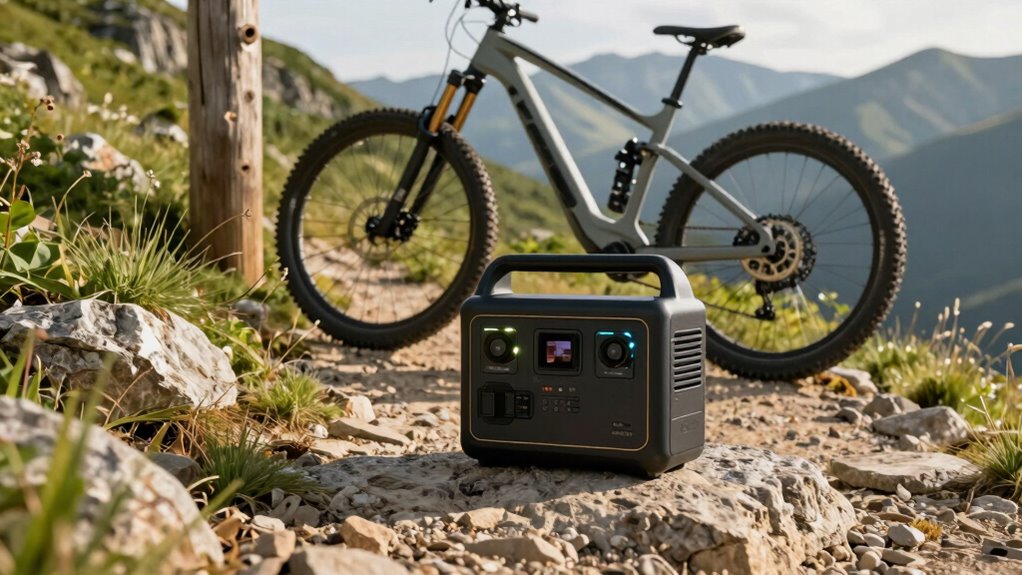
To size a portable power station for your e-bike, first determine your battery’s capacity in watt-hours and your typical trip length and energy needs. Consider the charging compatibility, ensuring it supports your e-bike’s port and voltage. Factor in additional device needs and whether you want quick recharging options like solar panels. Balancing capacity with portability is key—select a station that meets your energy demands without being bulky. For detailed guidance, keep exploring to find the best fit.

Get bike and ride gear delivered free with Prime
- Fast, free delivery on millions of items
- Prime Video, Amazon Music and more included
- Member-only deals all year
Key Takeaways
- Match the power station’s capacity (watt-hours) to your e-bike’s energy requirements for adequate charging.
- Confirm compatibility with your e-bike’s charging port, voltage, and current to ensure seamless connection.
- Consider your riding distance, device needs, and recharge frequency to select an appropriately sized station.
- Balance capacity with portability; larger capacity offers longer use but adds weight and size.
- Check if the station supports solar recharging or multiple device outputs for extended outdoor use.

As e‑bikes become more popular for commuting and outdoor adventures, having a reliable power source on the go is essential. Portable power stations are a practical solution, but to choose the right one, you need to understand how to size it properly. The first key factor to consider is battery capacity. This determines how much energy the power station can store and, ultimately, how many times it can recharge your e-bike or power your accessories during a trip. If you have a high-capacity e-bike battery, with several hundred watt-hours, you’ll need a power station with a matching or greater capacity to ensure it can deliver sufficient charge. Conversely, if your riding involves shorter distances and less energy consumption, a smaller capacity station might suffice, saving space and weight.
Charging compatibility is equally important. Not all portable power stations support the same charging methods or connectors, so you want one that matches your e-bike’s charging port and voltage requirements. Some stations are equipped with standard AC outlets, which are versatile but may require an inverter, while others have DC outputs or specific charging ports designed for e-bikes. To avoid frustration, check your e-bike’s charger specifications—voltage, current, and connector type—and confirm that the power station can handle these. Compatibility ensures you’ll be able to connect your e-bike directly or via an appropriate adapter, making recharging seamless during your outings.
When sizing a portable power station, consider both your riding habits and the types of devices you’ll need to power. If you’re planning long rides or multi-day adventures, prioritize higher battery capacity to prevent running out of power. Think about your typical energy needs: how much your e-bike consumes per ride and whether you’ll need to charge other devices like phones, GPS units, or lights. This will help you determine the minimum capacity you should look for. Additionally, assess the power station’s charging speed and whether it can replenish quickly enough between uses. Some stations can be recharged via solar panels, adding flexibility for extended trips. Understanding the European cloud innovation landscape can also inspire the integration of smart, energy-efficient charging solutions for outdoor use.
Popular right now

LG StanbyME 2 Max 32-Inch 4K Portable Smart Touchscreen TV

Dyson V12 Detect Slim Absolute Cordless Stick Vacuum

Ninja Luxe Café Mini Plus Espresso and Coffee Maker with AutoFroth, Bone & Champagne
As an affiliate, we earn on qualifying purchases.
Frequently Asked Questions
Can Portable Power Stations Charge Multiple E-Bike Batteries Simultaneously?
Yes, portable power stations can charge multiple e-bike batteries simultaneously, but it depends on their multi-battery charging capabilities and simultaneous power output. You should check if the station has multiple outputs and sufficient wattage to handle all batteries at once. If it does, you can efficiently charge several batteries without needing multiple units, saving you time and ensuring your e-bike stays ready for your rides.
How Long Do Portable Power Stations Typically Last During Continuous E-Bike Charging?
You might think your portable power station will last forever, but in reality, battery longevity and charging cycles limit its lifespan. During continuous e-bike charging, expect about 4-8 hours of reliable power, depending on the station’s capacity and usage. After numerous charging cycles, the station’s efficiency drops, so plan for eventual replacement. Remember, even the best stations aren’t immortal—so don’t expect endless power without some downtime!
Are Portable Power Stations Compatible With All E-Bike Models and Brands?
Portable power stations are generally compatible with most e-bike models and brands, but you should check charger compatibility first. Look for stations that support your e-bike’s charging port and voltage requirements. Brand interoperability can vary, so it’s wise to verify if the power station works seamlessly with your specific e-bike brand. Always review specifications to guarantee safe, efficient charging and avoid potential compatibility issues.
What Safety Features Should I Look for in a Portable Power Station for E-Bikes?
You should look for safety features like battery safety, which prevents overheating and short circuits, ensuring reliable operation. Overload protection is also essential, as it automatically cuts off power if you draw too much, preventing damage to your e-bike and the power station. Additionally, consider features like surge protection and built-in fuses for extra safety. These features help keep you and your e-bike safe during charging and use.
How Does Outdoor Temperature Affect the Performance of Portable Power Stations?
Like an old-time alchemist, you might think temperature doesn’t matter, but outdoor temperature greatly impacts your power station’s performance. Temperature fluctuation can reduce battery efficiency, causing it to drain faster in cold weather and overheat in the heat. To guarantee optimal performance, use a power station rated for your climate, and avoid exposing it to extreme temperatures. Proper storage and handling help maintain efficiency and prolong your device’s lifespan.
Conclusion
By choosing the right portable power station, you guarantee your e-bike’s battery stays topped up on longer rides or during emergencies. For example, imagine taking a weekend trip where your main battery runs low; a properly sized station can keep you riding without worry. Just remember to take into account your e-bike’s power needs and trip length. With the right setup, you’ll enjoy seamless adventures and peace of mind wherever your rides take you.