To size a portable power station for your e-bike, first check your battery’s watt-hour capacity, then pick a station with at least that much power to guarantee a full charge. Opt for a unit with fast charging speeds to minimize downtime and consider models with multiple ports for added devices. Make certain it’s lightweight and portable for outdoor use without sacrificing capacity. Continue exploring to discover tips that will help you choose the perfect power station for your adventures.

Get bike and ride gear delivered free with Prime
- Fast, free delivery on millions of items
- Prime Video, Amazon Music and more included
- Member-only deals all year
Key Takeaways
- Determine your e-bike’s battery capacity in watt-hours (Wh) to match or exceed the power station’s output.
- Choose a power station with a charging capacity that can fully recharge the e-bike’s battery comfortably.
- Ensure the power station’s charging speed (power delivery rate) aligns with your e-bike’s charging port requirements.
- Consider additional device charging needs and select a station with multiple ports for versatility.
- Opt for a portable, lightweight power station that balances capacity, speed, and ease of transport for outdoor use.

Ever wondered how to choose the right portable power station to keep your e-bike charged on the go? The key factors you need to evaluate are battery capacity and charging speed. These elements determine how effectively the power station can meet your needs, whether you’re out for a quick ride or starting on a multi-day adventure.
First, assess your e-bike’s battery capacity. This is usually measured in watt-hours (Wh). Knowing your bike’s battery capacity helps you understand how much energy you’ll need to recharge fully. For example, if your e-bike has a 500 Wh battery, you’ll want a power station with at least this much capacity, preferably more, to account for inefficiencies and potential future needs. Choosing a station with a higher capacity ensures you won’t run out of power mid-ride, especially if you plan to charge multiple times during your outing. It’s wise to select a portable power station with a capacity that exceeds your e-bike’s battery size to provide a buffer and accommodate additional devices or accessories.
Choose a power station with capacity exceeding your e-bike’s battery to ensure reliable, multi-charge capability on the go.
Next, look at the charging speed. This is often expressed in terms of how quickly the station can deliver power to your e-bike. A higher charging speed means your e-bike’s battery replenishes faster, reducing downtime and getting you back on the road sooner. Check the output specifications of the power station—look for models that support higher amperage and voltage levels compatible with your bike’s charging port. It’s vital to match the power station’s output with your e-bike’s charging requirements to ensure safe and efficient charging. If the station’s charging speed is too slow, you might find yourself waiting longer than you’d like, which can be inconvenient on tight schedules or remote adventures. Additionally, understanding the importance of proper power management can help you avoid potential damage to your e-bike’s battery and prolong its lifespan. Including power management features in your selection process can further optimize your charging experience.
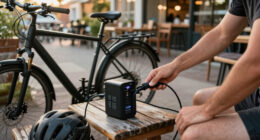
Another critical aspect to think about is whether the power station offers multiple charging ports or adapters, giving you the flexibility to charge other devices simultaneously. This can be especially useful if you’re off-grid and need to power your phone, GPS, or other electronics alongside your e-bike. Additionally, understanding the portable power station’s features can help you select a model with the right balance of capacity, speed, and versatility. Also, consider the weight and portability of the station. A lightweight, compact design makes it easier to carry on longer rides or hikes, without sacrificing capacity or speed.
Popular right now

Ninja Foodi 10-Qt DualZone Smart XL Air Fryer, 6-in-1, DZ550

Ninja DualZone Air Fryer 10 Qt Smart 6-in-1 Grey

Hisense E6SR Series 55-Inch 4K UHD Hi-QLED Roku Smart TV
As an affiliate, we earn on qualifying purchases.
Frequently Asked Questions
Can a Portable Power Station Fully Charge an E-Bike Battery?
Yes, a portable power station can fully charge an e-bike battery, but it depends on the battery capacity and charging speed. You need a station with enough watt-hours to match or exceed your e-bike’s battery capacity. Also, confirm the charging speed matches your e-bike’s requirements to avoid slow charging. Choosing the right power station guarantees a complete charge and efficient energy transfer, making your rides more reliable.
How Long Does a Typical Portable Power Station Last During E-Bike Charging?
A typical portable power station lasts around 2 to 4 full charges for an e-bike, depending on its battery capacity. You’ll notice that larger capacities, like 500Wh, provide faster charging speeds and longer usage times. If you plan to charge your e-bike often, choose a station with higher capacity, ensuring you get consistent power without frequent recharges. This way, you maximize charging efficiency and keep your rides going smoothly.
Are There Specific Brands Recommended for E-Bike Charging?
You should consider brands like Jackery, Goal Zero, and Anker, as they offer models with proven charging compatibility for e-bikes. When comparing brands, look at their power output, port options, and battery capacity to guarantee they meet your e-bike’s charging needs. Read reviews and brand comparisons to find reliable, durable options, and verify that the portable power station is compatible with your e-bike’s charging port and voltage requirements for safe, efficient charging.
Is It Safe to Use a Portable Power Station Outdoors?
Sure, it’s perfectly safe to use a portable power station outdoors—if you remember outdoor safety and weather considerations. The irony? Many think these devices are invincible, but rain, snow, or extreme heat can damage them or cause hazards. Always keep your power station covered and protected from the elements, and avoid exposing it to moisture or harsh weather. Think of it as giving your power station a little outdoor safety lesson!
How Often Should I Recharge the Power Station for Regular E-Bike Use?
You should recharge your portable power station after every few e-bike charges, depending on its battery capacity. For regular use, aim to recharge it when the battery drops to around 20-30%, which helps maintain peak performance. Monitoring the charging frequency ensures your power station stays ready, preventing unexpected power shortages. Consistent recharging prolongs the lifespan of your device and keeps your e-bike always ready for your next ride.
Conclusion
Think of choosing a portable power station like planting a sturdy tree. With the right size and capacity, it can support your e-bike adventures, providing energy like nourishing sunlight and water. When you select wisely, your power station becomes a dependable guardian, ready to fuel your rides through any terrain. So, pick the right size today, and watch your e-bike journeys flourish like a thriving garden, full of life and limitless possibilities.