
To keep your chain cleaner on high-mileage commutes, make sure to wipe it down after every ride to remove dirt and moisture. Regularly inspect for rust, stiff links, or wear and use proper cleaning tools for thorough maintenance. Apply a thin, even layer of eco-friendly lubricant, then wipe off excess to prevent dirt buildup. Consistent checks of tension and quick rust removal help prolong your chain’s life, and there’s more tips to keep it in top shape for the long haul.
Key Takeaways
- Clean the chain thoroughly after each ride to remove dirt and debris accumulated during high-mileage commutes.
- Apply a high-quality, weather-resistant lubricant regularly to protect against moisture and reduce wear.
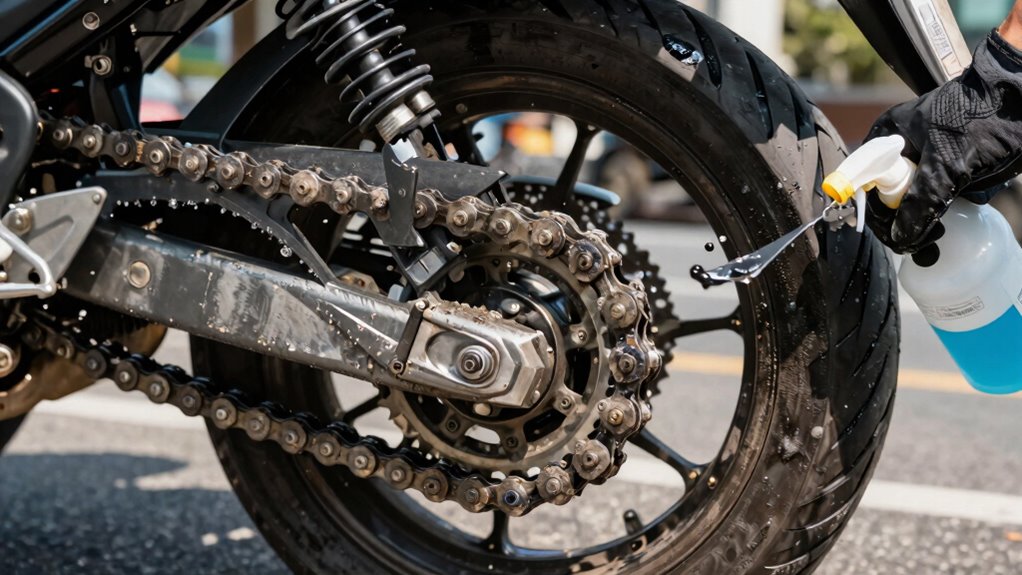
- Use appropriate cleaning tools, like brushes and degreasers, to ensure deep cleaning of inner links and rollers.
- Inspect the chain for rust, wear, or damage frequently, and address issues promptly to maintain performance.
- Cover or store your bike properly when not in use to minimize exposure to dirt, moisture, and environmental elements.
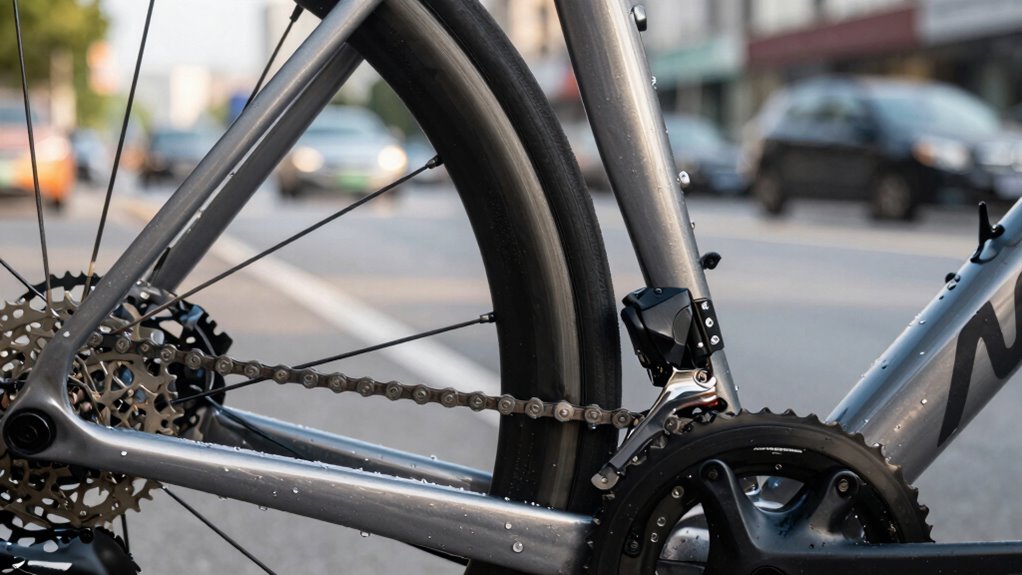
Keeping your bike chain clean is vital for smooth riding and extending its lifespan. When you’re logging high-mileage commutes, the dirt and grime that accumulate can quickly wear down your chain if not properly maintained. Regular cleaning and lubrication are your best tools for guaranteeing your chain stays in top shape, especially when riding long distances daily. Proper chain lubrication not only keeps your parts moving smoothly but also creates a protective barrier against moisture and debris, which can cause rust and corrosion over time. When you apply chain lube, focus on the inner links and rollers, making sure it penetrates deep into the moving parts. This ongoing process helps reduce friction, minimizes wear, and keeps your drivetrain responsive. Additionally, using appropriate cleaning tools can make the process more effective and easier to maintain.
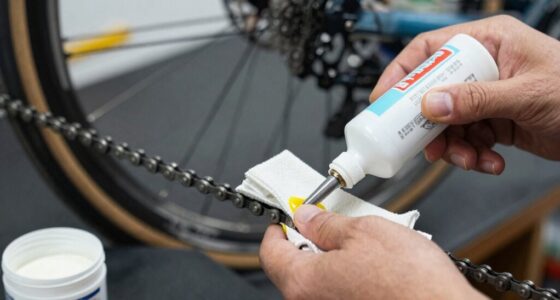
Rust prevention is vital, particularly if your commute involves riding in wet or humid conditions. After each ride, wipe down your chain to remove excess dirt, moisture, and old lubricant. This simple step prevents corrosive elements from settling into the metal and causing rust. Once the chain is clean and dry, apply a high-quality chain lubricant designed for wet or all-weather conditions. Don’t over-lubricate, as excess can attract more dirt, which accelerates wear. Instead, apply a thin, even layer, then wipe off any excess with a rag. Doing this regularly ensures your chain remains well-lubricated without becoming clogged with gunk. Regularly inspecting your chain and drivetrain components can help you catch issues early and prevent more costly repairs down the line. Incorporating proper maintenance routines that include checking chain tension and alignment can optimize your bike’s performance and prevent unnecessary wear. Moreover, understanding the importance of biodiversity in your local environment can help you choose more sustainable and eco-friendly lubricants and cleaning methods that minimize environmental impact.
In addition to routine cleaning and lubrication, it pays to inspect your chain frequently. Look for signs of rust, stiff links, or excessive wear. If you notice rust starting to develop, treat it immediately with a rust remover or consider replacing the chain if the damage is significant. Using a chain checker tool can help you monitor wear and avoid riding with a stretched or worn chain, which can cause premature drivetrain failure. Regularly checking your sprockets and chainrings for damage complements your efforts, as a healthy drivetrain depends on all parts working together smoothly.
Ultimately, keeping your chain cleaner on high-mileage commutes involves consistent, deliberate maintenance. Clean your chain after each ride if possible, especially in adverse weather, and always guarantee it’s well-lubricated to prevent rust and reduce friction. This routine maintenance not only enhances your riding experience but also prolongs the life of your entire drivetrain. By staying attentive to your chain’s condition and acting promptly when issues arise, you’ll keep your bike running smoothly mile after mile.
As an affiliate, we earn on qualifying purchases.
Frequently Asked Questions
How Often Should I Replace My Chain for High-Mileage Commuting?
You should replace your chain when you notice significant chain wear, usually every 2,000 to 3,000 miles for high-mileage commuting. Regularly check your chain’s wear using a chain checker tool to stay on top of the replacement schedule. Ignoring wear signs can lead to faster sprocket wear and costly repairs. Staying proactive guarantees smooth rides and prolongs your bike’s overall performance, making your high-mileage commutes more reliable.
What Type of Lubricant Is Best for Long-Distance Riding?
For long-distance riding, you want a wet or ceramic chain lubricant that penetrates deeply and resists water, ensuring smooth chain lubrication. This choice enhances long-distance efficiency by reducing friction and wear. Apply the lubricant evenly after cleaning your chain, and reapply regularly, especially if riding in wet conditions. Proper chain lubrication keeps your bike running smoothly on extended commutes, preventing damage and maintaining peak performance mile after mile.
Can I Use Household Items to Clean My Bike Chain?
Certainly, you can use household items for DIY cleaning your bike chain, but proceed cautiously. Household solutions like dish soap and warm water cut through grime, making them effective for light cleaning. Apply the solution with a brush or rag, then rinse thoroughly. However, avoid harsh chemicals like bleach or degreasers not meant for bikes, as they can damage components. Regular cleaning with safe household solutions keeps your chain smooth and extends its life.
How Do Weather Conditions Affect Chain Maintenance?
Weather impact considerably influences your chain maintenance routine. Rain, mud, and snow cause dirt, moisture, and corrosion, so you should clean and lubricate your chain more frequently in wet conditions. Seasonal adjustments are essential; in winter, use a water-resistant lubricant to prevent rust, while in dry summer months, a lighter oil keeps your chain running smoothly. Staying proactive with maintenance based on weather ensures your chain stays durable and performs well.
Is It Necessary to Adjust Chain Tension Regularly?
Your chain is like a loyal steed—tension needs regular tending to keep it running smoothly. Yes, you should adjust chain tension regularly; it prevents excessive wear and maintains proper alignment. Remember, good chain lubrication reduces friction and noise, but tension adjustment guarantees your ride stays responsive. Keep a close eye, especially on high-mileage commutes, and your bike will thank you with seamless, hassle-free miles.
wet weather bike chain lubricant
As an affiliate, we earn on qualifying purchases.
As an affiliate, we earn on qualifying purchases.
Conclusion
Keeping your chain clean isn’t just about maintenance; it’s about preserving the rhythm of your daily journey. When you give it the gentle attention it deserves, you’re softly tending to the heartbeat of your ride, ensuring smooth miles ahead. A well-kept chain whispers quiet confidence with every turn, making each commute feel like a graceful dance. Embrace this small ritual, and your trusty ride will glide through high-mileage days like a well-rehearsed ballet across endless horizons.
As an affiliate, we earn on qualifying purchases.
As an affiliate, we earn on qualifying purchases.