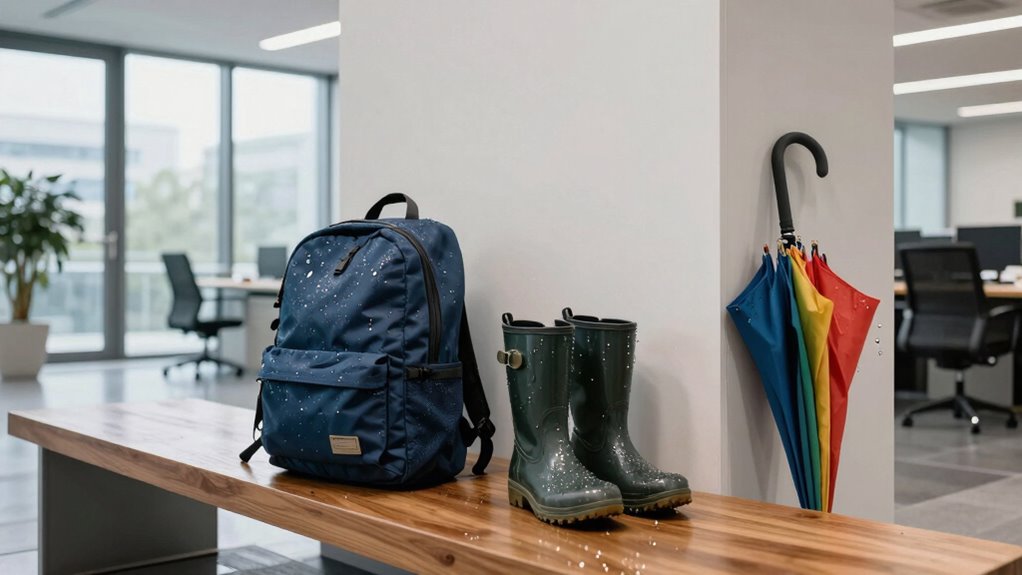

When you arrive at the office with wet gear, start by shaking off excess water and hanging your clothes on a sturdy hanger in a well-ventilated area. Use a small fan or open windows to promote airflow and help them dry faster. Avoid stuffing wet items into drawers or bags, and keep them separate from other belongings to prevent mold and odors. Want to learn more tips for quick and effective drying? Keep going for some helpful advice.

Get bike and ride gear delivered free with Prime
- Fast, free delivery on millions of items
- Prime Video, Amazon Music and more included
- Member-only deals all year
Key Takeaways
- Hang wet gear on sturdy hangers in a well-ventilated area to prevent moisture buildup.
- Use a small fan or open windows to improve airflow and speed up drying.
- Place moisture-absorbing materials like silica gel packs near wet items to reduce humidity.
- Avoid storing wet gear in drawers or bags; instead, dedicate a drying space or closet.
- Regularly check and adjust gear placement to prevent odors and mold formation.

When you arrive at the office soaked from rain or a workout, it’s tempting to toss your wet gear onto the nearest chair or into a corner. But quick, effective drying techniques can save you from lingering dampness and unpleasant odors. Start by shaking off excess water from your gear to prevent soaking your workspace. If you have a dedicated space or a closet, use it to hang your wet clothes on a sturdy hanger. Opt for a well-ventilated area with good airflow; this speeds up the drying process and minimizes the risk of mold or mildew. If possible, place a small fan nearby to circulate air around your gear. Avoid cramming wet clothes into a drawer or bag, as this traps moisture and promotes bacteria growth. Instead, prioritize proper storage solutions that keep your workspace tidy and your gear dry. Incorporating proper storage solutions can also help prevent mildew formation, which is a common issue with damp clothing. Ensuring good air circulation around your gear can significantly improve drying times and prevent odors from developing. For drying, consider using moisture-absorbing products like silica gel packs or dehumidifiers, especially if your office has high humidity. These help draw out excess moisture and speed up drying times. If your gear is made of quick-drying materials, you might hang it in a sunny spot near a window, as sunlight can help disinfect and evaporate water. However, be cautious with delicate fabrics that might fade or weaken under direct sunlight. For items that are particularly soaked or bulky, laying them flat on a clean towel and changing the towel regularly can absorb moisture effectively. If you’re in a pinch, some offices allow small portable dehumidifiers or electric drying racks, which can make the process more efficient. Additionally, using ventilation techniques such as opening windows or using fans can significantly enhance airflow and accelerate the drying process, especially in enclosed office spaces. The goal is to prevent your wet gear from becoming a source of odor or mildew, so choose storage options that promote ventilation and keep moisture away from other belongings.
Popular right now

Hisense 85 U6 Pro Series Mini-LED ULED 4K UHD HDR Gaming AI Smart Fire TV (85U6SF Pro)

De'Longhi Stilosa Compact Manual Espresso Machine with Milk Frother

TCL 85-Inch QM6K Series QLED Mini LED 4K HDR Smart Google TV
As an affiliate, we earn on qualifying purchases.
Frequently Asked Questions
Can I Leave Wet Gear in My Car Overnight?
You can leave wet gear in your car overnight, but it’s not ideal for car storage or gear hygiene. Moisture creates a perfect environment for mold and odor, which can damage your gear and your vehicle. If you must leave it, make sure your car is cool and well-ventilated. Better yet, dry your gear thoroughly before storing it in your car, minimizing damage and maintaining hygiene for future use.
Is It Safe to Use a Hairdryer on Wet Clothing?
Using a hairdryer on wet clothing isn’t safe; it can cause damage or even start a fire. Hairdryer safety is essential, and clothing is not designed for such drying techniques. Instead, use a towel to gently squeeze out excess water, and hang your gear in a well-ventilated area. For faster drying, a fan or sunlight works better and keeps you safe from potential hazards.
How Often Should I Clean My Storage Area for Wet Gear?
You should clean your storage area for wet gear at least once a week to prevent mold and odors. Implement a regular cleaning schedule, using storage tips like airing out the space and wiping down surfaces. Make sure to dry and ventilate wet gear thoroughly before storing. This routine keeps your area fresh, minimizes bacteria growth, and extends the life of your gear, ensuring a clean, organized workspace.
What Are Eco-Friendly Ways to Dry Wet Gear at the Office?
You can use eco-friendly drying methods like air-drying your wet gear on a rack or using a fan to circulate air, reducing energy use. Avoid electric dryers, which consume more power. To support sustainable gear maintenance, opt for natural sunlight when possible, as it helps dry and disinfect. These practices minimize your environmental impact while keeping your gear fresh and ready for your next adventure.
Can Wet Gear Cause Mold or Mildew in the Workspace?
Wet gear is a seed that, if left unchecked, can sprout mold growth and mildew in your workspace. By not drying your clothes promptly, you risk turning moisture into a silent invader, damaging your environment. To prevent this, guarantee proper airflow and avoid damp conditions. Mildew prevention depends on quick action, so take your wet gear home or use eco-friendly drying methods at the office to stop mold from taking root.
Conclusion
Once you step into the office, let your wet gear be a reminder — a symbol of every challenge you’ve faced outside. As you hang it up, you’re releasing the rain’s weight, making space for clarity and focus. Like the sun breaking through clouds, your fresh start begins here, drying not just fabric but your worries. Embrace the rhythm of renewal, knowing each new day is an opportunity to dry, grow, and shine brighter.