For most riders, I’d start with the Fanttik X9 Ace: its stated 150 PSI capacity, fast inflation claim, and auto-stop feature make it a strong all-round choice. The CYCPLUS AS2Pro is another standout for riders who want a compact pump, while the Bosch EasyPump may suit buyers who value a familiar, versatile inflator format. The main tradeoffs are size and weight, inflation speed, battery capacity, and how well a pump’s controls fit your tire and valve. A high maximum-pressure figure alone does not tell you how quickly it will inflate your particular tire or how many tires it can handle per charge. Read on for a ranked comparison of all 15 options and a guide to choosing the right one for your rides.

Get bike and ride gear delivered free with Prime
- Fast, free delivery on millions of items
- Prime Video, Amazon Music and more included
- Member-only deals all year
Key Takeaways
- The Fanttik X9 Ace leads this lineup on stated performance: its 150 PSI rating and 32-second inflation claim make it a compelling starting point, though actual results depend on tire volume and starting pressure.
- Compactness and speed are competing priorities. Mini pumps such as the CYCPLUS AS2Pro favor packability, while larger cordless inflator formats may be more convenient for repeated or mixed-use inflation.
- Auto-stop and a readable pressure display matter more than headline PSI for routine use. They can help reduce guesswork when topping up tires to a chosen pressure.
- Valve compatibility deserves a check before purchase. Several options list Presta and Schrader support or adapters, but buyers should confirm the included fittings match their setup.
- The lineup spans bike-specific minis and broader tire inflators. The Fanttik and CYCPLUS models lean toward portable cycling use, while options such as AstroAI, OlarHike, and VIAIR may appeal to buyers seeking wider utility at the cost of bulk.
| DSUY Mini Electric Bike Tire Pump, 120 PSI, with Digital Gauge and Auto-Stop |  | Best Lightweight Pick | Maximum pressure: 120 psi | Pressure range: 2–120 psi | Gauge accuracy: ±1 psi | VIEW LATEST PRICE | See Our Full Breakdown |
| TB2PRO Mini Electric Bike Pump, 120PSI Portable Bicycle Tire Pump |  | Best for Simple Roadside Use | Maximum pressure: 120 psi | Airflow: 15 liters per minute | Weight: 130 g | VIEW LATEST PRICE | See Our Full Breakdown |
| Fanttik X9 Ace Mini Electric Bike Pump, 150PSI, 32s Inflate, Auto Stop | 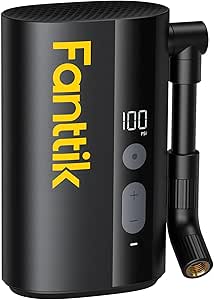 | Best for Repeated Inflations | Maximum pressure: 150 psi | Airflow: 10 liters per minute | Battery capacity: 5,000 mAh | VIEW LATEST PRICE | See Our Full Breakdown |
| Fanttik X11 Ace Mini Electric Bike Pump, 150 PSI |  | Best for Accurate Pressure Control | Maximum pressure: 150 PSI | Battery: 2,500 mAh lithium-ion | Inflation time: About 21 seconds from 80 to 100 PSI on a 700×23C tire | VIEW LATEST PRICE | See Our Full Breakdown |
| MICHELIN Ultra-Mini Electric Bike Pump, 130 PSI |  | Best Brushless-Motor Compact Pick | Maximum pressure: 130 psi | Airflow: 14 liters per minute | Motor: Brushless | VIEW LATEST PRICE | See Our Full Breakdown |
| AstroAI L7 Tire Inflator Portable Air Compressor, 150 PSI Cordless Bike Pump |  | Best for Bike-and-Car Versatility | Maximum pressure: 150 PSI | Battery capacity: 4,000 mAh | Weight: 15.36 oz | VIEW LATEST PRICE | See Our Full Breakdown |
| ETENWOLF S0 Mini Bike Pump, 20s Fast Inflate Bicycle Pump with Gauge |  | Best for Fast Road-Tire Inflation | Maximum pressure: 150 PSI | Airflow: 18 L/min | Battery capacity: 2,400 mAh | VIEW LATEST PRICE | See Our Full Breakdown |
| CYCPLUS Portable Electric Tire Inflator Bike Pump |  | Best for Bottle-Cage Carry | Maximum pressure: 150 PSI | Airflow: 12 L/min | Battery capacity: 2,600 mAh | VIEW LATEST PRICE | See Our Full Breakdown |
| Bosch EasyPump Portable Electric Air Pump |  | Best for Multi-Use, Straightforward Operation | Maximum pressure: 150 PSI / 10.3 bar / 1,030 kPa | Airflow: 10 L/min | Battery: 3.6 V / 3.0 Ah | VIEW LATEST PRICE | See Our Full Breakdown |
| Fanttik X10 Ace Mini Electric Bike Pump |  | Best for Ultralight Pocket Carry | Maximum pressure: 120 PSI | Weight: 4.16 oz | Dimensions: 2.09 × 1.18 × 2.83 in | VIEW LATEST PRICE | See Our Full Breakdown |
| AUXITO Electric Bike Pump, 120 PSI Portable Mini Bicycle Air Pump with Auto-Stop, LED Display, and Presta/Schrader Adapters |  | Best for Fast Road-Tire Top-Ups | Maximum pressure: 120 PSI (8.27 bar) | Battery: 1000mAh lithium-ion | Charging port: USB Type-C | VIEW LATEST PRICE | See Our Full Breakdown |
| CYCPLUS AS2Pro Mini Electric Bike Pump |  | Best for a Polished, Road-Focused Kit | Maximum pressure: 120 PSI | Weight: 120 g (4.23 oz) | Dimensions: 2.76 × 1.1 × 1.69 in | VIEW LATEST PRICE | See Our Full Breakdown |
| OlarHike Tire Inflator Portable Air Compressor, Cordless Electric Bike Pump |  | Best for Bike-and-Car Use | Weight: 15.52 oz | Dimensions: 5.91 × 2.76 × 1.97 in | Battery: 2000mAh × 2 high-voltage battery | VIEW LATEST PRICE | See Our Full Breakdown |
| VIAIR Recon Mini Portable Air Compressor |  | Best for Low-Pressure Setup | Pressure range: 2–120 PSI | Weight: 120 g | Dimensions: 2.89 × 1.33 × 1.84 in | VIEW LATEST PRICE | See Our Full Breakdown |
| GPUTEK Mini Electric Bike Pump for Presta and Schrader Valves |  | Best for Faster Full-Tire Inflation | Maximum pressure: 120 PSI | Pressure range: 2–120 PSI | Airflow: 40 L/min | VIEW LATEST PRICE | See Our Full Breakdown |
| portable electric bike pump | Weight | Maximum pressure | Valve compatibility | Dimensions |
|---|---|---|---|---|
| DSUY Mini Electric Bike Tire P | 136 g | 120 psi | Presta and Schrader | 1.98 × 1.98 × 1.35 in |
| TB2PRO Mini Electric Bike Pump | 130 g | 120 psi | Presta and Schrader | 2.09 × 1.26 × 3.03 in |
| Fanttik X9 Ace Mini Electric B | 384 g | 150 psi | Presta and Schrader | — |
| Fanttik X11 Ace Mini Electric | 10.08 ounces | 150 PSI | Presta and Schrader | — |
| MICHELIN Ultra-Mini Electric B | 174 g | 130 psi | — | 4.5 × 1.5 × 4.5 in |
| AstroAI L7 Tire Inflator Porta | 15.36 oz | 150 PSI | — | — |
| ETENWOLF S0 Mini Bike Pump | 8.64 oz | 150 PSI | Presta and Schrader with included adapters | — |
| CYCPLUS Portable Electric Tire | 13.28 oz (380 g) | 150 PSI | Presta, Schrader, and ball valve | 2.09 × 2.09 × 7.09 in |
| Bosch EasyPump Portable Electr | 0.43 kg | 150 PSI / 10.3 bar / 1,030 kPa | — | — |
| Fanttik X10 Ace Mini Electric | 4.16 oz | 120 PSI | Presta and Schrader | 2.09 × 1.18 × 2.83 in |
| AUXITO Electric Bike Pump | 4.48 oz | 120 PSI (8.27 bar) | Presta, Schrader, and sports-ball valves | 2.49 × 1.18 × 1.57 in |
| CYCPLUS AS2Pro Mini Electric B | 120 g (4.23 oz) | 120 PSI | Presta and Schrader | 2.76 × 1.1 × 1.69 in |
| OlarHike Tire Inflator Portabl | 15.52 oz | — | Includes Presta adapter | 5.91 × 2.76 × 1.97 in |
| VIAIR Recon Mini Portable Air | 120 g | — | Presta and Schrader | 2.89 × 1.33 × 1.84 in |
| GPUTEK Mini Electric Bike Pump | 0.23 lb | 120 PSI | Presta and Schrader | 2.81 × 1.77 × 1.25 in |
More Details on Our Top Picks
DSUY Mini Electric Bike Tire Pump, 120 PSI, with Digital Gauge and Auto-Stop
The DSUY is the lightest option in this group at 136 g, making it a strong fit for riders who want an electric backup without giving up much jersey-pocket space. Its preset pressure and auto-stop reduce guesswork during roadside top-ups, while the extension hose is useful for awkward valve angles and helps keep heat away from TPU valve stems. Compared with the heavier Fanttik X9 Ace, the DSUY is easier to carry, but it gives up that model’s larger stated battery and higher 150 PSI ceiling. The tradeoff is limited capacity: the listed estimate is about four to five full inflations of a 700×23C tire, and its plastic body may not appeal to riders seeking a more substantial build. I’d choose it for portability first, not repeated inflation duty.
Pros:- At 136 g, it is lighter than the Fanttik X9 Ace and easy to stow in a jersey pocket or saddle bag.
- Digital pressure preset and automatic shutoff help limit overinflation.
- Extension hose supports angled valves and helps protect TPU tubes from heat.
- Presta and Schrader compatibility, USB-C charging, and a storage bag are included.
Cons:- Battery is rated for only about four to five full 0–100 PSI inflations on a 700×23C tire.
- Plastic construction may feel less durable than a metal-bodied alternative.
- Its 120 PSI ceiling is lower than the 150 PSI Fanttik X9 Ace and X11 Ace.
Best for: Road cyclists who want a very light emergency pump for occasional tire top-ups and value an extension hose for delicate or hard-to-reach valves.
Not ideal for: Touring riders or groups who may need several full inflations between charges, or buyers who prefer a metal-bodied pump.
- Maximum pressure:120 psi
- Pressure range:2–120 psi
- Gauge accuracy:±1 psi
- Airflow:27 liters per minute
- Weight:136 g
- Dimensions:1.98 × 1.98 × 1.35 in
- Valve compatibility:Presta and Schrader
- Charging connector:USB-C
- Warranty:24 months
Our verdict“Choose the DSUY if minimizing carried weight matters more than maximizing pressure ceiling or battery capacity.”
TB2PRO Mini Electric Bike Pump, 120PSI Portable Bicycle Tire Pump
The TB2PRO focuses on straightforward roadside operation: its one-button controls, readable pressure display, and auto-stop make it approachable for riders who do not want to manage inflation manually. At 130 g, it is nearly as light as the DSUY, though its 15 L/min airflow is well below the DSUY’s listed 27 L/min. The product data estimates about 50 seconds to reach 80 PSI and says a charge can handle at least two 700×25C tires from empty to 120 PSI, so it suits limited emergency use better than a full group’s repair kit. The included hose and Presta converter add flexibility, but the instructions call for the hose above 100 PSI and for TPU tubes with resin valves. I’d pick it over the heavier Fanttik X9 Ace when simple controls and quick charging matter more than battery capacity.
Pros:- Compact 130 g body is easy to carry alongside a tube and tire levers.
- Display, preset pressure, and auto-stop make inflation less hands-on.
- Hose and Presta converter provide a hands-free connection option.
- USB-C charging is listed at about 30 minutes for a full charge.
Cons:- Listed airflow of 15 L/min is lower than the DSUY’s 27 L/min.
- The stated battery capacity covers at least two full 700×25C tire inflations, limiting multi-rider use.
- Above 100 PSI and with TPU resin valves, the supplied hose is required to reduce leakage or heat damage.
Best for: Newer road cyclists who want a small, simple pump for occasional flats and prefer automatic shutoff over manual pressure monitoring.
Not ideal for: Riders who routinely inflate several tires on one outing, or those who want the strongest airflow and broadest battery reserve.
- Maximum pressure:120 psi
- Airflow:15 liters per minute
- Weight:130 g
- Dimensions:2.09 × 1.26 × 3.03 in
- Valve compatibility:Presta and Schrader
- Charging connector:USB-C
- Inflation estimate:About 50 seconds to reach 80 PSI
- Battery estimate:At least two 700×25C tires from 0 to 120 PSI per charge
- Warranty:Two years
Our verdict“Pick the TB2PRO for simple controls and a quick recharge in a compact emergency pump, not for frequent multi-tire inflation.”
Fanttik X9 Ace Mini Electric Bike Pump, 150PSI, 32s Inflate, Auto Stop
Among these five, the Fanttik X9 Ace is the clearest choice for riders who want more capacity between charges. Its 5,000 mAh battery is rated for up to eight tires, and the cooling system is specified for continuous operation for 25 minutes—useful when several bikes need air. The 150 PSI maximum also gives it more headroom than the 120 PSI DSUY and TB2PRO. That capability comes with a portability penalty: at 384 g, it weighs nearly three times as much as the DSUY, so it is less appealing for riders counting every gram. The integrated rotating hose and valve setup simplify packing and awkward connections, while auto-stop handles the target pressure. I’d take this over the lighter Fanttik X11 Ace when battery endurance matters more than carrying weight, though its 10 L/min airflow is not the highest listed here.
Pros:- Large 5,000 mAh battery is rated for up to eight tire inflations per charge.
- Cooling system supports up to 25 minutes of continuous operation.
- 150 PSI maximum exceeds the 120 PSI limits of the DSUY and TB2PRO.
- Integrated rotating hose and valve setup reduce loose parts and help with awkward valve access.
Cons:- At 384 g, it is substantially heavier than the DSUY, TB2PRO, and Michelin Ultra-Mini.
- Listed airflow is 10 L/min, lower than the DSUY and TB2PRO.
- Its bulkier carry weight may be excessive for riders who only need a one-time emergency top-up.
Best for: Riders carrying a pump for multiple bikes, longer outings, or repeated tire top-ups who value battery capacity and a higher pressure ceiling.
Not ideal for: Weight-conscious road cyclists who need the smallest possible emergency pump or expect to use it only for a single occasional top-up.
- Maximum pressure:150 psi
- Airflow:10 liters per minute
- Battery capacity:5,000 mAh
- Weight:384 g
- Inflation estimate:32 seconds to refill a 700×23C tire from 80 to 100 PSI
- Battery estimate:Up to eight tires per charge
- Continuous operation:Up to 25 minutes
- Valve compatibility:Presta and Schrader
- Material:Plastic
Our verdict“Choose the X9 Ace when repeated inflations and battery reserve matter more than keeping your ride kit light.”
Fanttik X11 Ace Mini Electric Bike Pump, 150 PSI
The X11 Ace puts pressure feedback ahead of ultra-low weight. Its color screen shows both target and real-time pressure, and the automatic stop is specified as accurate within 1 PSI, giving riders a clear way to set repeatable road-tire pressures. Its 150 PSI ceiling matches the X9 Ace, while the stated inflation time—about 21 seconds from 80 to 100 PSI on a 700×23C tire—is notably quick for that particular top-up. The X9 Ace counters with a much larger stated battery and longer continuous-use rating; the X11 Ace is listed for up to six tires per charge and weighs 10.08 ounces. The built-in hose keeps the setup compact, but this is still a rechargeable plastic pump, not a tool for riders who want unlimited inflation capacity. I’d favor it when pressure visibility matters more than maximum battery reserve.
Pros:- Color screen displays both real-time and target pressure.
- Automatic stop is specified within 1 PSI for more controlled inflation.
- 150 PSI maximum pressure supports high-pressure road tires.
- Built-in hose and Presta/Schrader compatibility keep the setup self-contained.
Cons:- At 10.08 ounces, it is heavier than the DSUY, TB2PRO, and Michelin Ultra-Mini.
- Its 2,500 mAh battery is listed for up to six 700×23C tires, fewer than the X9 Ace’s stated eight.
- The 21-second inflation estimate applies to a specific tire size and pressure increase, not every inflation task.
Best for: Road cyclists who regularly tune tire pressure and want a visible target-and-live-pressure display with automatic shutoff.
Not ideal for: Riders who need the longest battery endurance or want a particularly light pump; the X9 Ace has a larger listed battery, while the DSUY weighs less.
- Maximum pressure:150 PSI
- Battery:2,500 mAh lithium-ion
- Inflation time:About 21 seconds from 80 to 100 PSI on a 700×23C tire
- Inflations per charge:Up to six 700×23C tires
- Pressure accuracy:Within 1 PSI
- Screen:4.5-inch color LED
- Weight:10.08 ounces
- Valve compatibility:Presta and Schrader
- Warranty:1 year
Our verdict“Choose the X11 Ace if precise, visible pressure control is your priority and its weight and battery limit suit your rides.”
MICHELIN Ultra-Mini Electric Bike Pump, 130 PSI
The MICHELIN Ultra-Mini offers a middle ground between the pocket-light DSUY and the higher-capacity Fanttik X9 Ace. At 174 g, it remains compact for a pocket or jersey, and its brushless motor is paired with a 130 PSI ceiling—slightly more headroom than the 120 PSI DSUY and TB2PRO, though less than either Fanttik. The listed 14 L/min airflow is also moderate: it sits below the DSUY and TB2PRO figures, so I would not pick it for speed-focused inflation. Its biggest limitation is the 500 mAh battery, which gives little basis for expecting repeated full-tire inflations without recharging. A short 7 cm hose may also make valve access less convenient than the DSUY’s extension hose. It makes most sense as a compact, brand-backed option for mixed bike use, not as a high-capacity group pump.
Pros:- Compact 174 g design is portable without reaching the Fanttik X9 Ace’s 384 g weight.
- Brushless motor and 130 PSI maximum support a range of bicycle tire types.
- USB-C charging and included storage pouch make it practical as a carry-along pump.
- Includes Presta and needle adapters for bicycle and ball-inflation uses.
Cons:- The 500 mAh battery is small compared with the Fanttik X9 Ace’s 5,000 mAh capacity.
- Listed airflow of 14 L/min is below the DSUY’s 27 L/min and TB2PRO’s 15 L/min.
- Its 7 cm hose may be restrictive around recessed or awkwardly positioned valves.
Best for: Commuters and recreational riders who want a compact rechargeable pump for occasional road, mountain, or e-bike tire needs and value a brushless motor.
Not ideal for: Riders who need several full inflations per charge, high-pressure road-tire headroom beyond 130 PSI, or a longer hose for awkward valve placement.
- Maximum pressure:130 psi
- Airflow:14 liters per minute
- Motor:Brushless
- Battery capacity:500 mAh
- Weight:174 g
- Dimensions:4.5 × 1.5 × 4.5 in
- Hose length:7 cm
- Charging connector:USB Type-C
- Warranty:1 year
Our verdict“Pick the MICHELIN Ultra-Mini for compact, occasional multi-bike use, but choose the X9 Ace if battery endurance is more important.”
AstroAI L7 Tire Inflator Portable Air Compressor, 150 PSI Cordless Bike Pump
The AstroAI L7 makes the most sense for riders who want one cordless inflator for bicycles, car tires, motorcycles, and balls. Its preset modes and automatic shut-off simplify pressure setting, while the display offers four pressure units and a custom range from 3 to 150 PSI. At under a pound, it is portable, though it is heavier and more car-oriented than the pocket-size Fanttik X10 Ace. The 4,000 mAh battery is specified to top up as many as eight car tires, and USB input/output plus a three-mode light add emergency utility beyond cycling. The tradeoff is that this is not a dedicated bike-first pump: the supplied description does not specify valve adapters, and its 15-minute continuous-use limit means longer inflation sessions need a cooling break.
Pros:- Supports bicycle, motorcycle, car-tire, and ball inflation through dedicated modes and a custom pressure setting.
- Automatic shut-off and four pressure units make preset inflation straightforward.
- 4,000 mAh battery is specified to handle multiple car-tire top-ups between charges.
- Built-in light and USB input/output add usefulness for roadside or low-light situations.
Cons:- At 15.36 ounces, it is heavier than the ETENWOLF S0 Mini and Fanttik X10 Ace.
- The supplied product information does not identify included Presta or Schrader adapters.
- Requires a 10-minute rest after 15 minutes of continuous operation.
Best for: Commuters and recreational riders who also want a cordless inflator for a household car, motorcycle, and sports balls.
Not ideal for: Road cyclists who want a tiny, bike-specific pump with clearly stated Presta and Schrader fittings; the product details provided do not list its valve adapters.
- Maximum pressure:150 PSI
- Battery capacity:4,000 mAh
- Weight:15.36 oz
- Pressure modes:Car, motorcycle, bicycle, ball, and custom
- Pressure units:PSI, bar, kPa, kg/cm²
- Continuous-use guidance:Rest for 10 minutes after 15 minutes of continuous use
- Charging and output:USB-C and USB input/output
- Additional function:Flashlight, SOS, and strobe modes
Our verdict“Choose the AstroAI L7 if you want a multi-purpose cordless inflator for bikes and household vehicles, not the lightest pump for a cycling-only kit.”
ETENWOLF S0 Mini Bike Pump, 20s Fast Inflate Bicycle Pump with Gauge
For riders who value getting back on the road quickly, the ETENWOLF S0 Mini pairs an 18 L/min airflow claim with a stated 20-second inflation time for a 700×23C tire at 80–100 PSI. That makes it a more speed-focused choice than the CYCPLUS A2B, which lists a lower 12 L/min airflow rate. Its ±1 PSI digital gauge and auto-stop help remove guesswork when topping up high-pressure tires, and the memory function saves the last pressure setting. At 8.64 ounces, it stays compact without matching the exceptionally tiny Fanttik X10 Ace. The main compromise is the separate Presta adapter: riders must attach it for road-bike use, adding a small setup step. The claimed inflation speed and capacity are manufacturer specifications, not a guarantee for every tire or starting pressure.
Pros:- Listed 18 L/min airflow and a stated 20-second 700×23C inflation time target fast road-tire top-ups.
- Digital gauge has a stated ±1 PSI precision, with automatic shut-off at the set pressure.
- Includes adapters for Presta and Schrader valves, plus fittings for balls and other uses.
- Weighs 8.64 ounces and remembers the previous pressure setting.
Cons:- Road-bike use requires attaching the separate Presta air-nozzle adapter.
- At 8.64 ounces, it is heavier than the Fanttik X10 Ace.
- The 20-second figure is a stated performance claim and can vary with tire size and starting pressure.
Best for: Road cyclists who want a compact rechargeable pump, quick high-pressure top-ups, and a digital target-pressure readout.
Not ideal for: Riders who want a direct, adapter-free Presta connection or who prioritize the smallest possible pocket carry.
- Maximum pressure:150 PSI
- Airflow:18 L/min
- Battery capacity:2,400 mAh
- Weight:8.64 oz
- Gauge precision:±1 PSI
- Valve compatibility:Presta and Schrader with included adapters
- Stated tire inflation time:700×23C tire at 80–100 PSI in 20 seconds
- Additional included fittings:Air chuck, ball needle, and balloon valve
Our verdict“Pick the ETENWOLF S0 Mini if quick road-tire inflation and a pressure gauge matter more than adapter-free setup or minimum weight.”
CYCPLUS Portable Electric Tire Inflator Bike Pump
The CYCPLUS A2B is a practical pick for riders who want a pump that can travel on the bike rather than stay in a car kit. Its 2.09-by-2.09-by-7.09-inch body is designed to fit a bottle cage, and the included bike mount gives it a more ride-ready carry setup than the Bosch EasyPump, which comes with a storage bag. The 150 PSI ceiling, built-in hose, and automatic shut-off suit roadside top-ups without repeated pressure checks; adapters cover Presta, Schrader, and ball valves. Its listed 12 L/min airflow is below the ETENWOLF S0 Mini’s 18 L/min, so speed-focused road riders may prefer that model. The A2B also weighs 13.28 ounces, and its 2,600 mAh battery may call for more frequent charging during heavy use.
Pros:- Compact dimensions and included bike mount support bottle-cage carry.
- Automatic shut-off helps stop inflation at the selected pressure.
- Adapters support Presta, Schrader, and ball valves.
- Built-in LED light can help with valve visibility in low light.
Cons:- At 13.28 ounces, it is heavier than the ETENWOLF S0 Mini and Fanttik X10 Ace.
- Listed airflow of 12 L/min is lower than the ETENWOLF S0 Mini’s 18 L/min.
- The 2,600 mAh battery may need more frequent charging with repeated use.
Best for: Cyclists who want a mounted, bottle-cage-sized electric pump for regular rides and occasional roadside inflation.
Not ideal for: Weight-conscious riders seeking a very light pocket pump, or frequent users who need the highest listed airflow and battery capacity.
- Maximum pressure:150 PSI
- Airflow:12 L/min
- Battery capacity:2,600 mAh
- Weight:13.28 oz (380 g)
- Dimensions:2.09 × 2.09 × 7.09 in
- Charging:Rechargeable battery; Type-C
- Valve compatibility:Presta, Schrader, and ball valve
- Warranty:Two years
Our verdict“Choose the CYCPLUS A2B if you want a pump designed for bottle-cage carry and broad valve compatibility, and can accept extra weight.”
Bosch EasyPump Portable Electric Air Pump
The Bosch EasyPump suits riders who want a familiar, general-purpose inflator for bicycle tires alongside car tires, motorcycles, and sports equipment. Its digital display, preset-pressure autostop, LED light, and included adapters make the basic inflation process easy to follow. Compared with the bike-focused CYCPLUS A2B, Bosch gives up bottle-cage dimensions and a higher listed airflow rate in favor of a more general travel tool with a carrying bag. Its 10 L/min airflow is the lowest listed among the products here with a published airflow figure, so filling larger or very low tires may take longer than with the ETENWOLF S0 Mini. At 0.43 kg, it is portable but not pocket-light, and the plastic construction may be less reassuring for riders seeking a rugged metal-bodied pump.
Pros:- Preset-pressure autostop reduces the need to monitor inflation continuously.
- Digital display and LED light help with pressure checks and low-light use.
- Adapters and carrying bag support travel and use across different inflatables.
- USB-C charging and a 24 cm hose add practical convenience.
Cons:- Listed airflow of 10 L/min is lower than the ETENWOLF S0 Mini and CYCPLUS A2B.
- At 0.43 kg, it is heavier than the smaller bike-focused pumps in this lineup.
- Plastic construction may be less appealing to riders seeking a more rugged-feeling body.
Best for: Riders who want one easy-to-operate rechargeable pump for bicycle tires, household vehicles, and sports equipment.
Not ideal for: Cyclists who prioritize fast inflation, bottle-cage mounting, or the lightest possible ride-day carry.
- Maximum pressure:150 PSI / 10.3 bar / 1,030 kPa
- Airflow:10 L/min
- Battery:3.6 V / 3.0 Ah
- Weight:0.43 kg
- Hose length:24 cm
- Charging port:USB-C
- Material:Plastic
- Additional features:Autostop, digital display, LED light, adapters, and carrying bag
Our verdict“Choose the Bosch EasyPump if broad household usefulness and simple preset operation matter more than fast inflation or minimal bike carry weight.”
Fanttik X10 Ace Mini Electric Bike Pump
At just 4.16 ounces, the Fanttik X10 Ace is the clear choice here for riders who want an electric pump small enough for a jersey pocket or compact saddle bag. Its stated ±1 PSI accuracy and auto-stop offer useful pressure control in a remarkably small package, while Presta and Schrader compatibility covers common bicycle setups. Compared with the ETENWOLF S0 Mini, it gives up the higher 150 PSI ceiling and listed 18 L/min airflow, so it is less suited to riders who put maximum pressure or rapid inflation first. The X10 Ace tops out at 120 PSI, which is still relevant for many bicycle tires but limits its range relative to the other pumps here. Its plastic body also needs protection from rain, and prolonged operation may trigger overheat protection.
Pros:- At 4.16 ounces, it is substantially lighter than the other pumps in this batch.
- Compact dimensions suit a jersey pocket or small saddle bag.
- Stated ±1 PSI accuracy and auto-stop support controlled inflation.
- Works with both Presta and Schrader valves.
Cons:- Maximum pressure of 120 PSI is below the 150 PSI ceiling of the ETENWOLF S0 Mini and CYCPLUS A2B.
- Not waterproof, so it needs protection from rain and moisture.
- Overheat protection may interrupt prolonged inflation sessions.
Best for: Road and gravel cyclists who value low carry weight and compact storage, with tire pressures within the pump’s 120 PSI limit.
Not ideal for: Riders who need pressures above 120 PSI, frequent long inflation sessions, or a pump intended to stay exposed to wet weather.
- Maximum pressure:120 PSI
- Weight:4.16 oz
- Dimensions:2.09 × 1.18 × 2.83 in
- Power source:Lithium-ion battery
- Charging connector:USB
- Valve compatibility:Presta and Schrader
- Pressure accuracy:±1 PSI
- Warranty:One year
Our verdict“Pick the Fanttik X10 Ace if minimum carry weight matters most and its 120 PSI limit covers your tires.”
AUXITO Electric Bike Pump, 120 PSI Portable Mini Bicycle Air Pump with Auto-Stop, LED Display, and Presta/Schrader Adapters
The AUXITO is the speed-focused pocket pick here: its stated 14 L/min airflow and brushless motor are aimed at quick pressure corrections, with a claimed 80-to-100-PSI top-up in 20 seconds. That makes it a better match for road riders who want to restore pressure between rides than for someone carrying a pump for many flat tires. Its ±1 PSI sensor and auto-stop reduce guesswork, while the LED display keeps the target visible. Compared with the CYCPLUS AS2Pro, AUXITO offers a larger 1000mAh battery and sports-ball compatibility, but needs manual adapter changes and has less specified accessory protection. At just 4.48 ounces, it is easy to pack; the tradeoff is that frequent or multi-tire use may call for more charging.
Pros:- Very light 4.48-ounce body is easy to carry in a pocket or small saddle bag.
- Claimed 14 L/min airflow and quick road-tire top-up suit short pressure corrections.
- Auto-stop and ±1 PSI accuracy help limit overinflation.
- Adapters cover Presta, Schrader, and sports-ball valves.
Cons:- 1000mAh battery may need frequent recharging with heavy or repeated use.
- Adapters require manual switching before use.
- 120 PSI maximum is below the ceiling of some higher-pressure alternatives in the roundup.
Best for: Road cyclists who want a very light pump for quick, occasional pressure top-ups and also value sports-ball compatibility.
Not ideal for: Riders who expect to inflate several flat tires on one charge or want a hose-and-case setup ready without swapping adapters.
- Maximum pressure:120 PSI (8.27 bar)
- Battery:1000mAh lithium-ion
- Charging port:USB Type-C
- Airflow:14 L/min
- Weight:4.48 oz
- Dimensions:2.49 × 1.18 × 1.57 in
- Valve compatibility:Presta, Schrader, and sports-ball valves
- Pressure accuracy:±1 PSI
Our verdict“Choose the AUXITO if a lightweight, fast top-up pump matters more than extended battery capacity or a ready-attached hose.”
CYCPLUS AS2Pro Mini Electric Bike Pump
The CYCPLUS AS2Pro makes the most sense for riders who want a compact pump with useful accessories rather than the biggest battery in this group. Its display shows both preset and live pressure, and automatic shutoff takes the guesswork out of stopping at a chosen target. The aluminum shell and included silicone case and waterproof bag add a more protected carry setup than the AUXITO’s simpler package. It weighs just 120 g and supports both Presta and Schrader valves, but its 420mAh battery is modest: the stated capacity is at least two 700 × 25C tires from flat to 110 PSI per charge. Compared with the VIAIR Recon Mini, it offers a longer two-year warranty and more included protection, though neither is built for broad non-bike use.
Pros:- Preset and real-time pressure readings make target setting easy to follow.
- Automatic shutoff helps prevent overshooting the selected pressure.
- Aluminum shell, silicone case, and waterproof bag support compact carry.
- Two-year warranty is longer than the VIAIR Recon Mini’s listed one-year warranty.
Cons:- 420mAh battery is limited for repeated full inflations.
- Designed primarily for bicycle tires rather than broad inflating tasks.
- At 120 PSI, it does not offer more headroom than other pumps in this group.
Best for: Road cyclists who want a small, protected pump for planned bike use and appreciate clear pressure feedback and included storage.
Not ideal for: Riders who need a high-capacity emergency inflator for repeated full-tire fills or want one pump for varied household inflatables.
- Maximum pressure:120 PSI
- Weight:120 g (4.23 oz)
- Dimensions:2.76 × 1.1 × 1.69 in
- Material:Aluminum
- Battery capacity:420mAh lithium-ion
- Charging:USB Type-C
- Valve compatibility:Presta and Schrader
- Pressure accuracy:±1 PSI
- Warranty:2 years
Our verdict“Pick the AS2Pro for a well-equipped road-bike carry kit, but choose a higher-capacity option if frequent full-tire inflation is likely.”
OlarHike Tire Inflator Portable Air Compressor, Cordless Electric Bike Pump
Unlike the pocket-size AUXITO and CYCPLUS pumps, the OlarHike is a small general-purpose inflator that also suits cyclists who travel by car. Its one-pound weight and 5.91-inch length make it much larger than the 120 g VIAIR Recon Mini, but that added bulk brings a 2000mAh × 2 battery, a built-in USB output, multiple pressure units, and a storage slot for accessories. The auto-shutoff display helps keep inflation controlled, while the included Presta adapter extends its use to bikes. Its stated car-tire inflation figures speak more directly to roadside vehicle needs than bicycle-specific speed, so I would not rank it as the best choice for carrying on every ride. The tradeoff is clear: more versatility and battery capacity in exchange for considerably less pocket-friendly carry.
Pros:- 2000mAh × 2 battery and USB output add utility beyond bicycle inflation.
- Includes a Presta adapter alongside a needle adapter and long nozzle.
- Supports PSI, BAR, KPA, and kg/cm² pressure units.
- Auto shutoff and LED display assist with controlled inflation.
Cons:- At 15.52 oz, it is substantially heavier than the 120 g CYCPLUS and VIAIR options.
- Its bulk makes it a poor fit for riders prioritizing pocket or jersey-pocket carry.
- The product information emphasizes car-tire performance rather than a bicycle-specific inflation time.
Best for: Cyclists who drive to rides and want one cordless inflator for bike tires, vehicle emergencies, and charging a phone.
Not ideal for: Riders seeking a pump to carry in a jersey pocket or compact saddle bag; it is far heavier and larger than dedicated mini bike pumps.
- Weight:15.52 oz
- Dimensions:5.91 × 2.76 × 1.97 in
- Battery:2000mAh × 2 high-voltage battery
- Power source:Battery powered
- Pressure units:PSI, BAR, KPA, and kg/cm²
- Charging port:USB Type-C
- Valve compatibility:Includes Presta adapter
- Included accessories:Air hose, long nozzle, needle adapter, Presta adapter, and storage bag
Our verdict“Choose the OlarHike if you want one car-ready inflator that can handle bike tires, not if minimal on-bike weight is your priority.”
VIAIR Recon Mini Portable Air Compressor
The VIAIR Recon Mini stands out for its unusually broad 2–120 PSI adjustment range, making it a more flexible fit for riders who tune pressure across road, gravel, and mountain tires. Preset PSI or BAR controls, a readable display, and automatic shutoff simplify reaching a chosen setting; its stated gauge accuracy is approximately ±1 PSI. At 120 g, it matches the CYCPLUS AS2Pro for low-weight carry, while its TPU shock-resistant shell and integrated finger rest are aimed at more secure handling. The CYCPLUS package includes a longer two-year warranty and a waterproof bag, whereas VIAIR lists a one-year warranty and a carrying case. VIAIR’s stated charge time is under an hour only under supported conditions, so charging convenience can depend on the setup.
Pros:- 2–120 PSI adjustment range accommodates a wide range of bike tire pressures.
- 120 g weight is easy to carry in a pocket or small bike storage compartment.
- Preset controls and auto-stop simplify pressure setting.
- TPU shock-resistant shell and finger rest support handling.
Cons:- One-year warranty is shorter than the CYCPLUS AS2Pro’s listed two-year coverage.
- USB-C charging under one hour depends on supported conditions.
- 120 PSI maximum offers no extra pressure headroom over several other picks.
Best for: Mixed-surface cyclists who adjust pressures between road, gravel, and mountain tires and want a light pump with low-pressure settings.
Not ideal for: Riders who prioritize a longer warranty or a large accessory and protection kit; the CYCPLUS AS2Pro lists a two-year warranty and includes a waterproof bag.
- Pressure range:2–120 PSI
- Weight:120 g
- Dimensions:2.89 × 1.33 × 1.84 in
- Material:Plastic with TPU shock-resistant shell
- Valve compatibility:Presta and Schrader
- Charging:USB-C; under one hour under supported conditions
- Gauge accuracy:Approximately ±1 PSI
- Warranty:1 year
Our verdict“The VIAIR is a strong fit for riders who need low-pressure flexibility in a very light pump and can accept a shorter listed warranty.”
GPUTEK Mini Electric Bike Pump for Presta and Schrader Valves
The GPUTEK Mini is the most compelling option here for riders who care more about filling a tire from flat than making a tiny pressure correction. Its stated 40 L/min airflow and approximate 80-second time to take a 70 × 23C tire from 0 to 100 PSI give buyers a useful performance reference that the AUXITO’s quick top-up claim does not: the AUXITO is specified for an 80-to-100-PSI fill, not a full inflation. GPUTEK also has a 1000mAh battery, digital pressure adjustment from 2 to 120 PSI, and automatic operation. The tradeoff is capacity: a full charge is listed for about two to three inflations from 0 to 100 PSI. The brushless motor can also get noisy and warm, so compactness does not mean quiet operation.
Pros:- 40 L/min stated airflow and a full-tire inflation estimate help set expectations for flat repairs.
- Digital gauge and 2–120 PSI adjustment support precise target setting.
- Automatic inflation reduces the need to hold the pump through the full cycle.
- 1000mAh battery offers more capacity than the CYCPLUS AS2Pro’s 420mAh unit.
Cons:- Full-charge capacity is limited to about two to three inflations from 0 to 100 PSI.
- Brushless motor may produce noticeable noise and heat during operation.
- At 0.23 lb, it is heavier than the 120 g CYCPLUS AS2Pro and VIAIR Recon Mini.
Best for: Road riders who want a compact electric pump with a stated full-tire inflation time and enough battery for occasional flats.
Not ideal for: Touring riders or groups who may need several full inflations between charges, or anyone who needs a quiet pump.
- Maximum pressure:120 PSI
- Pressure range:2–120 PSI
- Airflow:40 L/min
- Weight:0.23 lb
- Dimensions:2.81 × 1.77 × 1.25 in
- Battery capacity:1000mAh lithium-ion
- Valve compatibility:Presta and Schrader
- Hose length:4.4 in
- Inflation time:Approximately 80 seconds for a 70 × 23C tire from 0 to 100 PSI
Our verdict“Choose the GPUTEK for a pocketable pump with a stated full-flat inflation time, provided two to three full fills per charge are enough.”
How We Picked
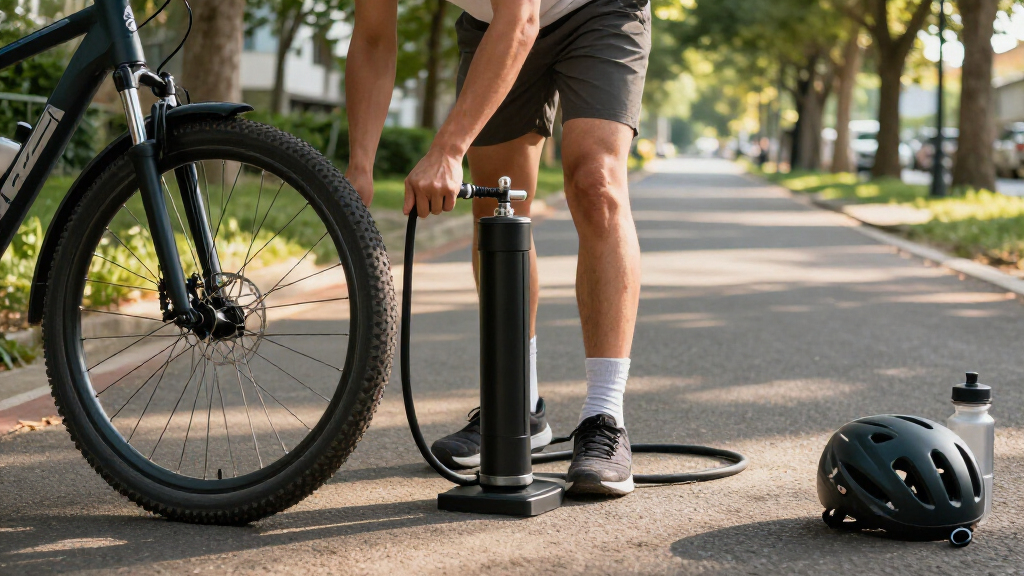
I ranked these pumps around the job riders actually need them to do: carry one easily, connect it to the bike’s valve, set a useful pressure, and inflate without adding unnecessary hassle. I compared stated pressure capacity, inflation-speed claims, size and portability, gauge and auto-stop functions, valve support, and whether each model appears aimed at bike tires or broader inflator use. I also weighed the likely usefulness of the controls and fittings, since a pump is only convenient if it works with the rider’s valve and pressure routine.
The ranking favors a balance rather than the biggest single specification. The Fanttik X9 Ace places first for its combination of a 150 PSI claim, fast stated inflation, and auto-stop; compact CYCPLUS options stand out for riders who prioritize carrying ease. Models with broader inflator formats can make sense for varied tasks but may be less appealing as a dedicated ride-day pump. Product specifications and claims can vary by version, so I recommend checking the exact listing for included adapters, dimensions, and battery details before buying.
| portable electric bike pump | Valve compatibility |
|---|---|
| DSUY Mini Electric Bike Tire P | Presta and Schrader |
| TB2PRO Mini Electric Bike Pump | Presta and Schrader |
| Fanttik X9 Ace Mini Electric B | Presta and Schrader |
| Fanttik X11 Ace Mini Electric | Presta and Schrader |
| MICHELIN Ultra-Mini Electric B | — |
| AstroAI L7 Tire Inflator Porta | — |
| ETENWOLF S0 Mini Bike Pump | Presta and Schrader with included adapters |
| CYCPLUS Portable Electric Tire | Presta, Schrader, and ball valve |
| Bosch EasyPump Portable Electr | — |
| Fanttik X10 Ace Mini Electric | Presta and Schrader |
| AUXITO Electric Bike Pump | Presta, Schrader, and sports-ball valves |
| CYCPLUS AS2Pro Mini Electric B | Presta and Schrader |
| OlarHike Tire Inflator Portabl | Includes Presta adapter |
| VIAIR Recon Mini Portable Air | Presta and Schrader |
| GPUTEK Mini Electric Bike Pump | Presta and Schrader |
Factors to Consider When Choosing Best Portable Electric Bike Pumps
The right portable pump depends on what you expect it to do between rides and on the road. I’d choose around your tires, riding habits, and tolerance for carrying weight—not just a maximum PSI number.
Match Pressure Capacity to Your Tires
Start with the pressure range printed on your tire or recommended by its manufacturer, then choose a pump that can reach that range with room to spare. A high maximum PSI is more relevant to narrow, high-pressure tires than to many wider tires, which may need more air volume rather than an extreme pressure ceiling. Do not treat a pump’s maximum rating as a target; the right pressure depends on tire width, rider weight, terrain, and tire system. A pressure gauge helps you repeat a setting, while auto-stop can prevent overshooting when the target is entered correctly. If you ride more than one bike, check that the pump can handle the pressure needs of each. This helps avoid paying for a headline spec your setup does not use.
Think About Tire Volume, Not Just Inflation Speed
Speed claims are hard to compare unless they refer to the same tire size and starting pressure. A compact pump may bring a road tire up to pressure quickly but take longer with a high-volume mountain or cargo-bike tire. If you commonly inflate larger tires from nearly flat, look for credible details about battery capacity, duty cycle, or tested tire size rather than relying on a short time claim alone. For occasional pressure top-ups, a smaller pump can be the better ride companion even if it is slower from empty. Repeated full inflations also create more heat and drain the battery faster. Match the pump’s intended workload to your most demanding real use.
Set a Practical Limit for Size and Weight
A pump that stays in a saddle bag or jersey pocket is more useful on a ride than a more capable model left at home. Compare the actual dimensions and weight, including any hose, adapters, or storage case you plan to carry. Handlebar, frame, and bag space differ, so check how the pump will fit alongside a tube, tools, and other essentials. A larger cordless inflator may be sensible for home use or a vehicle kit but feel cumbersome on a long ride. Small pumps bring their own compromise: controls and displays can be harder to operate with cold hands or in poor light. Choose the size you will realistically bring along.
Check Valve Fit and Hose Design
Confirm whether your bike uses Presta, Schrader, or another valve arrangement and verify which adapters come in the box. A listed adapter is not always attached or stored in a way that is convenient on the roadside. A hose can make it easier to connect the pump without putting leverage on a delicate valve, especially when the pump body is small. Direct-fit designs may save space but can be awkward to hold steady. If you switch between bikes, look for a simple, secure way to change fittings and keep small parts from getting lost. Do not assume compatibility from a product title alone; check the exact model’s included accessories.
Weigh Battery Capacity Against Ride Use
Battery performance matters most when you need several inflations, are far from a charging point, or ride in a group. Ask whether you expect emergency use, routine pressure checks, or repeated tire inflation from flat; each creates a different battery demand. A compact pump may be ideal for topping up one tire but less suited to servicing multiple high-volume tires. Look for clear charging details and any stated limits on continuous operation, since these affect how practical the pump is after repeated use. Keep in mind that cold conditions can reduce battery performance. For remote rides, a manual backup or spare battery plan can be more reassuring than choosing solely by claimed speed.
Choose Controls You Can Use Under Pressure
A clear display and straightforward buttons reduce the chance of setting the wrong pressure when you are fixing a flat outdoors. Check whether the gauge uses units you understand and whether the target-pressure controls are easy to distinguish. Auto-stop is helpful, but it does not replace checking the tire’s recommended range or confirming the selected setting. A built-in light can help with nighttime repairs, though it should not be treated as a substitute for a proper bike light. Consider how the display is positioned and whether the pump can stand or be held securely while running. For a first electric pump, simple controls and a readable gauge can be more useful than extra modes you are unlikely to use.
Frequently Asked Questions
Can one portable electric pump handle both road and mountain-bike tires?
Often, but the pump’s pressure range and ability to move enough air both matter. Road tires typically call for higher pressure, while mountain-bike tires usually need more volume at lower pressure. Check the manufacturer’s stated limits and any inflation examples for the tire sizes you own. Also verify that the pump includes fittings for your valves. If you regularly inflate both types from flat, prioritize a pump designed for repeated use rather than assuming a high PSI rating covers every need.
Is a 150 PSI rating a reason to choose one pump over another?
Not by itself. Maximum pressure indicates a ceiling, not how fast the pump reaches your target or how many tires it can inflate per charge. Most buyers should first check the pressure range their tires actually require, then compare usability, battery performance, and portability. A pump with auto-stop and a clear gauge may be easier to use accurately than one with a higher rating but less helpful controls. Consider the full set of specifications for your tire size rather than ranking models by PSI alone.
Should I carry an electric pump or a manual backup on longer rides?
An electric pump can make inflation less tiring, but it depends on a charged battery and functioning electronics. On a remote or all-day ride, a small manual pump or another backup can provide a way to inflate if the battery runs out or the device fails. The extra weight may be worthwhile if you ride far from help or travel with a group. For short commutes and rides near home, some riders may prefer the convenience of a single electric pump. Base the choice on how difficult it would be to end your ride without a working pump.
Can I use a portable bike pump to inflate car tires too?
Some models in this roundup are described as broader portable inflators, but that does not mean every mini bike pump is suited to car tires. Car tires have a much larger air volume than bicycle tires, which can take longer and may push a small pump beyond its intended workload. Check the manufacturer’s supported uses, duty limits, connector fit, and vehicle-tire guidance for the exact model. If regular car-tire inflation is a priority, a larger inflator designed for that task may be a better fit. A bike-focused mini pump is best chosen for the bicycle needs it is built to serve.
How can I tell whether auto-stop will prevent overinflation?
Auto-stop usually stops inflation when the pump reaches the target pressure entered by the user, so it depends on setting that target correctly. Check that the display uses units you recognize and that you can select the intended pressure without confusion. The tire’s sidewall maximum is not automatically the pressure you should use; follow the tire or bike maker’s guidance for your setup. A gauge reading can also vary with connection quality and when the pump measures pressure. Treat auto-stop as a useful aid, not a replacement for choosing an appropriate pressure.
Conclusion
For the broadest mix of stated speed, pressure capacity, and automatic stopping, I’d choose the Fanttik X9 Ace as best overall. Riders who want a compact pump for carrying should compare the CYCPLUS AS2Pro and other mini designs, while the broader-format AstroAI L7 or OlarHike may suit buyers who also want an inflator for other tasks. I’d treat best value as the model that meets your tire and valve needs without paying for unused capacity; compare the listed features and included accessories rather than relying on a single spec. For beginners, a pump with a readable digital gauge and auto-stop, such as the DSUY or AUXITO, offers straightforward pressure control. For specific needs, choose a compact CYCPLUS for ride carry, a broader inflator format for mixed use, or a high-pressure model for tires that genuinely need that range. Check the exact model’s dimensions, fittings, and battery details before making the final call.