When it rains, your stopping distance increases because wet roads reduce tire grip and heighten the risk of hydroplaning, causing your vehicle to slide instead of stop quickly. To adapt, you should slow down, increase your following distance, and brake earlier with gentle, controlled movements. Proper tire maintenance also helps. By understanding these factors, you can improve your safety and react better in wet conditions—continue exploring for more essential tips.

Get bike and ride gear delivered free with Prime
- Fast, free delivery on millions of items
- Prime Video, Amazon Music and more included
- Member-only deals all year
Key Takeaways
- Wet surfaces reduce tire grip, increasing stopping distance due to decreased traction.
- Hydroplaning risk rises in rain, causing tires to lose contact and delaying braking effectiveness.
- Brake fade occurs more quickly in wet conditions from frequent or prolonged braking, reducing stopping power.
- Proper tire inflation and tread depth improve water channeling, helping maintain braking performance.
- Starting to brake earlier and applying controlled pressure can compensate for increased stopping distances in rain.
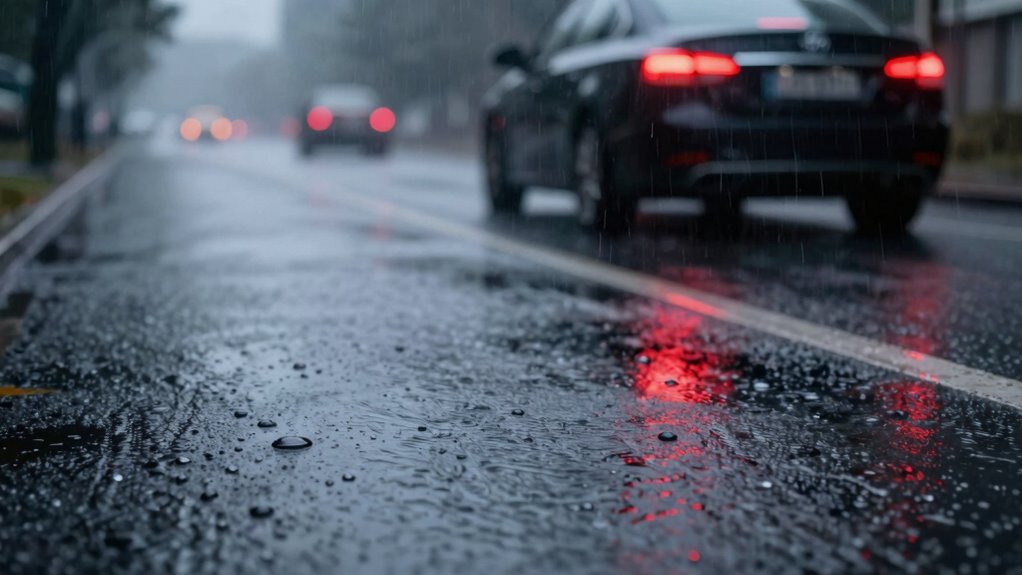
Have you ever wondered how rain affects your car’s braking performance? When roads are wet, stopping quickly becomes more challenging, and understanding why can help you drive more safely. One major concern is hydroplaning hazards, where a layer of water prevents your tires from gripping the road. When hydroplaning occurs, your vehicle fundamentally skims over the water, drastically reducing traction. This means your brakes won’t respond as expected, increasing your stopping distance and risking a loss of control. To minimize this danger, you should reduce your speed in rainy conditions and avoid sudden movements. Maintaining properly inflated tires with good tread depth also helps channel water away and improves grip, lowering hydroplaning risks. Additionally, high-quality projectors can improve visibility in poor weather conditions, helping you stay alert to hazards on the road.
Another factor that influences braking in the rain is brake fade. Brake fade happens when your brake system overheats after repeated use or prolonged pressure, which can be more common during wet conditions when you need to brake more frequently or harder. When brakes overheat, their ability to generate friction diminishes, resulting in longer stopping distances. This is especially dangerous on inclines or slippery surfaces, where you might already be at a disadvantage. To counteract brake fade, avoid riding your brakes constantly or applying excessive pressure for extended periods. Instead, use controlled, moderate braking and downshift when possible to slow down gradually. If you feel your brakes are fading or becoming less responsive, gently pump them to help dissipate heat and restore some braking power.
Rain also affects your stopping distance because wet surfaces reduce tire grip, making it harder for your brakes to decelerate your vehicle effectively. This means you need to increase your following distance—giving yourself more space to stop safely. It’s a good idea to start braking earlier than usual as you approach intersections, crosswalks, or any potential hazard. Additionally, avoid sudden steering or braking maneuvers, which can cause your vehicle to slide or hydroplane. Always be aware of standing water or puddles, as they can hide deeper hazards and increase the likelihood of hydroplaning. If you do start hydroplaning, don’t slam your brakes; instead, ease off the accelerator and steer gently in the direction of your intended path until your tires regain contact with the road.
As an affiliate, we earn on qualifying purchases.
Frequently Asked Questions
How Do Different Tire Types Affect Stopping Distances in Rain?
Different tire types substantially impact your stopping distances in rain. Tires with deeper treads channel water better, reducing hydroplaning and stopping distances. Softer rubber compositions provide better grip on wet surfaces, helping you stop quicker. Conversely, worn or slick tires with shallow treads and hard rubber increase stopping distances. Always choose tires with good tread depth and appropriate rubber composition for wet conditions to guarantee safer and shorter stopping distances in rain.
Does Vehicle Weight Influence Braking Performance on Wet Roads?
Your vehicle load directly impacts braking efficiency on wet roads. When you carry more weight, your brakes need to work harder, which can increase stopping distances because more force is required to slow down the additional load. Conversely, a lighter vehicle generally brakes more effectively. To stay safe, adjust your driving, maintain your brakes well, and leave extra space, especially when your vehicle is heavily loaded or driving in rainy conditions.
Are There Specific Brake Maintenance Tips for Rainy Conditions?
You should regularly check your brake fluid to make certain it’s at the proper level and free of contaminants, which helps maintain braking efficiency in rainy conditions. Additionally, inspect your rotors for signs of wear or damage, as smooth rotors improve braking performance on wet roads. Keeping your brake system well-maintained ensures safer stops during rain, reducing the risk of slipping or losing control when braking in wet weather.
How Does Vehicle Speed Impact Braking Distance in Wet Weather?
Your speed greatly impacts braking distance in wet weather, as higher speeds increase hydroplaning risks and extend stopping times. To stay safe, reduce your speed, especially when tire tread depth is low, since worn tires can’t channel water effectively. This helps prevent hydroplaning and shortens your stopping distance. Always drive cautiously in rain, adjusting your speed to maintain control and giving yourself ample space to stop safely.
What Safety Features Help Reduce Stopping Distance During Rain?
You benefit from safety features like ABS technology and traction control, which actively reduce stopping distances in rain. While slick roads threaten your control, ABS prevents wheel lockup, maintaining steering ability. Traction control adjusts power output, preventing wheel spin and enhancing grip. These features work together to improve your safety, helping you stop quicker and more confidently, even on wet, slippery surfaces. Always verify these systems are functioning before driving in rain.
As an affiliate, we earn on qualifying purchases.
Conclusion
So, next time it rains, remember: your stopping distance can double or even triple! That tiny splash of water isn’t just a splash—it’s a sneaky trap waiting to turn your smooth ride into a wild, unexpected slide. Slow down, stay alert, and give yourself way more space to stop. Don’t let rain turn your drive into a heart-pounding, adrenaline-fueled roller coaster. Stay safe and keep those brakes ready for the unexpected!
hydroplaning prevention products
As an affiliate, we earn on qualifying purchases.
As an affiliate, we earn on qualifying purchases.
As an affiliate, we earn on qualifying purchases.
Fall Picks
fall essentials
As an affiliate, we earn on qualifying purchases.