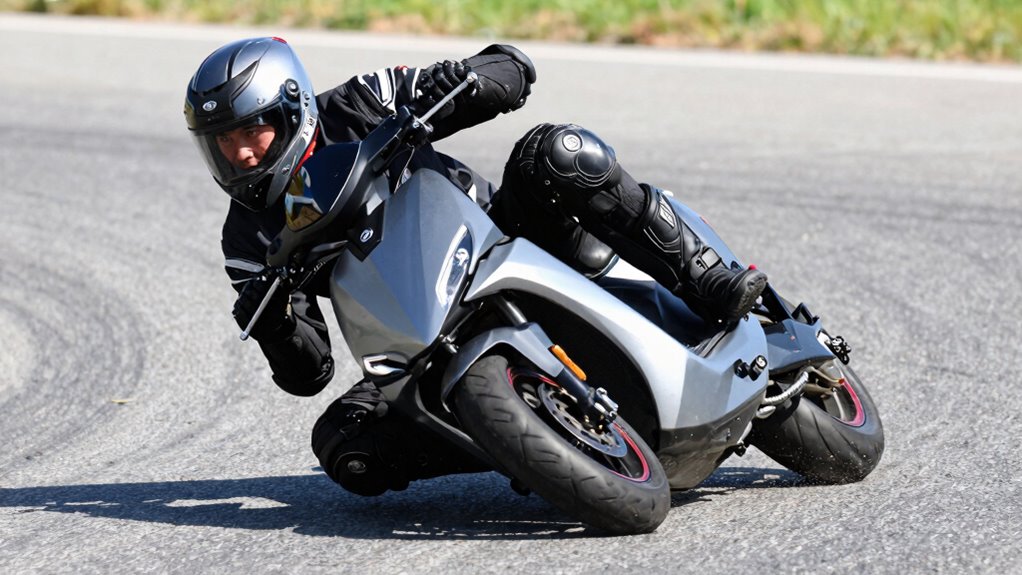

To stay stable during hard braking, apply both front and rear brakes smoothly and gradually, avoiding sudden pressure that could cause skids. Keep your weight centered and slightly back to maintain balance, and look ahead to anticipate obstacles. Be aware of surface conditions, adjusting your braking accordingly. If you feel the wheel locking or skidding, ease off and reapply gently. For more tips on mastering stability, continue exploring these essential techniques.

Get bike and ride gear delivered free with Prime
- Fast, free delivery on millions of items
- Prime Video, Amazon Music and more included
- Member-only deals all year
Key Takeaways
- Apply both front and rear brakes gradually to maintain balance during hard stops.
- Keep your body centered and slightly leaned back to counteract forward momentum.
- Avoid sudden or excessive front brake pressure to prevent wheel lock or skidding.
- Regularly check brake responsiveness for smooth, controlled braking performance.
- Be aware of surface conditions and obstacles to adjust braking force accordingly.
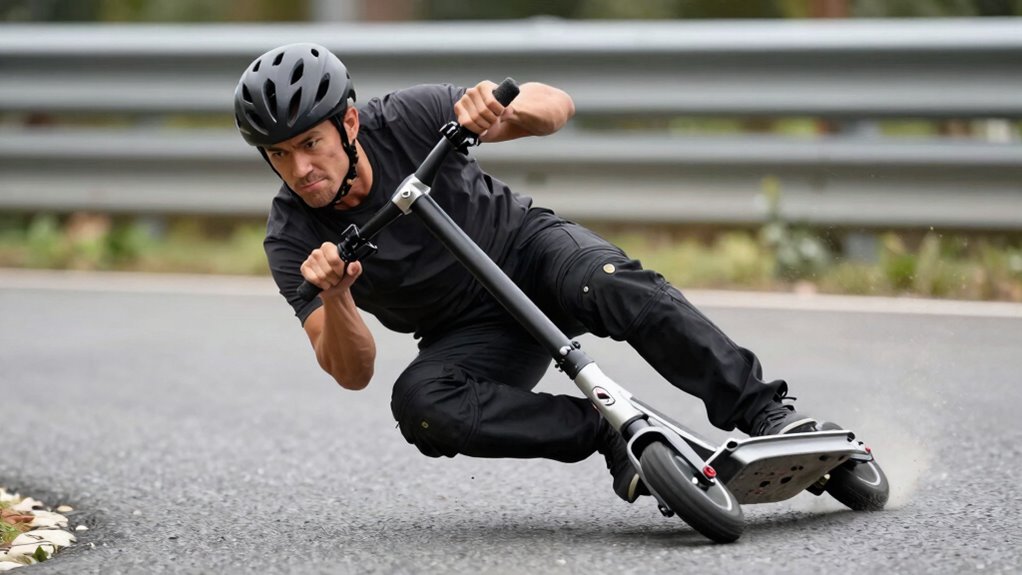
When applying the brakes, do so gradually rather than squeezing them abruptly. Use both the front and rear brakes together, but be cautious with the front brake as it provides the most stopping power. Applying too much front brake too quickly can cause the wheel to lock up and lead to a fall. If you feel the scooter starting to skid, ease off the brake pressure immediately, then reapply gradually. Maintaining a smooth, controlled pressure on your brakes helps prevent sudden shifts in balance. Regular brake checks and proper brake response are essential for safe stopping. Additionally, understanding biodiversity and how it relates to sustainable practices can promote safer riding environments by supporting healthier ecosystems that reduce hazards on the road. Incorporating modern tech like sensors or stability aids can further enhance your scooter’s safety during sudden stops. A good understanding of sustainable practices can also help in choosing eco-friendly maintenance products that support environmental health. Being aware of your riding environment, including surface conditions and potential obstacles, also plays a crucial role in maintaining stability during hard braking.
Popular right now

Roborock Q7 L5 Robot Vacuum and Mop Combo

Vitamix VX1 Professional-Grade Blender, 64 oz, Black

Bose QuietComfort Wireless Bluetooth Headphones – Active Over‑Ear Noise Cancelling with Mic, USB‑C Charging, Deep Bass, up to 24 h Playtime,
As an affiliate, we earn on qualifying purchases.
Frequently Asked Questions
What Types of Scooters Are Best for Hard Braking Situations?
For hard braking situations, choose scooters with robust scooter design and advanced braking systems like disc brakes or regenerative brakes. These features provide better stopping power and stability. Look for models with a low center of gravity and wide tires, which help maintain balance during sudden stops. By selecting a scooter with reliable braking systems and a stable design, you’ll feel more confident and secure when braking hard.
How Does Tire Condition Affect Scooter Stability During Hard Braking?
Your scooter’s stability during hard braking hinges on tire condition. Worn tread and low tire pressure are like trying to grip a slick surface—dangerous and unpredictable. Properly inflated tires with good tread provide better traction, helping you stay in control when braking suddenly. Regularly check and maintain your tires to prevent slipping or skidding, ensuring a safer ride even when you need to stop abruptly.
Can Rider Weight Influence Scooter Stability When Braking Hard?
Your rider weight considerably influences scooter stability during hard braking. Heavier riders can improve brake responsiveness because their weight helps keep the tires grounded, reducing the risk of skidding or losing control. However, if you’re too heavy, it may put extra strain on the braking system. To maintain stability, adjust your weight distribution, keep a firm grip, and apply brakes smoothly, ensuring maximum control and safety during sudden stops.
Are There Specific Braking Techniques Recommended for Emergency Stops?
For emergency stops, you should press the brake pedal gently but firmly, since brake pedal sensitivity varies. Use quick, controlled braking to avoid skidding, and always give a hand signal to alert others. Studies show that riders who signal during abrupt stops are 30% less likely to cause accidents. Keep your hands ready to brake smoothly and communicate clearly, ensuring a safer, more stable halt during unexpected situations.
How Does Weather Impact Scooter Control During Sudden Braking?
Weather conditions and road surface considerably impact your scooter control during sudden braking. Wet or icy conditions reduce traction, making it harder to stop quickly and increasing the risk of slipping. On slick surfaces, you should brake gently and gradually, avoiding abrupt movements. Always be extra cautious in rain, snow, or icy weather, as these conditions can compromise stability and control, requiring you to adjust your braking technique accordingly.
Conclusion
Think of your scooter as a ship steering through turbulent waters. When you brake hard, you’re guiding through a storm—keeping your balance is like steadying the helm against crashing waves. Stay relaxed, distribute your weight evenly, and look ahead, not down. With practice, you’ll sail smoothly through even the roughest braking moments, turning potential chaos into a controlled voyage. Remember, mastery turns turbulence into calm seas, ensuring your ride remains steady and safe.