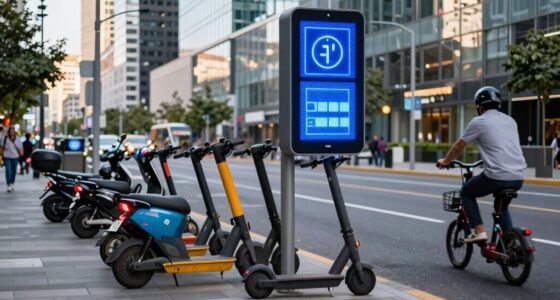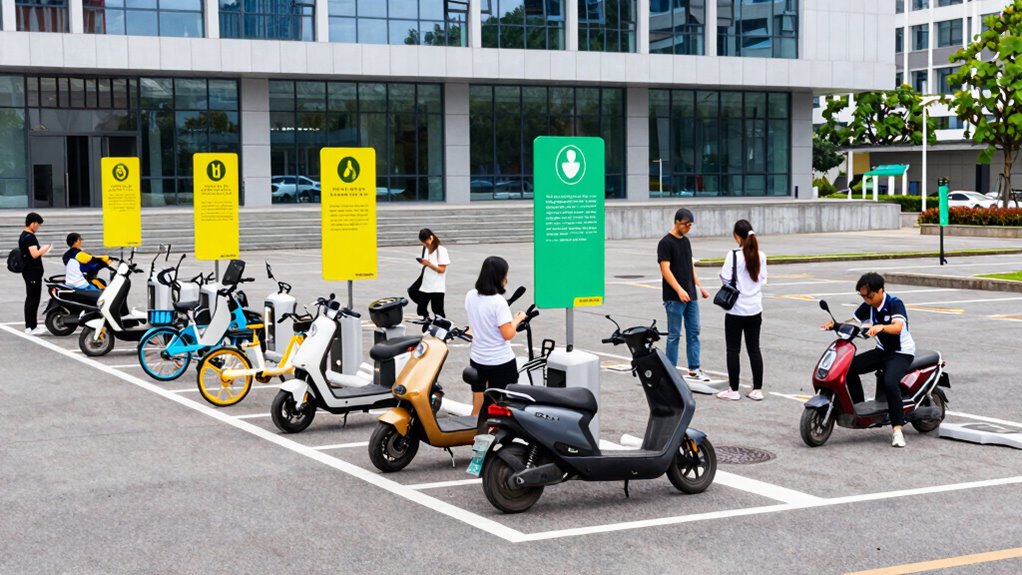

Campus rules shape how you park and charge your electric vehicle or e-scooter by setting clear guidelines to keep everyone safe and fair. They specify designated areas, time limits, and permit requirements to prevent misuse and guarantee equitable access. Proper signage and enforcement help avoid misunderstandings, maintain order, and reduce safety hazards. Understanding these rules helps you avoid fines and stay in compliance—there’s more to learn about making the most of campus parking regulations.

Get bike and ride gear delivered free with Prime
- Fast, free delivery on millions of items
- Prime Video, Amazon Music and more included
- Member-only deals all year
Key Takeaways
- Campus rules designate specific areas for bikes, e-scooters, and electric vehicles to ensure organized parking and safety.
- Regulations set time limits and permit requirements for charging stations to promote fair access for all riders.
- Signage and infrastructure provide clear guidance, helping prevent misuse and maintain order in parking and charging areas.
- Enforcement policies deter violations, ensuring charging stations remain accessible and functional for everyone.
- Adherence to campus policies reduces safety hazards, traffic congestion, and potential conflicts among riders and pedestrians.

Are you aware of the campus rules and parking policies for riders? Knowing these guidelines is essential because they directly impact your daily experience and safety. Campus rules are designed to maintain order, protect student safety, and guarantee everyone has fair access to parking resources. When it comes to parking regulations, understanding what’s permitted and what isn’t can save you from costly fines, towing, or inconvenience. These rules often specify designated areas for different types of riders, such as bikes, e-scooters, or electric vehicles, and clarify the procedures for charging stations. Ignoring these regulations can lead to safety hazards and disrupt the flow of traffic, so staying informed helps you avoid these issues. Following campus policies is crucial to ensure a smooth and safe environment for all users.
Most importantly, strict adherence to parking regulations enhances student safety. When everyone follows designated paths and parking zones, it reduces accidents and congestion, especially during busy hours. This is particularly essential for riders, who need clear, safe routes to avoid collisions with pedestrians or vehicles. Additionally, some campuses implement specific rules for electric vehicle charging stations to prevent misuse, ensuring that students who rely on these stations can charge their bikes or scooters efficiently. These policies often include time limits for charging or parking, which helps prevent monopolization and guarantees equitable access for all riders. Enforcing these policies ensures that everyone benefits from a fair and secure transportation environment. Proper regulation compliance also helps prevent conflicts and misunderstandings among campus users. By respecting these rules, you contribute to a safer environment for yourself and your peers.
Campus rules also shape how charging stations are allocated and used. Many campuses now support sustainable transportation by providing designated charging areas. These stations usually have clear signage and parking regulations that specify who can use them and when. For example, some campuses require students to display a permit or pay a fee to park or charge their vehicles. Following these procedures is essential because it maintains order and fairness. If you try to bypass these rules, not only could you face fines or penalties, but you might also block others from charging their vehicles, creating inconvenience and frustration. Proper enforcement of regulations helps ensure that charging infrastructure remains accessible and functional for everyone. Moreover, regular maintenance and monitoring of these stations are vital to prevent malfunctions and ensure safety standards are met.
electric vehicle charging station for campus
As an affiliate, we earn on qualifying purchases.
As an affiliate, we earn on qualifying purchases.
Frequently Asked Questions
Are There Any Discounts for Students on Parking Fees?
Yes, many campuses offer student discounts on parking fees. You can often access parking fee reductions by showing your student ID or registering through the campus parking system. These discounts make it more affordable to park on campus, especially if you commute regularly. Be sure to check your school’s specific policies, as discounts vary and some campuses might have limited offers or special programs for students.
How Do Emergency Vehicle Restrictions Impact Rider Parking Options?
You’ll find that emergency vehicle restrictions can be a real game-changer for rider parking options. These rules create restricted zones to guarantee emergency access, meaning you can’t park in certain areas during specific times. As a result, you need to stay alert and plan ahead to avoid fines or towing. It’s a tightrope walk, but understanding these restrictions helps you navigate campus efficiently without stepping on any toes.
Can Riders Reserve Parking Spots in Advance?
Yes, riders can reserve parking spots in advance, but it depends on the campus’s reservation policies. You should check the specific rules, as some campuses offer online booking systems to secure parking, especially during busy periods. Keep in mind that reservation policies can affect parking availability, so it’s best to reserve early to guarantee you get a spot when needed. Always verify the latest guidelines through official campus resources.
What Penalties Exist for Violating Campus Charging Policies?
If you violate campus charging policies, you risk facing enforcement penalties like fines or parking ticket issuance. Ignoring parking permit regulations can lead to these penalties, and repeated violations might result in permit suspension or even towing your vehicle. To avoid issues, always follow campus rules carefully, ensuring your parking permits are valid and properly displayed. Staying compliant helps you avoid costly penalties and keeps campus parking smooth for everyone.
Are There Designated Charging Stations for Electric Scooters?
Imagine finding a hidden oasis amid a desert—that’s what designated charging stations for electric scooters feel like on campus. Yes, there are specific electric scooter infrastructure and charging station accessibility designed to make recharging easy. These stations are strategically placed around campus, ensuring you can plug in conveniently without searching. This setup encourages eco-friendly commuting by providing reliable, accessible spots to keep your scooter charged and ready for your next ride.
As an affiliate, we earn on qualifying purchases.
Conclusion
Remember, rules are there to keep everyone safe and organized—you’re part of the community. When you follow campus parking and charging policies, you help create a smooth, respectful environment for all riders. As the saying goes, “A chain is only as strong as its weakest link.” Stay responsible, stay respectful, and contribute to a well-functioning campus. Your cooperation makes a difference; together, we keep the wheels turning smoothly.
As an affiliate, we earn on qualifying purchases.
As an affiliate, we earn on qualifying purchases.
Halloween Picks
halloween
As an affiliate, we earn on qualifying purchases.